Our Lady of Manaoag
Pangasinan's Marian basilica - one of the country's major pilgrimage churches, drawing constant crowds to an ivory image four centuries old.
Updated 18 October 2026

AI illustration
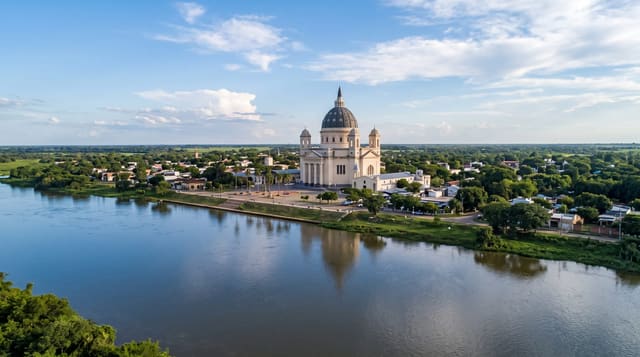
The Minor Basilica of Our Lady of the Most Holy Rosary of Manaoag is one of the busiest pilgrimage churches in the Philippines - a Dominican shrine in a small Pangasinan town that receives visitors continuously, in numbers that swell enormously through October, the rosary month, and over Holy Week. The image at its centre is a carved ivory and wood figure brought from Spain in the seventeenth century, credited by devotees with protection during fires, wars and typhoons, and reached by a stairway behind the altar where people file past to touch the mantle. The church itself is a large stone building rebuilt in the 1910s after fire, with a museum, a devotional candle area, gardens and, inevitably, a wide apron of stalls selling rosaries, religious images and food. Vehicle blessings in the forecourt are a particular local custom. The town exists largely around the shrine, and the traffic on weekends reflects it.
History
According to documents from 1610, a farmer walking home heard a woman's voice and saw on a treetop a figure that the priests took for the Virgin, who told him where the people should build a church; a chapel went up on the hilltop, and the town grew around it. The name Manaoag is traditionally derived from the Pangasinan verb mantaoag, "to call". The image itself, of ivory and silver, was brought from Spain by way of the Manila galleons from Acapulco early in the 17th century by the priest Juan de San Jacinto. Pope Pius XI decreed its canonical coronation on 25 August 1925, carried out by the papal nuncio on 21 April 1926; Pope Benedict XVI granted the shrine spiritual affinity with the Basilica of Saint Mary Major in 2011, and Pope Francis later raised it to a minor basilica (Wikipedia, Our Lady of Manaoag).
Highlights
- The ivory image - the four-century-old figure above the altar.
- The rear stairway - the queue of devotees filing past.
- The candle area - the devotional lighting court.
- The stall apron - rosaries, images and food around the church.
When to go
November to May for travel; October and Holy Week are the devotional peaks and the most crowded. Weekday mornings are the calmest time to see the shrine.
Practical notes
Crowds are constant and the queue to the image can be long. Traffic and parking around the town are difficult at weekends. It is a devotional site, not a sightseeing one, and dress codes apply.
Nearby
Dagupan and the Lingayen coast are half an hour away; the Hundred Islands at Alaminos are about an hour and a half.
Key facts
Source: Wikidata, item Q7110872, read on 18 October 2026.
What to pack for Our Lady of Manaoag
Chosen from what this place is for. Tap a kit for the full checklist.
- Binoculars - The single best wildlife tool - even a compact pair transforms a sighting. Find on Amazon
- Comfortable walking shoes - Sightseeing means kilometres of pavement and cobbles daily. Find on Amazon
- Modest clothing - Shoulders and knees covered - the single most common requirement. Find on Amazon
- A zoom camera or long lens - Animals rarely come close; reach beats megapixels. Find on Amazon
Some links on this page are Amazon affiliate links - if you buy through them we may earn a small commission at no extra cost to you.
All packing kitsPlan your trip
Where to start if Our Lady of Manaoag is going on the list.
Booking links on this page are affiliate links - if you book through them we may earn a small commission at no extra cost to you. It never changes what we write about a place.
Opening times, ticket prices and seasonal closures change - check the official source before you go: official site.