Manila Chinese Cemetery
Streets of elaborate mausoleums in Santa Cruz, built by Chinese-Filipino merchant families as houses for the dead.
Updated 18 October 2026
AI illustration
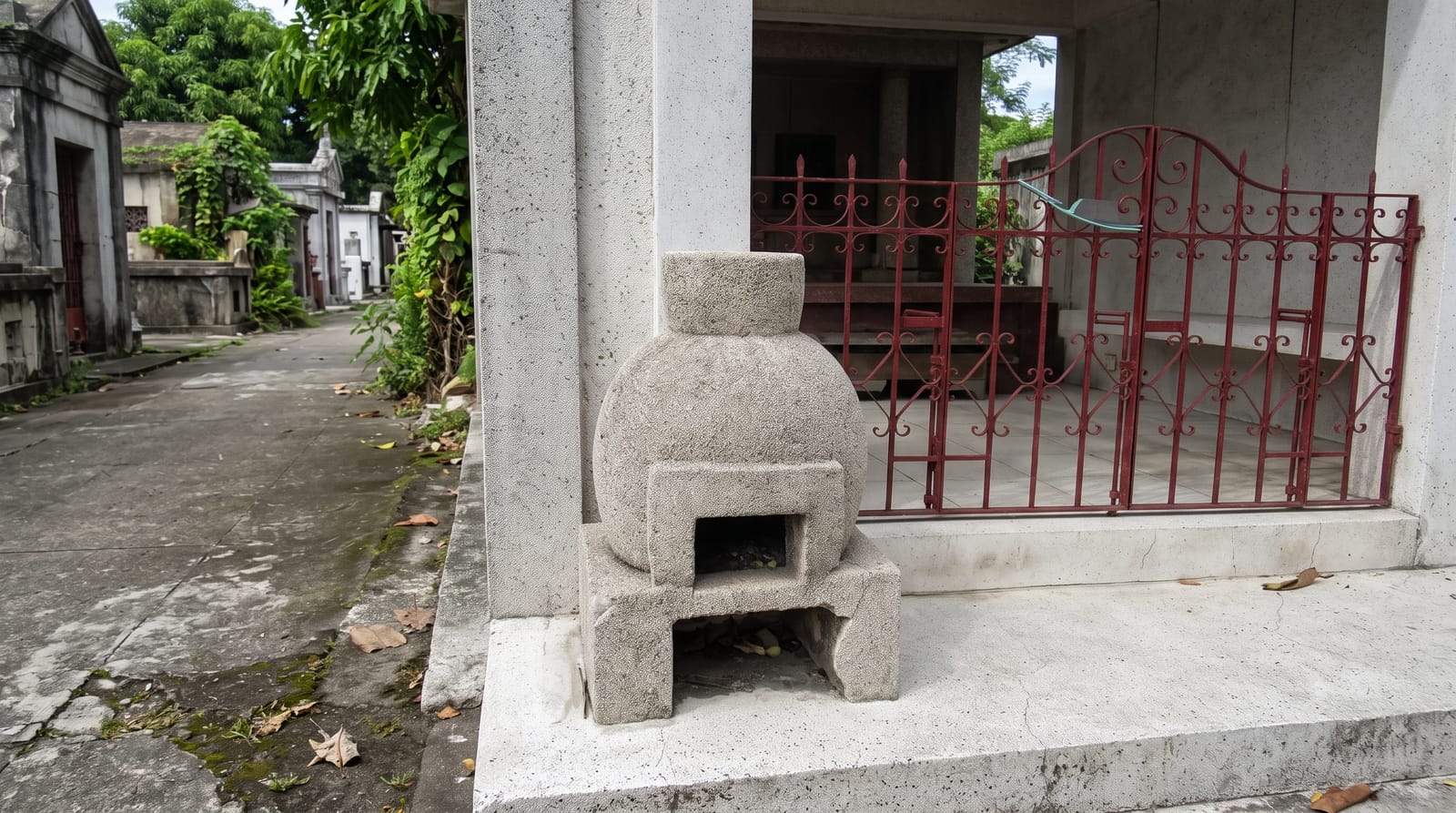
The Chinese Cemetery was established in the 1850s to give Manila's Chinese, Catholic or not, a burial ground of their own, and what grew there over the following century is unlike any other burial ground in the country: laid out on a street grid, with family mausoleums built as small houses - some with air conditioning, plumbing, kitchens, letterboxes and chandeliers, in styles running from Chinese temple through art deco to postmodern - so that relatives could stay with their dead during visits and at Qingming. It has been called a city for the dead with some justification. Among the graves is a memorial to the Chinese-Filipino resistance of the Second World War. Guided tours run and are worth taking: the cemetery is large, the layout is confusing, and the histories attached to particular families are the point.
History
Before it existed, Buddhist Chinese were buried on a hillside at Bangkusay in Tondo. In 1843 the Governor-General allowed the Chinese to open a cemetery at La Loma, and it was founded in the 1850s by Lim Ong and Carlos Palanca (Tan Quien-Sien). In 1863 Lim Ong, then gobernadorcillo of the Chinese community of Binondo, bought land to enlarge it into a proper burial ground for Catholic and non-Catholic Chinese alike, and it also took those refused burial in the consecrated ground of the neighbouring La Loma Cemetery, such as victims of contagious disease. A later gobernadorcillo, Mariano Fernando Yu Chingco, bought more land from the Dominicans in 1878 for ₱14,000. It served especially the poor, who could not afford to send their dead home to China; today it covers about 54 hectares (Wikipedia, Manila Chinese Cemetery).
What to look for
- The mausoleum streets - family tombs built as houses.
- The architectural range - temple styles through deco to modern.
- Chong Hock Temple - at the end of the main road from the Felix Huertas gate.
- The war memorial - to the Chinese-Filipino resistance.
When to go
Mornings for light and cooler walking. Qingming in early April brings families in large numbers and is the most active time. It is quiet on ordinary weekdays.
Practical notes
It is a working cemetery - families visit, and photography of mourners is inappropriate. The area around it is rough in places; a guided tour is the sensible way in. Watch belongings.
Nearby
Binondo and Chinatown are south; the Quiapo district and Manila's centre are close.
Key facts
Source: Wikidata, item Q6749679, read on 18 October 2026.
What to pack for Manila Chinese Cemetery
Chosen from what this place is for. Tap a kit for the full checklist.
- Comfortable walking shoes - Sightseeing means kilometres of pavement and cobbles daily. Find on Amazon
- Modest clothing - Shoulders and knees covered - the single most common requirement. Find on Amazon
- A slim anti-theft daypack - Zips that close properly; keep it in front in crowds and on transit. Find on Amazon
- A scarf or shawl - To cover the head or shoulders on entry; women especially at mosques. Find on Amazon
Some links on this page are Amazon affiliate links - if you buy through them we may earn a small commission at no extra cost to you.
All packing kitsPlan your trip
Where to start if Manila Chinese Cemetery is going on the list.
Booking links on this page are affiliate links - if you book through them we may earn a small commission at no extra cost to you. It never changes what we write about a place.
Opening times, ticket prices and seasonal closures change - check the official source before you go: official site.