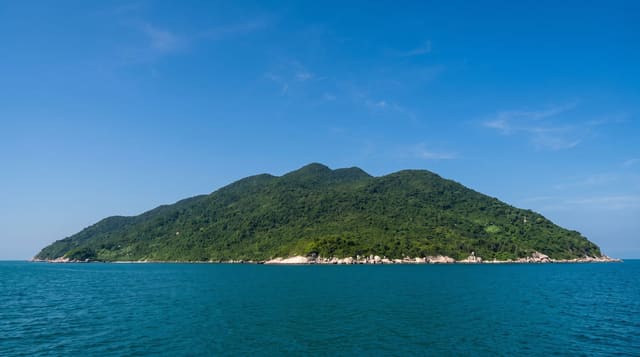
Islas de Gigantes
A remote island group off northern Iloilo with a cliff-ringed saltwater lagoon, curving twin beaches and a scallop fishery.
Updated 22 October 2026
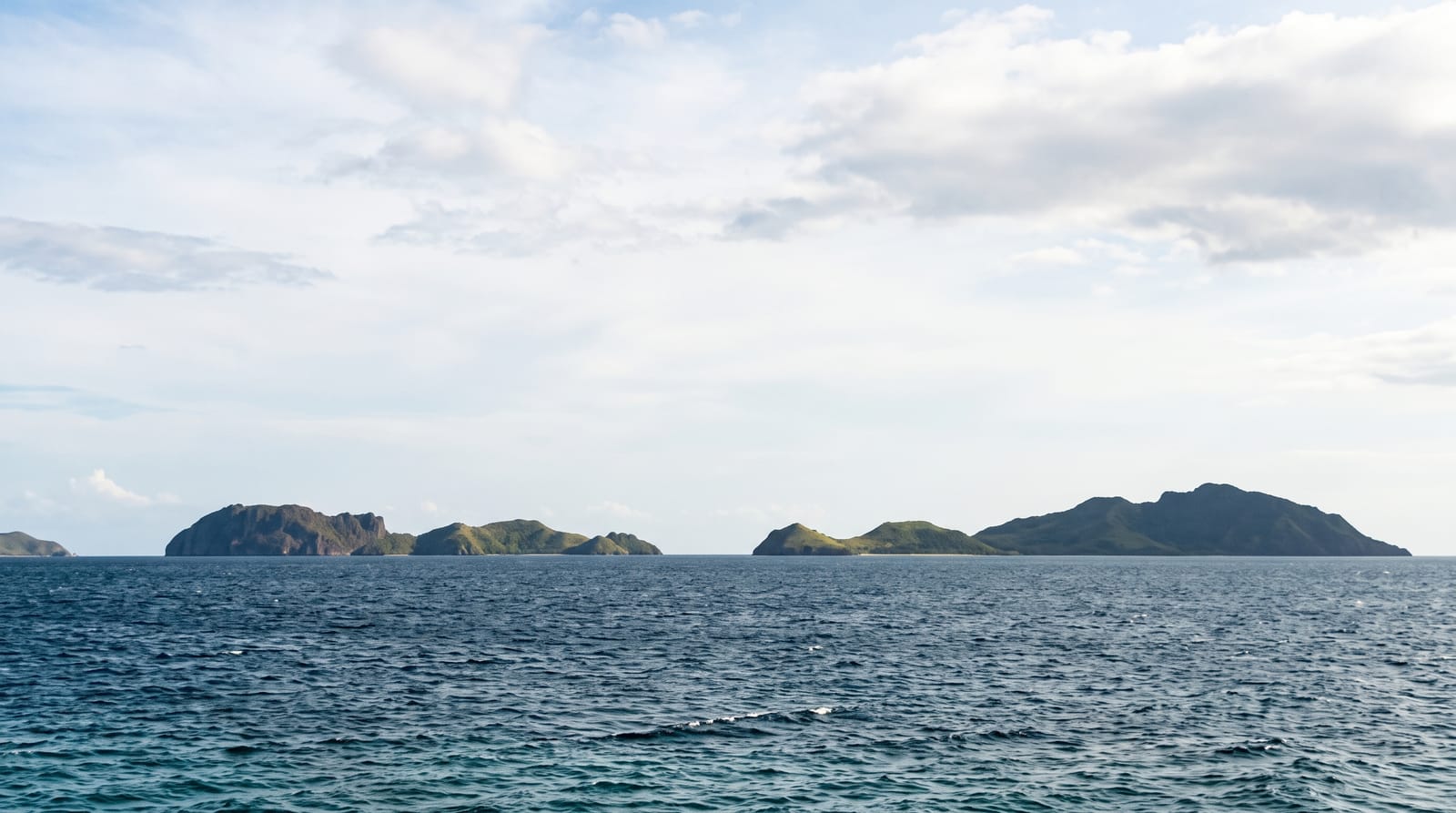
AI illustration
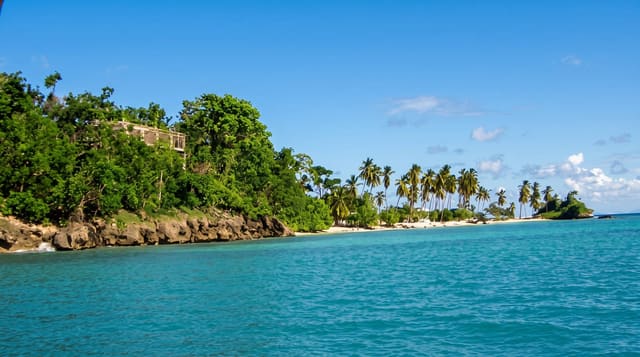
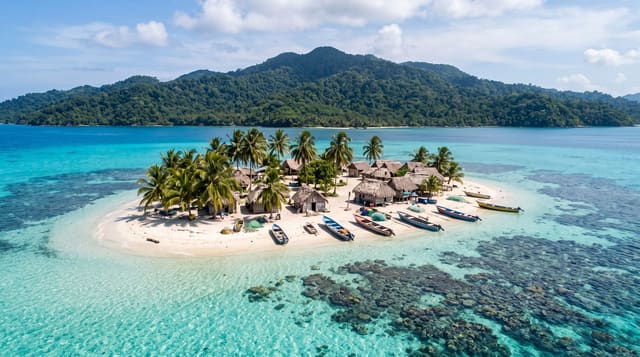
The Gigantes group lies off the northeastern corner of Panay, two main islands and a scatter of smaller ones, and the journey out is long enough that most visitors stay a night. The set piece is Tangke, a saltwater lagoon enclosed by limestone walls that you reach by climbing over the rock from a boat at low tide; at high water the entry is submerged and the boats do not stop. Cabugao Gamay is the picture everyone knows, a narrow island with two curving beaches back to back and a short climb to look down on them. Antonia beach is the swimming stop. The islands run a large scallop fishery and shells are piled everywhere.
History
The group was once called Sabuluag or Salauag, after a tree that grows only here, and took the name Gigantes in the Spanish period from a legend of coffins in Bakwitan Cave holding giant human bones. A lighthouse, one of the original 27 Spanish lighthouses in the Philippines, stood on Gigantes Norte before 1895 until Typhoon Fengshen brought it down in June 2008; Japan donated a solar-powered iron tower in its place (Wikipedia, Gigantes Islands).
Highlights
- Tangke lagoon - a saltwater pool inside limestone walls, entered over rock at low tide only.
- Cabugao Gamay - the twin curving beaches and the short climb to the viewpoint above them.
- Antonia beach - the main swimming and lunch stop on the island-hopping circuit.
- The scallop piles - mounds of discarded shells around the fishing villages on Gigantes Norte.
When to go
March to June is the calmest and the most reliable for the crossing. From July onwards the sea gets rough and boats to Bancal are cancelled for days. The Tangke visit depends entirely on tide, so ask about the tide table before fixing the day. Leave Iloilo City early: the road alone takes about four hours.
Practical notes
This is a long, uncomfortable trip - a half-day of road and a ninety-minute open crossing in a small boat that gets wet. Accommodation on the islands is basic, with limited power hours and no ATMs. Tangke is small and when three boats arrive together it is a queue on the rocks. Fees are charged island by island and add up faster than expected.
Nearby
Concepcion and the northern Iloilo coast, with Sicogon Island nearby.
Key facts
Source: Wikidata, item Q16892764, read on 18 October 2026.
What to pack for Islas de Gigantes
Chosen from what this place is for. Tap a kit for the full checklist.
- Travel rod + reel - A packable multi-piece rod fits in a case and covers most holiday fishing. Find on Amazon
- Reef-safe sunscreen - High SPF that will not bleach the coral you are swimming over. Find on Amazon
- Head torch + spare batteries - Hands-free light is essential; caves are truly dark. Find on Amazon
- A small tackle selection - Hooks, weights, line and a few lures or flies suited to local waters. Find on Amazon
Some links on this page are Amazon affiliate links - if you buy through them we may earn a small commission at no extra cost to you.
All packing kitsPlan your trip
Where to start if Islas de Gigantes is going on the list.
Booking links on this page are affiliate links - if you book through them we may earn a small commission at no extra cost to you. It never changes what we write about a place.
Opening times, ticket prices and seasonal closures change - check the official source before you go: official site.