Presbítero Maestro Cemetery
Lima's first public cemetery, opened in 1808, an outdoor museum of marble mausoleums and Carrara sculpture.
Updated 21 October 2026
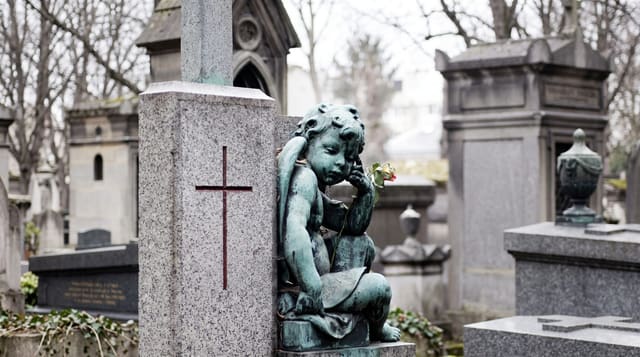
Presbítero Maestro opened in 1808, the first public cemetery in Lima and one of the earliest in the Americas, built when burial inside churches was ended for public health reasons. It holds around seventy thousand graves, including presidents, writers, generals and most of the nineteenth-century Peruvian establishment, and the sculpture is the point - imported Carrara marble angels, mourning figures, allegories and portrait busts by Italian workshops, in an ordered plan of avenues and quadrants. It functions now as a museum of funerary art, with guided routes and occasional night tours. The neighbourhood around it, Barrios Altos, has a difficult reputation, and the standard advice is to arrive by taxi and to visit on an organised tour rather than alone. Restoration has been partial and some sections are in poor repair, with damage from earthquakes and from theft of bronze and marble.
History
The cemetery, the first civil cemetery in America, was inaugurated on 31 May 1808 under Viceroy José Fernando de Abascal and designed by the priest, architect and painter Matías Maestro, at a time when Lima still buried its dead in churches. It holds 766 mausoleums and 92 historical monuments, with works by sculptors such as Damià Campeny, Louis-Ernest Barrias and Ulderico Tenderini, and it took its present name on 17 August 1923 (Wikipedia, Cementerio Presbítero Matías Maestro).
What you'll find
- The sculpture - Carrara marble angels and allegorical figures by Italian workshops.
- The 1808 foundation - the first public cemetery in Lima, and among the first in the Americas.
- The occupants - presidents, writers and generals of the nineteenth century.
- The plan - ordered avenues and quadrants across around seventy thousand graves.
When to go
Year-round. One to two hours on a guided route. Tours run at set times; check the schedule before going.
Practical notes
Barrios Altos has real security problems - arrive by taxi, go on a tour, and do not walk in from the centre. Parts of the cemetery are damaged or closed. Sculpture theft has removed pieces. Not all sections are open to visitors.
Nearby
Barrios Altos and the old centre are west; the Plaza Mayor is about two kilometres away.
Key facts
Source: Wikidata, item Q3776989, read on 18 October 2026.
What to pack for Presbítero Maestro Cemetery
Chosen from what this place is for. Tap a kit for the full checklist.
- Comfortable walking shoes - Sightseeing means kilometres of pavement and cobbles daily. Find on Amazon
- A slim anti-theft daypack - Zips that close properly; keep it in front in crowds and on transit. Find on Amazon
- A refillable water bottle - Many cities have public fountains; save money and plastic. Find on Amazon
- A light layer + compact umbrella - For museum air-con and a sudden shower. Find on Amazon
Some links on this page are Amazon affiliate links - if you buy through them we may earn a small commission at no extra cost to you.
All packing kitsPlan your trip
Where to start if Presbítero Maestro Cemetery is going on the list.
Booking links on this page are affiliate links - if you book through them we may earn a small commission at no extra cost to you. It never changes what we write about a place.
Opening times, ticket prices and seasonal closures change - check the official source before you go: official site.