The Ngäbe-Buglé
Panama's largest indigenous people, with their own comarca across the western highlands, known for the nagua dress and chácara bags.
Updated 21 October 2026
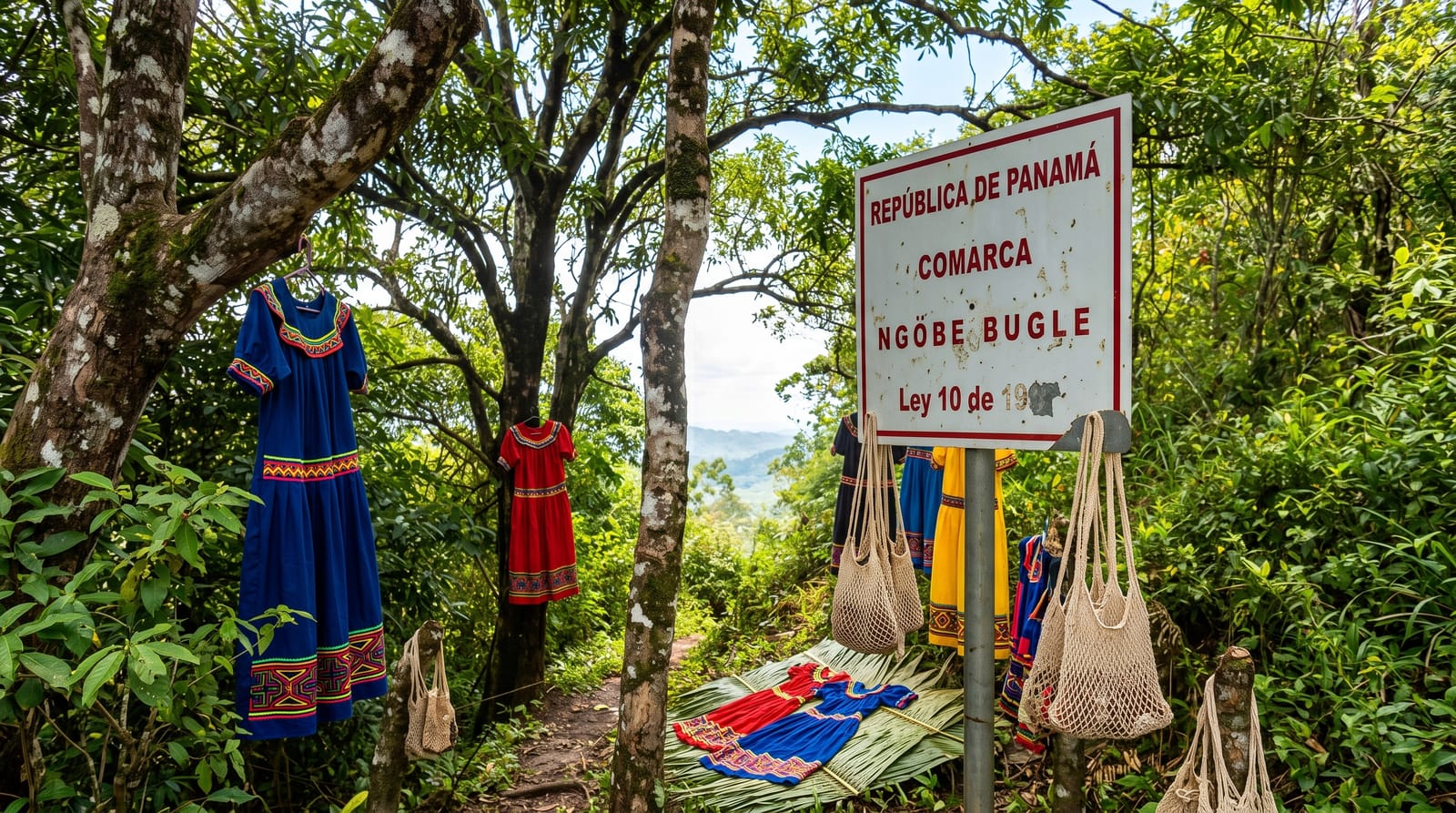
AI illustration
The Ngäbe and Buglé together are the largest indigenous population in Panama, well over two hundred thousand people, with a comarca established in 1997 covering a large block of the western highlands and both coasts. The nagua, the long bright dress with appliquéd geometric borders, is worn widely and is instantly recognisable across western Panama. The chácara, a bag netted from plant fibre and dyed with natural colours, is the other well-known craft, made by women and traded across the country. Communities are scattered and mostly agricultural, and the comarca includes some of the poorest districts in Panama.
History
From 1972 the Panamanian state was required to set up comarcas, regions where indigenous peoples hold the land and run much of their own administration. The Ngäbe-Buglé comarca was created in 1997 from lands of Bocas del Toro, Chiriquí and Veraguas, the largest and most populous of the country's six comarcas, with its capital at Buäbiti, Llano Tugrí in Spanish (Wikipedia, Ngäbe-Buglé Comarca).
What to look for
- The nagua - the long appliquéd dress worn across western Panama.
- Chácara bags - netted from plant fibre and naturally dyed.
- The balsería - a traditional contest of throwing balsa sticks.
- Community craft sales - along the roads through the comarca.
When to go
December to April is the dry season and the roads passable. Visits should be arranged through community organisations rather than turning up. Craft is sold along the roads and at markets in David and Chiriquí Grande.
Good to know
The comarca is not a tourist destination and there is very little infrastructure for visitors; it is a place people live, several of its districts among the poorest in the country. Arriving to photograph people is not welcome. Craft bought directly from makers along the road is worth more to them than anything bought in a city shop.
Nearby
The comarca borders Chiriquí, Bocas del Toro and Veraguas.
Key facts
Source: Wikidata, item Q1129783, read on 18 October 2026.
What to pack for The Ngäbe-Buglé
Chosen from what this place is for. Tap a kit for the full checklist.
- Comfortable walking shoes - Sightseeing means kilometres of pavement and cobbles daily. Find on Amazon
- A slim anti-theft daypack - Zips that close properly; keep it in front in crowds and on transit. Find on Amazon
- A refillable water bottle - Many cities have public fountains; save money and plastic. Find on Amazon
- A light layer + compact umbrella - For museum air-con and a sudden shower. Find on Amazon
Some links on this page are Amazon affiliate links - if you buy through them we may earn a small commission at no extra cost to you.
All packing kitsPlan your trip
Where to start if The Ngäbe-Buglé is going on the list.
Booking links on this page are affiliate links - if you book through them we may earn a small commission at no extra cost to you. It never changes what we write about a place.
Opening times, ticket prices and seasonal closures change - check the official source before you go: official site.