Molas
Layered reverse-appliqué panels sewn by Guna women, worn as blouse fronts and among the most recognisable textiles in the Americas.
Updated 2 September 2026
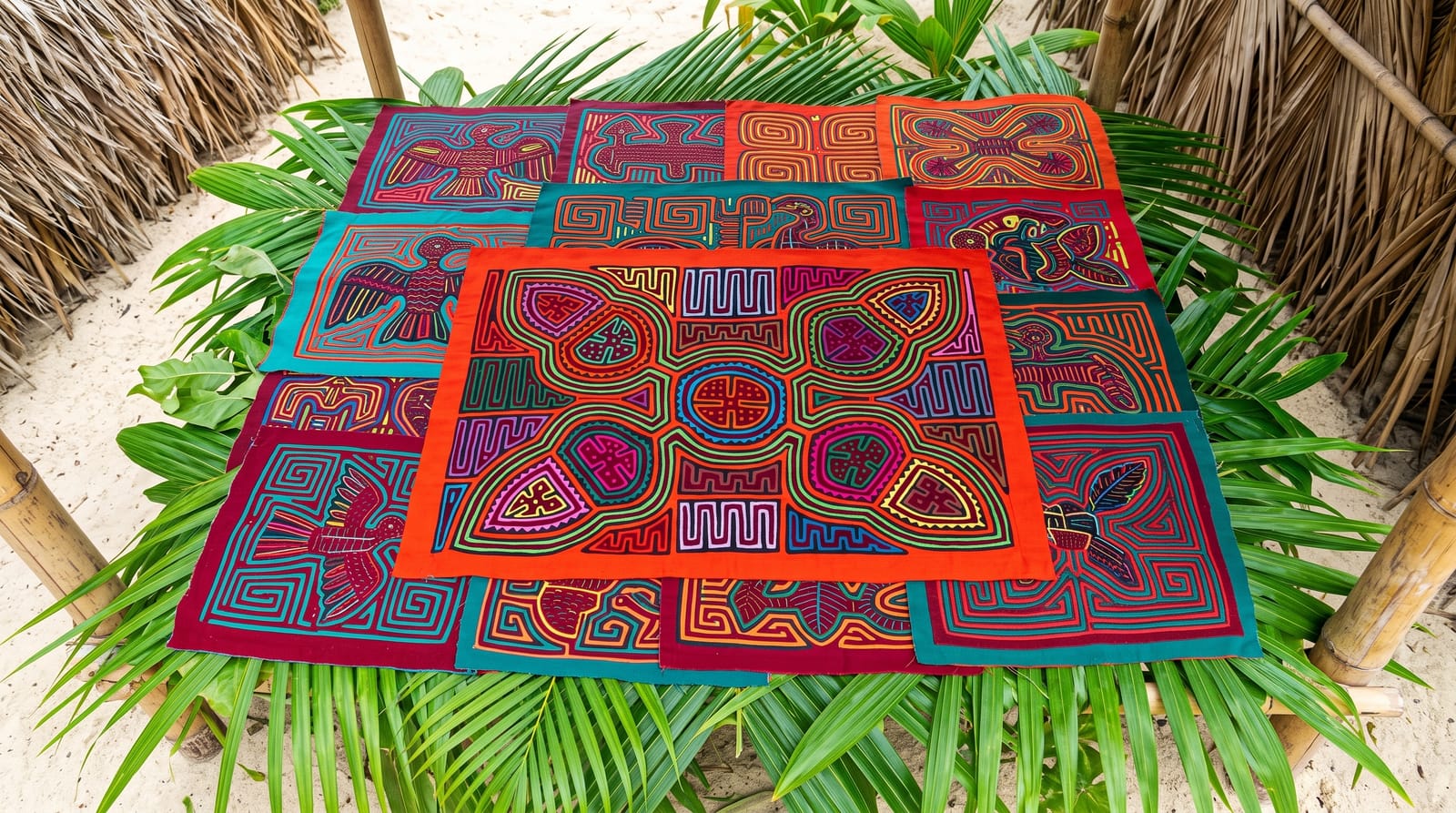
AI illustration
A mola is made by stacking layers of coloured cotton, cutting shapes down through them and stitching the edges under, so the design emerges from the layers rather than being applied on top; a good one has four or five layers and thousands of stitches, and takes weeks. Guna women wear them in pairs as the front and back of a blouse, and the designs run from geometric abstraction descended from body painting to birds, fish, political commentary and, occasionally, whatever caught the maker's eye off a packet or a poster. They are sold in Guna Yala, and by Guna women who sell in Panama City wearing the full dress.
What you'll find
- The layering - four or five colours cut down through and stitched under.
- Geometric designs - descended from the older body-painting tradition.
- The full Guna dress - mola blouse, wini beadwork and gold nose ring.
- Guna sellers in Panama City - in Casco Viejo and the craft markets.
When to go
Year-round. Buying in Guna Yala from the maker is best, both for price and for authenticity; the Guna sellers in Panama City are also selling their own work. Craft market stalls run by others are a different proposition.
Good to know
A great deal of what is sold as mola is machine-stitched, single-layer or made outside the community entirely; genuine work is hand-stitched throughout, with tiny even stitches visible on the reverse, and costs accordingly. Guna Yala has its own rules on photography and visitors are charged for photographing people. Buying directly supports the makers.
Nearby
Guna Yala is the source; Casco Viejo has Guna sellers.
What to pack for Molas
Chosen from what this place is for. Tap a kit for the full checklist.
- Comfortable walking shoes - Sightseeing means kilometres of pavement and cobbles daily. Find on Amazon
- A slim anti-theft daypack - Zips that close properly; keep it in front in crowds and on transit. Find on Amazon
- A refillable water bottle - Many cities have public fountains; save money and plastic. Find on Amazon
- A light layer + compact umbrella - For museum air-con and a sudden shower. Find on Amazon
Some links on this page are Amazon affiliate links - if you buy through them we may earn a small commission at no extra cost to you.
All packing kitsPlan your trip
Where to start if Molas is going on the list.
Booking links on this page are affiliate links - if you book through them we may earn a small commission at no extra cost to you. It never changes what we write about a place.
Opening times, ticket prices and seasonal closures change - check the official source before you go: official site.