Ringebu Stave Church
A stave church above the Gudbrandsdal valley, recognisable by the bright red tower added in the seventeenth century.
Updated 21 October 2026
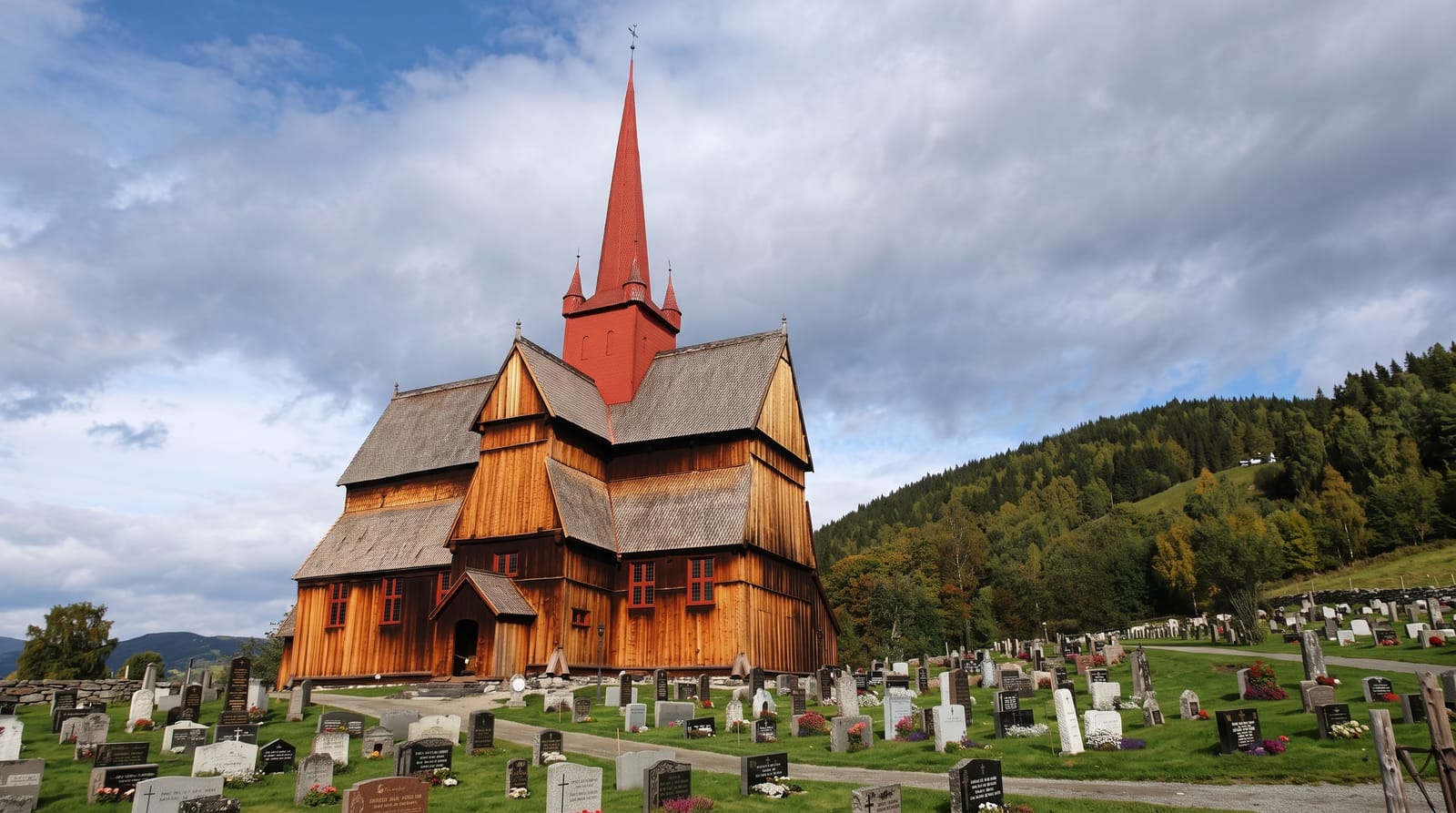
AI illustration
Ringebu stave church was built around 1220 and stands on a slope above the Gudbrandsdal valley, and what makes it instantly recognisable is not medieval at all: a tall red-painted tower with a spire was added around 1630 when the church was rebuilt into a cross plan, and the colour against the dark tarred timber has become its signature. Inside, the medieval staves and portals survive alongside seventeenth-century furnishing, and a wooden figure of Saint Lawrence from around 1250 is displayed. Excavations under the floor found graves and traces of an earlier church. The building is still in parish use, and the surrounding grounds include a large graveyard and a view down the valley.
History
The earliest written record of the church dates from 1270, but tree rings show its logs were cut in the 1190s, and post holes found in the 1980-1981 survey support the tradition of an older church on the site, along with about 900 coins, mostly from 1217-1263. Around 1630 the master builder Werner Olsen added transepts and a central tower, and a restoration by Ragnvald Einbu in 1921 brought back the interior's original colouring (Wikipedia, Ringebu Stave Church).
What to look for
- The red tower - an addition of around 1630 that defines the church's appearance.
- The medieval portals - carved twelfth and thirteenth-century doorways.
- The Saint Lawrence figure - a wooden statue of about 1250.
- The valley view - Gudbrandsdalen spread below the churchyard.
When to go
May to September for the interior, with services and weddings closing it periodically; the exterior and graveyard are open year-round. The E6 and the railway both pass through Ringebu.
Practical notes
Opening is seasonal and hours are limited. The most striking feature is a seventeenth-century addition rather than medieval work. The church is a short but steep walk or drive above the village.
Nearby
Ringebu village and the Gudbrandsdal valley are below; Rondane and Lillehammer lie north and south.
Key facts
Source: Wikidata, item Q2030772, read on 18 October 2026.
What to pack for Ringebu Stave Church
Chosen from what this place is for. Tap a kit for the full checklist.
- Comfortable walking shoes - Sightseeing means kilometres of pavement and cobbles daily. Find on Amazon
- A slim anti-theft daypack - Zips that close properly; keep it in front in crowds and on transit. Find on Amazon
- A refillable water bottle - Many cities have public fountains; save money and plastic. Find on Amazon
- A light layer + compact umbrella - For museum air-con and a sudden shower. Find on Amazon
Some links on this page are Amazon affiliate links - if you buy through them we may earn a small commission at no extra cost to you.
All packing kitsPlan your trip
Where to start if Ringebu Stave Church is going on the list.
Booking links on this page are affiliate links - if you book through them we may earn a small commission at no extra cost to you. It never changes what we write about a place.
Opening times, ticket prices and seasonal closures change - check the official source before you go: official site.


