Henningsvaer
A fishing village spread over islets south of Austvagoya, known for a football pitch surrounded by sea and drying racks.
Updated 4 September 2026
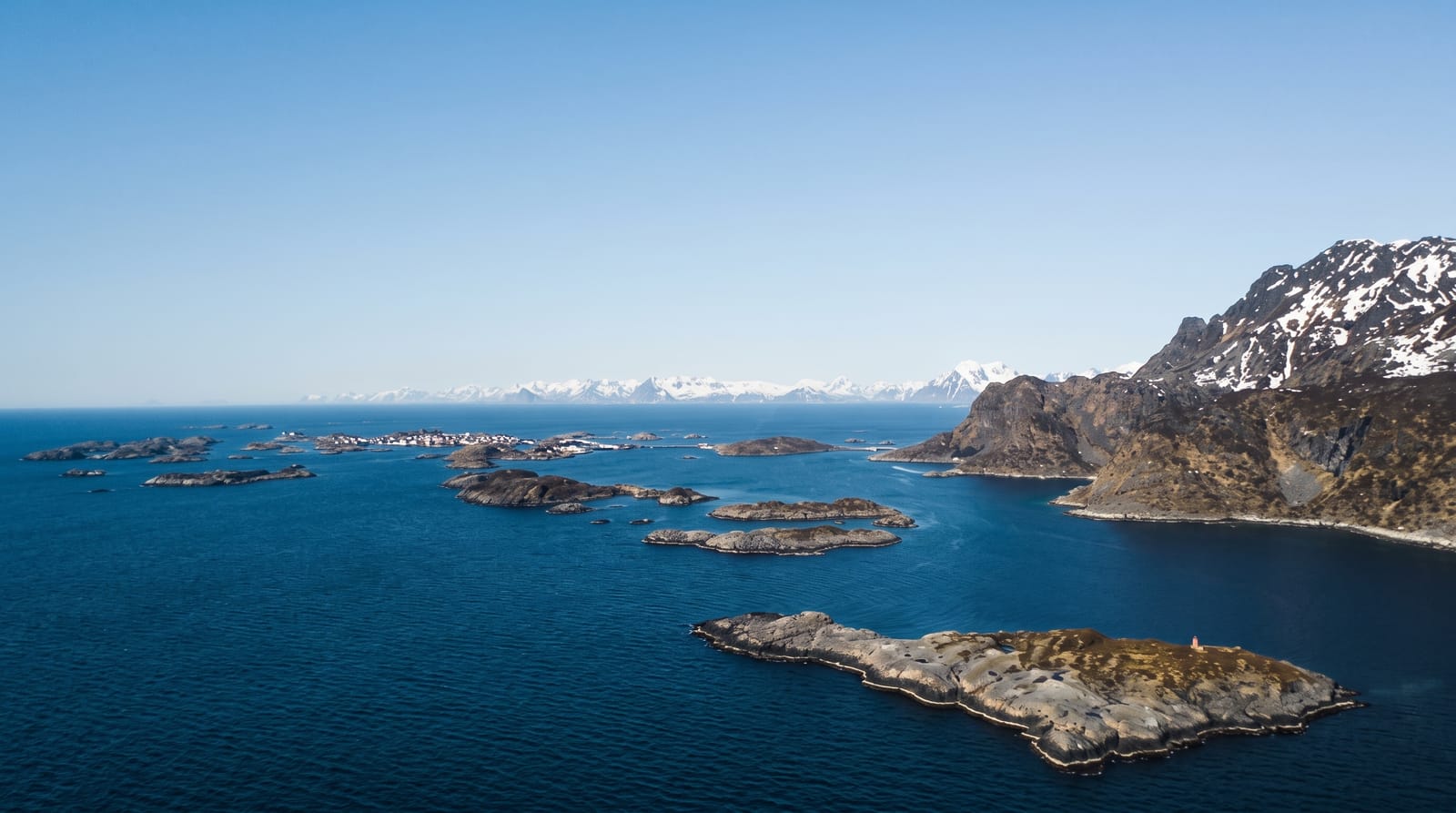
AI illustration
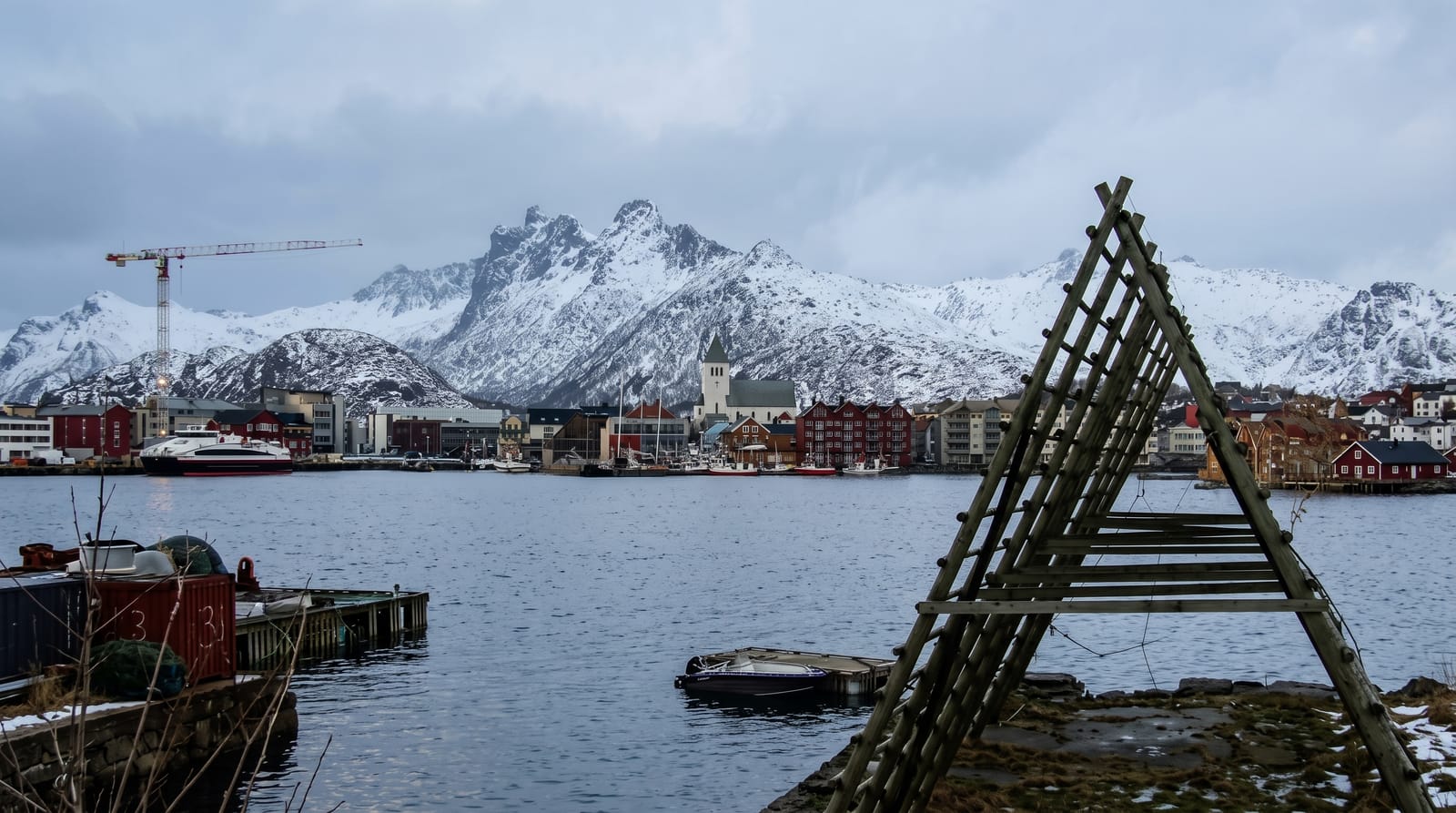
Henningsvaer is built across several small islands connected by bridges, and it is the liveliest of the Lofoten villages: a working fishing harbour with cod drying racks filling every flat surface in spring, alongside galleries, cafes, a climbing scene drawn by the granite walls of Vagakallen behind, and a photography gallery in a former cod liver oil factory. The football pitch on the outer rock, surrounded on all sides by sea and drying racks with no room for stands, became internationally known through aerial photographs. The two narrow bridges in were built in the 1980s; before that the village was reached only by boat. Parking is severely limited and the lanes are tight.
What's there
- The football pitch - a full-size ground on bare rock ringed by sea.
- The drying racks - cod hanging across the village from February to May.
- The working harbour - fishing boats and processing buildings in use.
- The galleries - art and photography spaces in converted industrial buildings.
When to go
May to September for the fullest life and open galleries; February to May for the fishing season and the racks at their fullest. Winter is quiet and dark but the aurora appears over the harbour.
Before you go
Parking is genuinely difficult and the narrow bridges and lanes are unsuited to large vehicles. The village is crowded in summer. The football pitch is a working ground, not a viewpoint, and the famous images are taken from the air or from the hill above.
Nearby
Svolvaer and Kabelvaag are northeast; Vagakallen and the Lofoten climbing crags rise behind.
Key facts
Source: Wikidata, item Q1605649, read on 18 October 2026.
What to pack for Henningsvaer
Chosen from what this place is for. Tap a kit for the full checklist.
- Travel rod + reel - A packable multi-piece rod fits in a case and covers most holiday fishing. Find on Amazon
- Spare batteries + cards - Cold and long shoots drain power; never run out at the good light. Find on Amazon
- Comfortable walking shoes - Sightseeing means kilometres of pavement and cobbles daily. Find on Amazon
- A small tackle selection - Hooks, weights, line and a few lures or flies suited to local waters. Find on Amazon
Some links on this page are Amazon affiliate links - if you buy through them we may earn a small commission at no extra cost to you.
All packing kitsPlan your trip
Where to start if Henningsvaer is going on the list.
Booking links on this page are affiliate links - if you book through them we may earn a small commission at no extra cost to you. It never changes what we write about a place.
Opening times, ticket prices and seasonal closures change - check the official source before you go: official site.