Balestrand
A Sognefjord village of dragon-style timber villas that became an artists' colony and a stop for European royalty.
Updated 4 September 2026
AI illustration
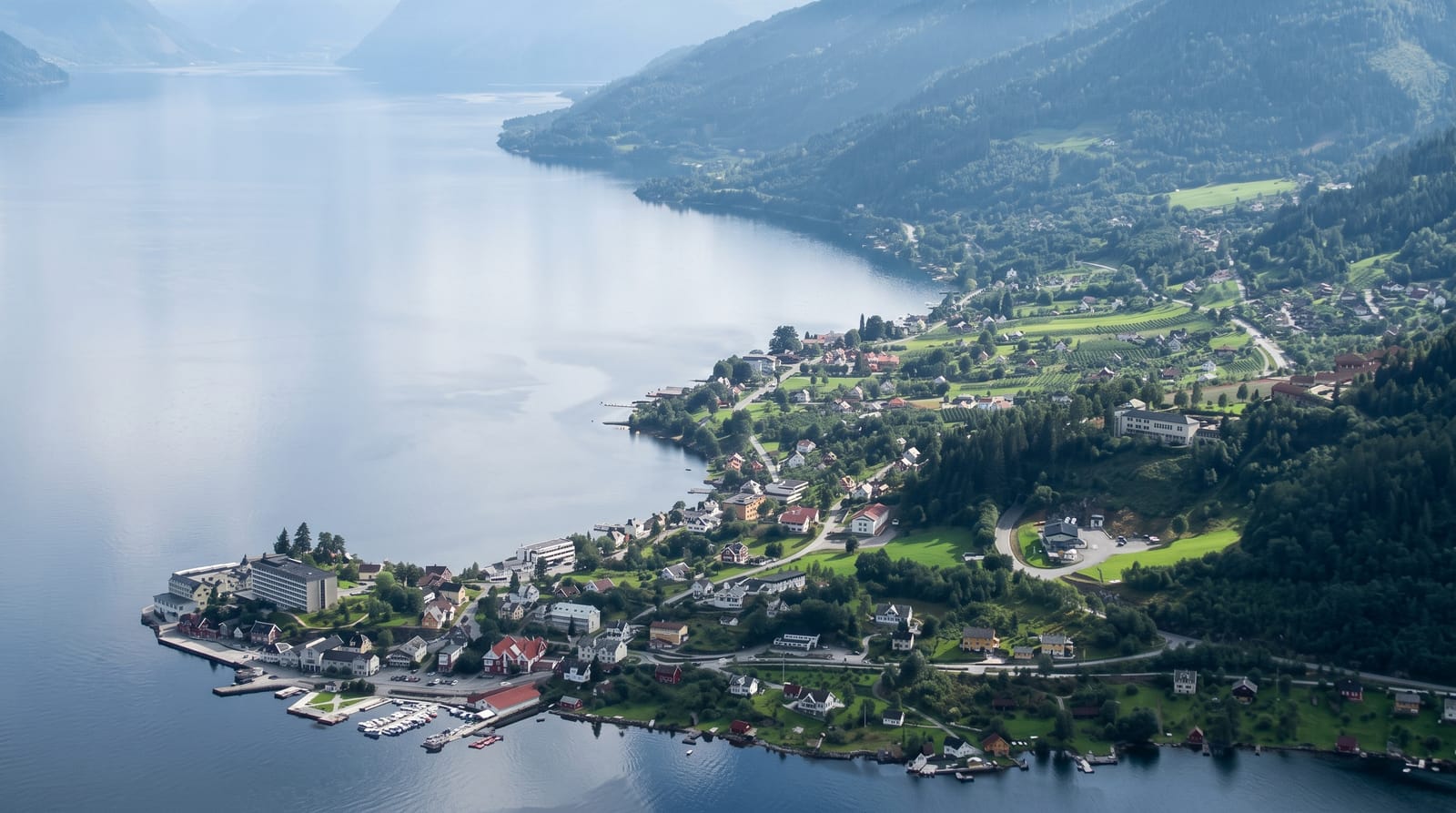
Balestrand became fashionable in the late nineteenth century when landscape painters settled here and the fjord tourism boom brought steamers, and the buildings from that period define it: timber villas in the dragestil, the dragon style, a national romantic idiom that borrowed carved beasts and steep roofs from stave churches, along with the Kviknes Hotel, a huge wooden building of 1877 still run by the same family. Kaiser Wilhelm II came here summer after summer before the First World War and paid for two statues of Norse figures on the shore. Saint Olaf's church, a small English-style timber church of 1897, was built for the British visitors. The village faces the fjord with mountains behind and is reached mainly by boat.
The main sights
- The dragon-style villas - carved timber houses in the national romantic idiom.
- Kviknes Hotel - an 1877 wooden hotel still in family hands.
- Saint Olaf's church - a small English-style timber church of 1897.
- The Norse statues - shore monuments paid for by Kaiser Wilhelm II.
When to go
May to September, when the express boats and ferries run their full schedule and the hotel and museums are open; the village is very quiet in winter with limited transport and most places shut.
Practical notes
Balestrand is small and can be walked in an hour, and outside the historic buildings there is little to do. Ferry and express boat timetables constrain visits. Accommodation is limited and the main hotel is expensive.
Nearby
Fjaerland and its bookshops lie north; Vik, Hopperstad and the Sognefjord ferries are across the water.
Key facts
Source: Wikidata, item Q493292, read on 18 October 2026.
What to pack for Balestrand
Chosen from what this place is for. Tap a kit for the full checklist.
- Comfortable walking shoes - Sightseeing means kilometres of pavement and cobbles daily. Find on Amazon
- A slim anti-theft daypack - Zips that close properly; keep it in front in crowds and on transit. Find on Amazon
- A refillable water bottle - Many cities have public fountains; save money and plastic. Find on Amazon
- A light layer + compact umbrella - For museum air-con and a sudden shower. Find on Amazon
Some links on this page are Amazon affiliate links - if you buy through them we may earn a small commission at no extra cost to you.
All packing kitsPlan your trip
Where to start if Balestrand is going on the list.
Booking links on this page are affiliate links - if you book through them we may earn a small commission at no extra cost to you. It never changes what we write about a place.
Opening times, ticket prices and seasonal closures change - check the official source before you go: official site.