Austerdalsbreen
A remote glacier arm above Veitastrond, described by a Victorian mountaineer as the finest ice scenery in Europe.
Updated 4 September 2026
AI illustration
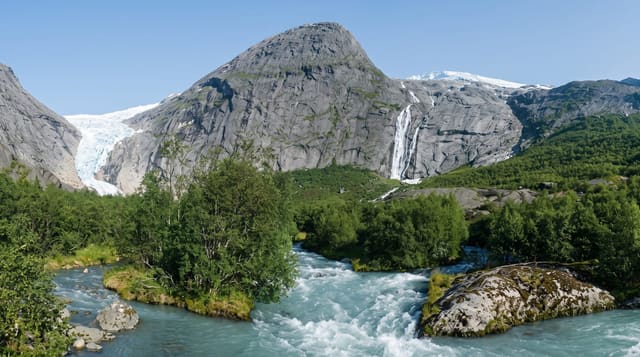
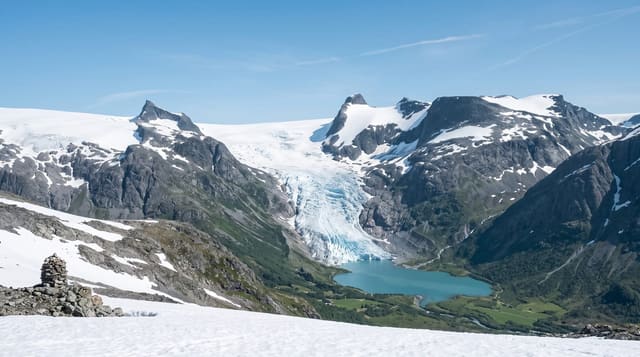
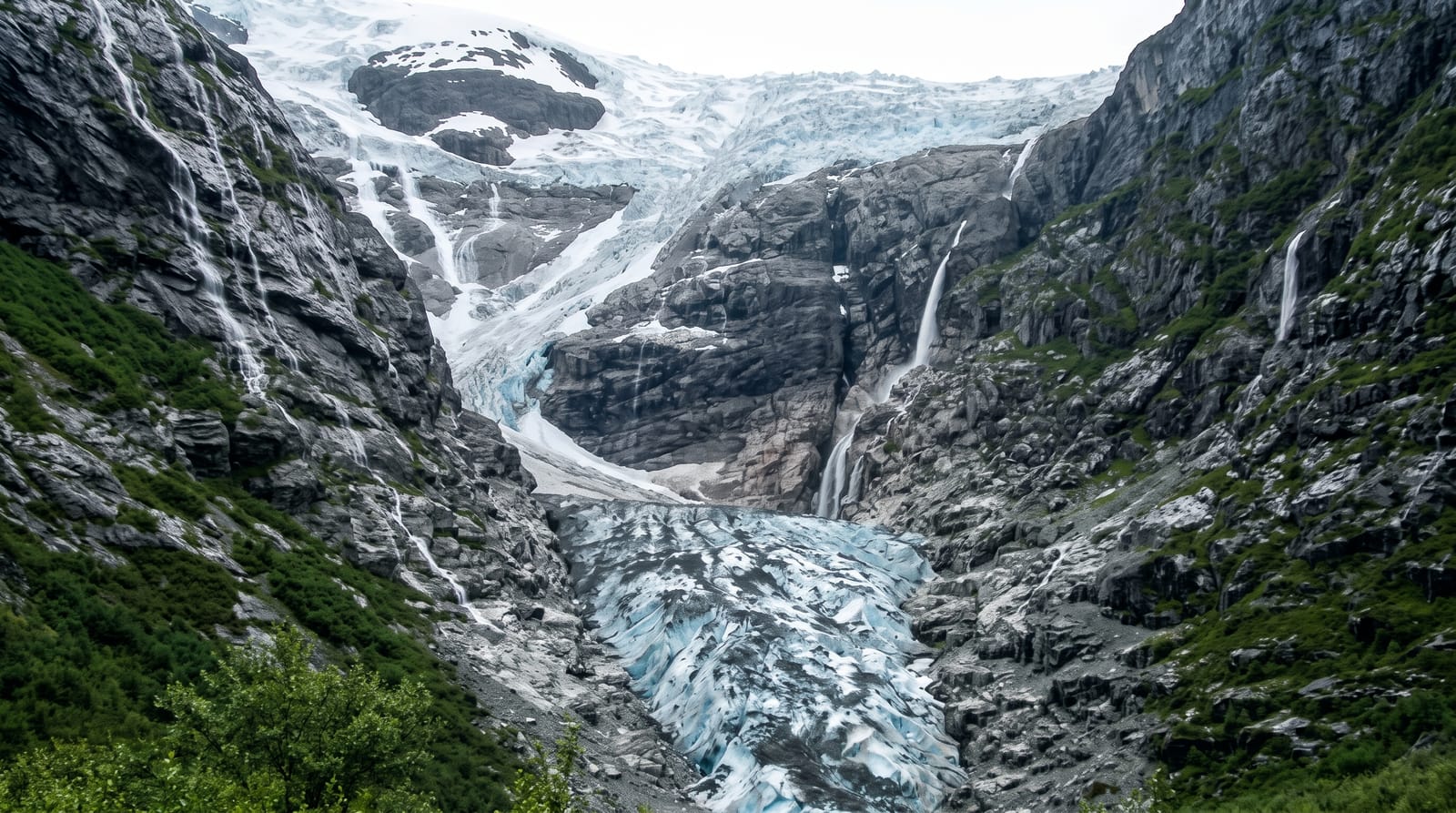
Austerdalsbreen descends from Jostedalsbreen into a steep valley above the lake at Veitastrond, and three icefalls pour into it from the plateau above, named Odin, Thor and Loki. William Cecil Slingsby, the English climber who did much to open Norwegian mountaineering, called the scene the finest ice view in Europe, and the combination of three icefalls in one amphitheatre still justifies the attention. Reaching it takes commitment: a long drive up a narrow valley road, then a walk of two to three hours over moraine and boulder from the trailhead. Guided glacier walks operate onto the ice in summer with equipment provided. The Tungestolen tourist cabin, rebuilt after a storm destroyed it in 2011, sits at the valley mouth.
The landscape
- The three icefalls - Odin, Thor and Loki pouring from the plateau.
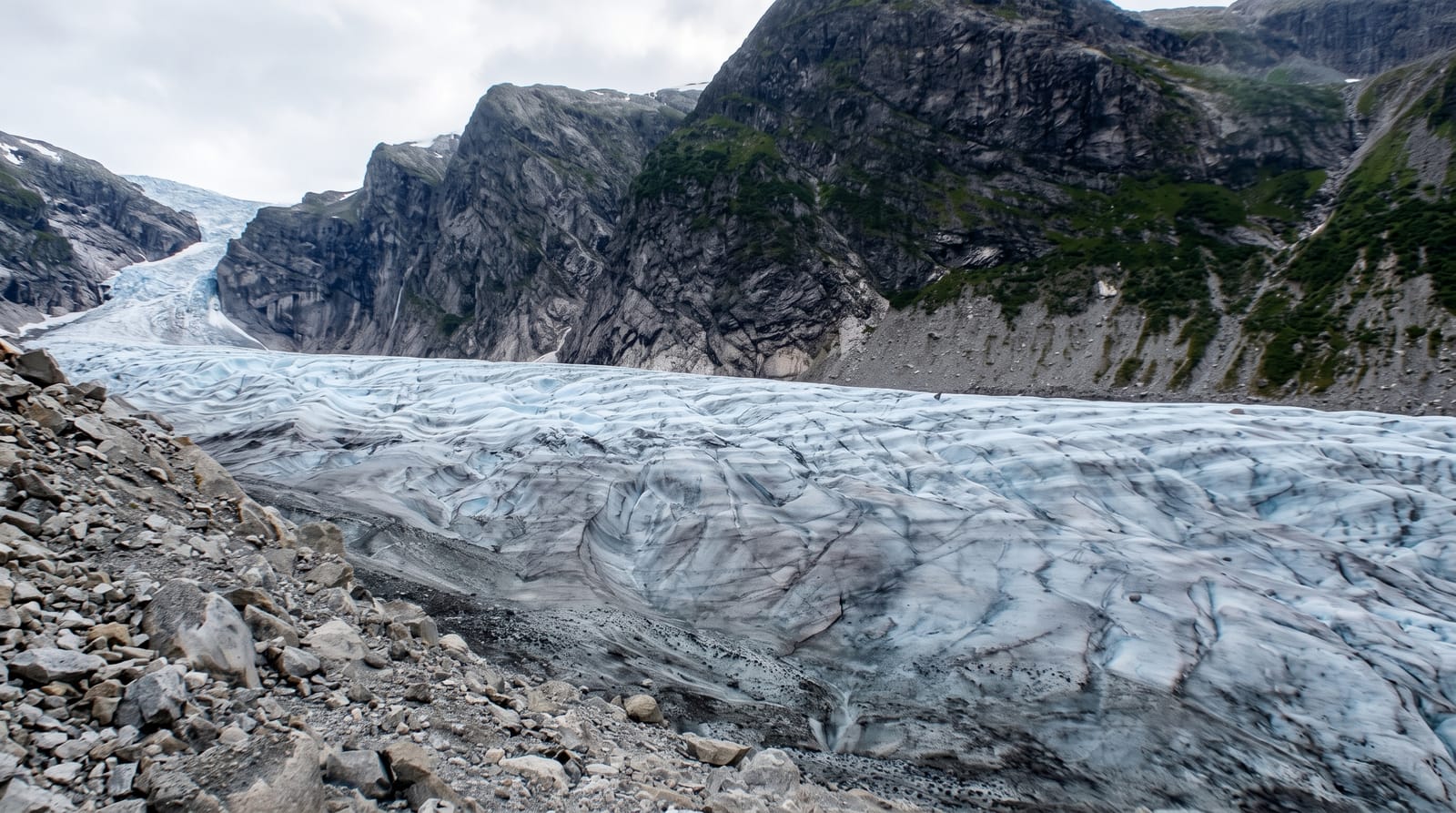
- The glacier tongue - the ice arm filling the head of the valley.
- The moraine walk - the approach over rock left by the retreating ice.
- Tungestolen cabin - a modern rebuilt lodge at the valley entrance.
When to go
July to September, when the approach is snow-free and guided walks run; earlier in summer the trail can still hold snow. Weather in this valley changes fast and rain is frequent.
Things to know
The approach is long, rough and unmarked in places, over loose moraine, and it is not a casual outing. Going onto the ice without a guide and equipment is dangerous and strongly discouraged. The access road to Veitastrond is narrow with passing places and prone to rockfall.
Nearby
Veitastrond and its lake lie below; Nigardsbreen and the Jostedalen valley are over the ridge.
Key facts
Source: Wikidata, item Q1783496, read on 18 October 2026.
What to pack for Austerdalsbreen
Chosen from what this place is for. Tap a kit for the full checklist.
- Broken-in walking shoes or boots - Grip and ankle support matter more than looks; never hike in brand-new boots. Find on Amazon
- Warm base layers - Merino or synthetic against the skin - never cotton, which chills when damp. Find on Amazon
- Layers + a waterproof shell - Mountain weather turns fast; a packable rain jacket saves the day. Find on Amazon
- An insulated + windproof jacket - A down or synthetic layer under a hard shell handles most cold. Find on Amazon
Some links on this page are Amazon affiliate links - if you buy through them we may earn a small commission at no extra cost to you.
All packing kitsPlan your trip
Where to start if Austerdalsbreen is going on the list.
Booking links on this page are affiliate links - if you book through them we may earn a small commission at no extra cost to you. It never changes what we write about a place.
Opening times, ticket prices and seasonal closures change - check the official source before you go: official site.