Arctic Circle Centre
The point where the E6 crosses the polar circle on the Saltfjellet plateau, marked by a centre and a line of cairns.
Updated 18 October 2026
AI illustration
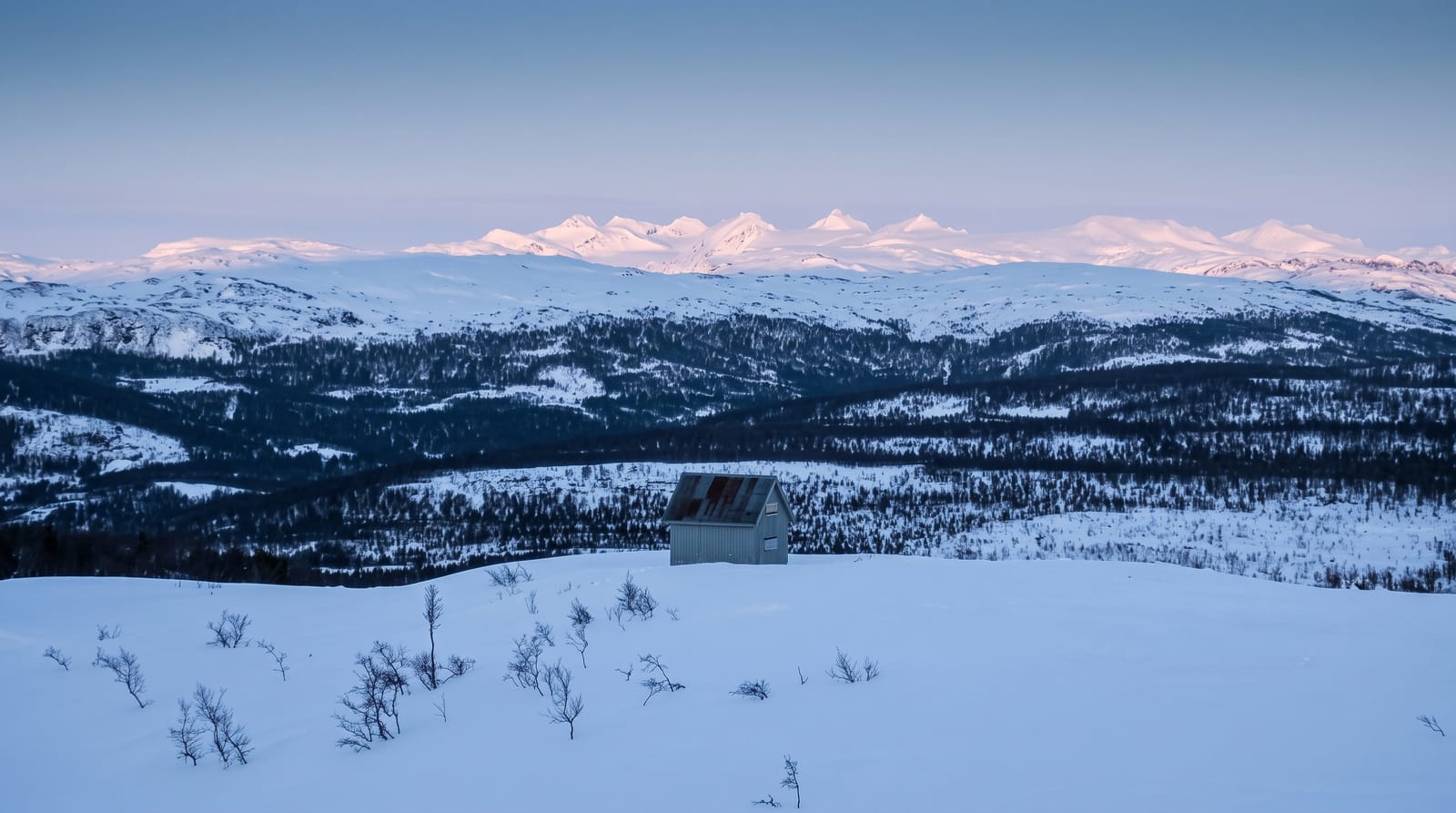
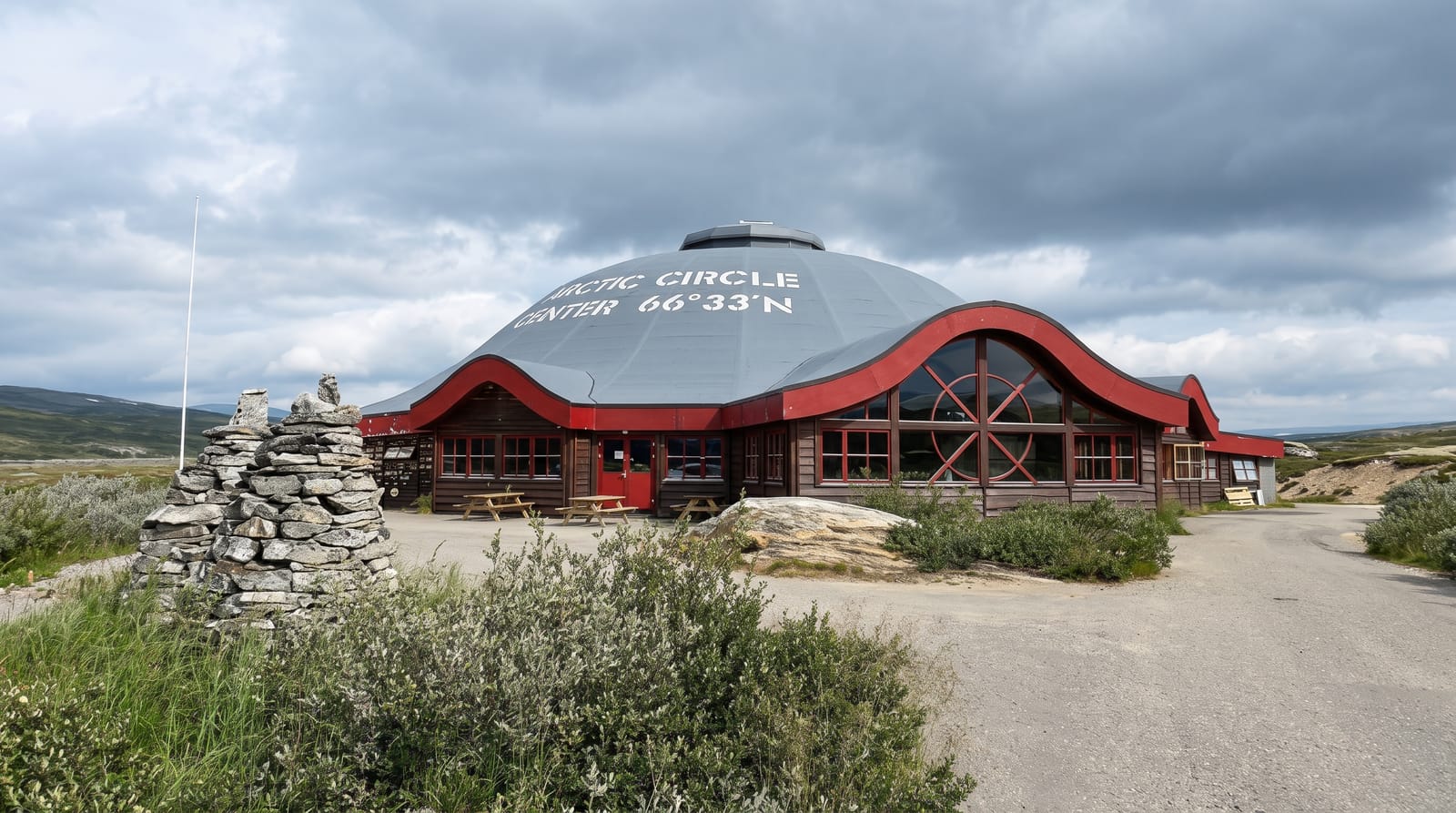
The Arctic Circle runs at about 66 degrees 33 minutes north, the latitude above which the sun does not set at midsummer or rise at midwinter, and the E6 crosses it on the bare Saltfjellet plateau at around 680 metres. A visitor centre, Polarsirkelsenteret, was built there in 1990 with a shop, cafe, exhibition and the standard certificate for crossing, and stone cairns mark the line across the tundra outside. The setting is the point as much as the latitude: a treeless plateau of rock, bog and snow patches with mountains on both sides, often bleak even in July. The circle itself moves slightly year by year with the Earth's axial tilt, so the marked line is approximate.
History
The centre opened on 13 July 1990, on the same day as the new E6 road over Saltfjellet, in a 1,300-square-metre building designed to sit low in the landscape; a marble path through it marks the circle, and it now draws about 160,000 visitors a year. The line on the floor is already out of date: in the summer of 2009 the true Arctic Circle lay 1,039 metres further north, and it moves on by about 14.25 metres a year. Around the centre stand Russian and Yugoslav war memorials from the Second World War, and the post office stamps cards with its own Arctic Circle postmark (Norwegian Wikipedia, Polarsirkelsenteret).
The main sights
- The marked line - cairns and a monument across the plateau.
- The visitor centre - shop, cafe and exhibition at the crossing point.
- The Saltfjellet plateau - bare treeless high ground on both sides.
- The certificate - the traditional souvenir of crossing the circle.
When to go
June to September, when the centre is open and the road reliably clear; the E6 stays open in winter but the centre closes and conditions on the plateau can be severe. The midnight sun is visible from here around midsummer.
What to expect
The centre is a commercial stop with a large souvenir shop, and some visitors find it tacky. The plateau is exposed and cold, with snow lying into summer. The circle's position shifts slightly over time, so the marker is symbolic.
Nearby
Saltfjellet-Svartisen National Park surrounds the plateau; Mo i Rana and Fauske lie south and north.
What to pack for Arctic Circle Centre
Chosen from what this place is for. Tap a kit for the full checklist.
- Spare batteries + cards - Cold and long shoots drain power; never run out at the good light. Find on Amazon
- Warm base layers - Merino or synthetic against the skin - never cotton, which chills when damp. Find on Amazon
- Comfortable walking shoes - Sightseeing means kilometres of pavement and cobbles daily. Find on Amazon
- A compact tripod - Essential for night skies, aurora, waterfalls and low light. Find on Amazon
Some links on this page are Amazon affiliate links - if you buy through them we may earn a small commission at no extra cost to you.
All packing kitsPlan your trip
Where to start if Arctic Circle Centre is going on the list.
Booking links on this page are affiliate links - if you book through them we may earn a small commission at no extra cost to you. It never changes what we write about a place.
Opening times, ticket prices and seasonal closures change - check the official source before you go: official site.