Alkefjellet
Black dolerite cliffs on Svalbard's Hinlopen Strait packed with around sixty thousand pairs of nesting guillemots.
Updated 4 September 2026

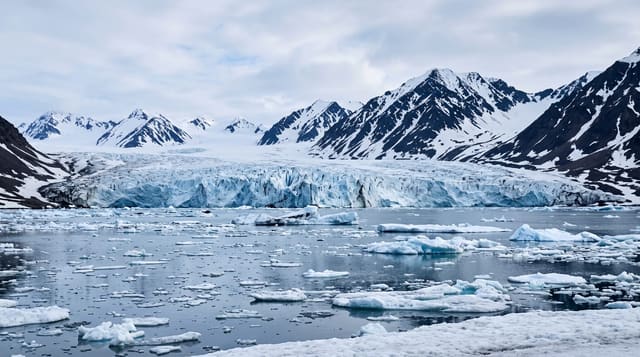
AI illustration
Alkefjellet is a wall of dark dolerite rising a hundred metres or so from the Hinlopen Strait, its columnar structure forming thousands of narrow ledges, and on those ledges nest around sixty thousand breeding pairs of Brunnich's guillemot, one of the largest colonies in Svalbard. The noise and smell at close range are considerable, and the air is thick with birds moving between the cliff and the sea. Arctic foxes work the base for fallen chicks and eggs, and glaucous gulls patrol above. Zodiacs from expedition ships run along the foot of the cliff, which is the only practical way to see it. The colony is at its most active in July when chicks are being fed.
Highlights
- The guillemot colony - tens of thousands of pairs on the cliff ledges.
- The dolerite columns - dark columnar rock forming the nesting structure.
- The Arctic foxes - foxes hunting at the base of the cliffs.
- The zodiac passage - small boats running along the cliff foot.
When to go
June to August, the breeding season and the only period ships operate; July is the peak for activity. Ice conditions in the Hinlopen Strait determine whether ships can reach it at all in a given year.
Practical notes
Access is by expedition cruise only, at significant cost, and the Hinlopen Strait is frequently blocked by ice, so the landing is never guaranteed. Zodiac cruising is cold and wet. The site is a wildlife spectacle rather than a place to walk.
Nearby
The Hinlopen Strait separates Spitsbergen from Nordaustlandet; Longyearbyen is the voyage base.
Key facts
Source: Wikidata, item Q11794228, read on 18 October 2026.
What to pack for Alkefjellet
Chosen from what this place is for. Tap a kit for the full checklist.
- Broken-in walking shoes or boots - Grip and ankle support matter more than looks; never hike in brand-new boots. Find on Amazon
- Binoculars - The single best wildlife tool - even a compact pair transforms a sighting. Find on Amazon
- Warm base layers - Merino or synthetic against the skin - never cotton, which chills when damp. Find on Amazon
- Shelter suited to the place - Tent, tarp or hut booking - match it to the terrain and rules. Find on Amazon
Some links on this page are Amazon affiliate links - if you buy through them we may earn a small commission at no extra cost to you.
All packing kitsPlan your trip
Where to start if Alkefjellet is going on the list.
Booking links on this page are affiliate links - if you book through them we may earn a small commission at no extra cost to you. It never changes what we write about a place.
Opening times, ticket prices and seasonal closures change - check the official source before you go: official site.