Lake Ohrid
One of the oldest and deepest lakes on earth - an ancient, crystal-clear lake of astonishing biodiversity shared with Albania, a UNESCO natural wonder ringed by mountains, beaches, monasteries and endemic life.
Updated 18 October 2026
AI illustration
UNESCO World Heritage
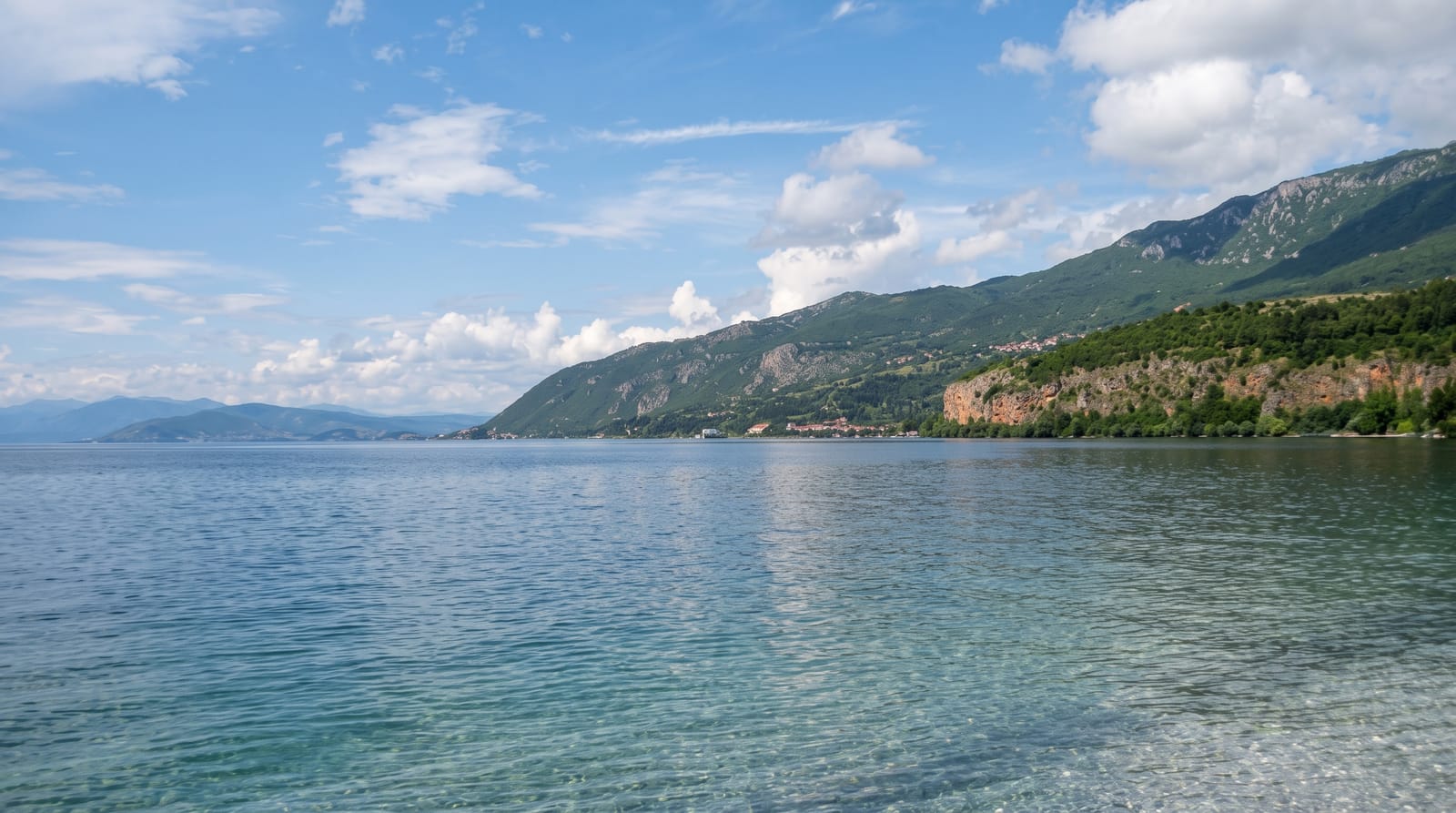
Lake Ohrid, shared between North Macedonia and Albania, is one of the oldest and deepest lakes in the world, formed some three million years ago and plunging nearly 300 metres. This extraordinary age has made it a living museum of biodiversity, home to hundreds of endemic species found nowhere else, including the prized Ohrid trout, earning it UNESCO World Heritage status for both nature and culture. Ringed by mountains, its clear blue waters offer swimming from pebbly beaches, boat trips to the lovely clifftop Sveti Naum monastery, and lakeside relaxation.
History
Lake Ohrid lies in a chain of tectonic basins that opened when the central Balkans began to stretch some 6 million years ago, and its oldest sediments, of the Pliocene, may be 3 to 5 million years old, which puts it among the world's ancient rift lakes with Baikal and Tanganyika; it survives because of its great depth, continuing subsidence and inflow mostly from underground channels from Lake Prespa that carry little sediment, and earthquakes are frequent, the strongest measured, of magnitude 6.6, on 18 February 1911. The North Macedonian side became a World Heritage Site in 1979, extended to the cultural and historic area of Ohrid in 1980, the Albanian side followed in 2019, the Ohrid-Prespa transboundary biosphere reserve was created in 2014, and in 2021 the North Macedonian part became a Ramsar site; in 2010 NASA named a lake on Titan after it (Wikipedia, Lake Ohrid).
What you'll find
- The clear blue water - the swimming and boating on the ancient lake.
- Sveti Naum Monastery - the lovely monastery near the Albanian border.
- The endemic wildlife - the Ohrid trout and unique lake species.
- The lakeside beaches - the pebbly shores and resorts.
When to go
June to September, the warm summer season, for lake swimming, boat trips and lakeside relaxation, with the water warmest in high summer; the shoulder months are quieter and pleasant. The lake and the Sveti Naum monastery are beautiful year-round, though the swimming season is limited to summer.
Good to know
The Macedonian shore around Ohrid town is the most developed, so those seeking quieter, wilder stretches should explore toward Sveti Naum or the Albanian side; the endemic Ohrid trout is under pressure and eating it is discouraged for conservation. The lake's astonishing age, clarity and biodiversity, its beaches and its lovely monastery, though, make it a genuine natural and cultural treasure.
Nearby
Ohrid town, the Galicica mountains and Albania's Pogradec are around the shore.
Key facts
Source: Wikidata, item Q156258, read on 18 October 2026.
What to pack for Lake Ohrid
Chosen from what this place is for. Tap a kit for the full checklist.
- Reef-safe sunscreen - High SPF that will not bleach the coral you are swimming over. Find on Amazon
- Head torch + spare batteries - Hands-free light is essential; caves are truly dark. Find on Amazon
- Binoculars - The single best wildlife tool - even a compact pair transforms a sighting. Find on Amazon
- Modest clothing - Shoulders and knees covered - the single most common requirement. Find on Amazon
Some links on this page are Amazon affiliate links - if you buy through them we may earn a small commission at no extra cost to you.
All packing kitsPlan your trip
Where to start if Lake Ohrid is going on the list.
Booking links on this page are affiliate links - if you book through them we may earn a small commission at no extra cost to you. It never changes what we write about a place.
Opening times, ticket prices and seasonal closures change - check the official source before you go: official site.