Split Apple Rock
A granite boulder cleaved cleanly in two, sitting in shallow water off a Tasman Bay beach.
Updated 29 October 2026
AI illustration
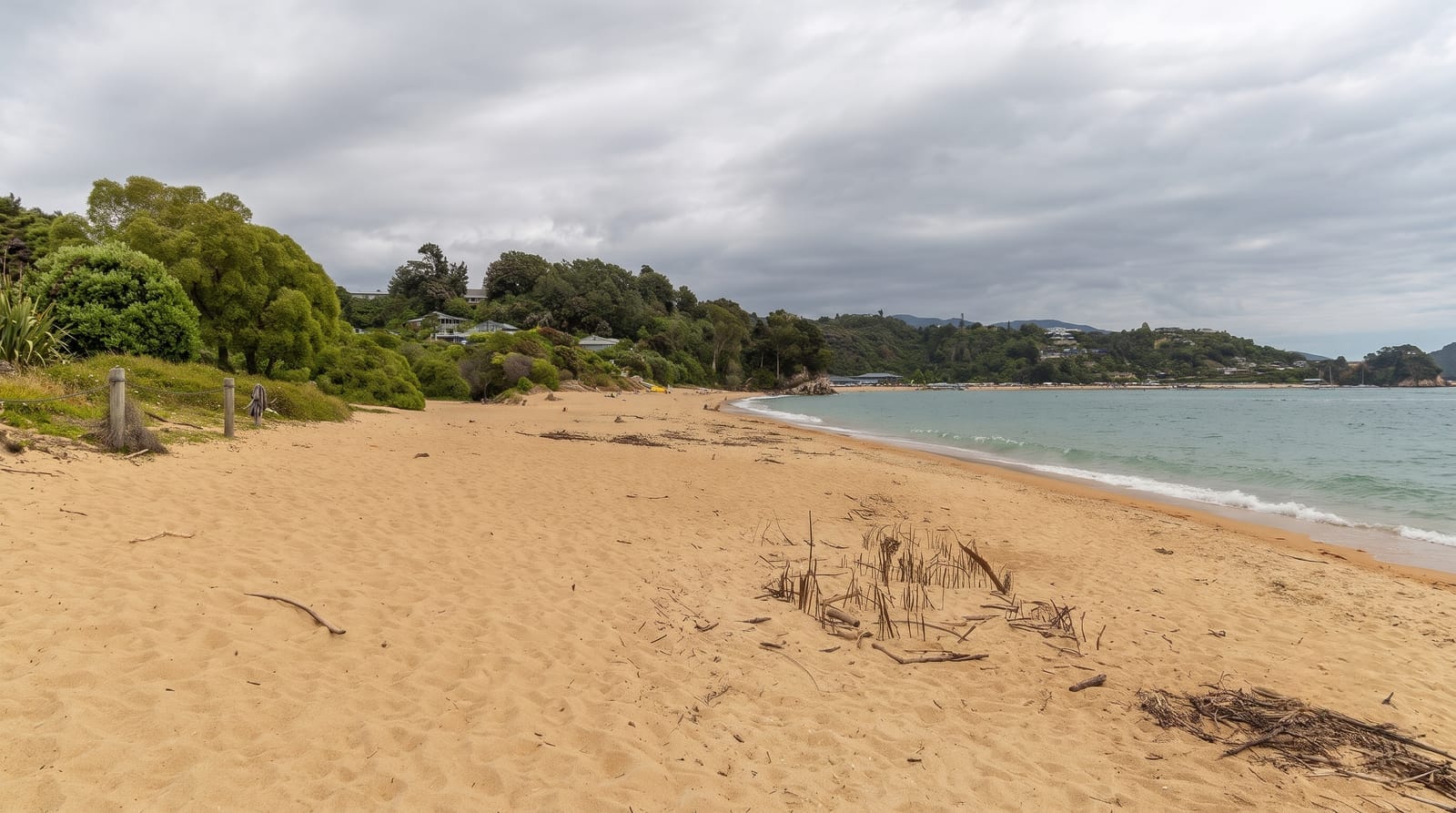
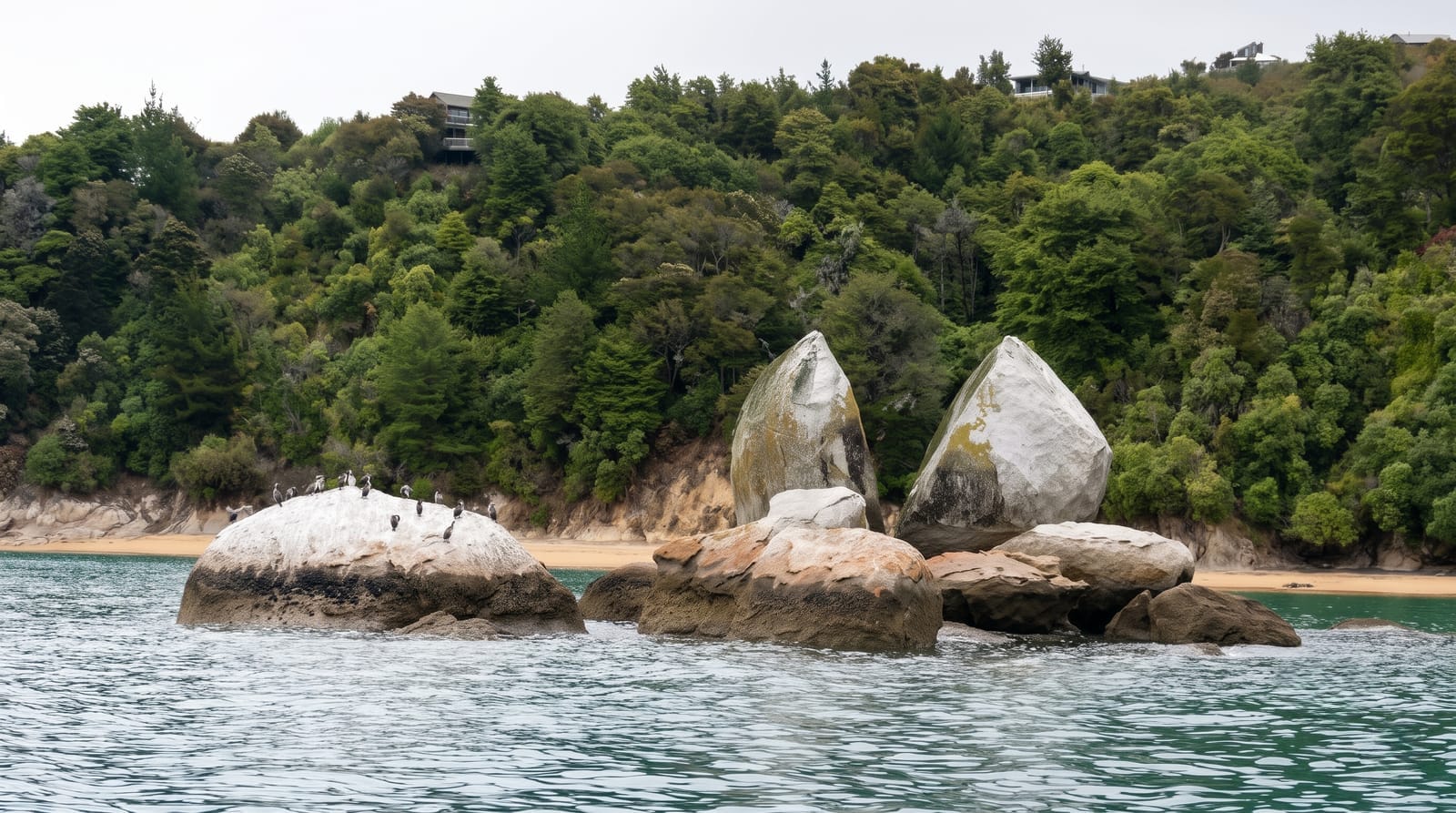
Tokangawha, Split Apple Rock, is a granite boulder sitting in shallow water about fifty metres offshore, split down the middle into two almost equal halves with a clean gap between them. The geology is ordinary enough - the rock parted along a natural joint, a plane of weakness common in granite that rain and waves opened up - but the result is improbably neat, which is why it is one of the most photographed rocks in the country. There is a Maori tradition explaining it as two gods splitting the rock to settle who owned it. Reaching it on foot means a short but steep track down from a small car park on the Kaiteriteri-Marahau road to Towers Bay, and then the rock is a little way out in the water, so at high tide you photograph it from the beach and at low tide you can wade closer. Most people see it from a kayak or a water taxi heading into Abel Tasman.
Background
Tokangawhā / Split Apple Rock is a rock formation in Tasman Bay / Te Tai-o-Aorere, off the northern coast of New Zealand's South Island. Made of Cretaceous granite, it looks like an apple sliced in half. Its cleft follows a natural joint, one of the weak planes common in granite that rain and waves exploit. A traditional Māori myth tells of two gods breaking the rock apart. It sits approximately 50 metres offshore between Kaiteriteri and Mārahau, in water shallow enough at low tide to wade out, and the many tourist boats along the shores of Abel Tasman National Park make it a point of interest. The name Split Apple Rock became official in 1988 and was changed to Tokangawhā / Split Apple Rock in August 2014.
Source: Wikipedia, "Split Apple Rock"
Highlights
- The split boulder - Cretaceous granite parted cleanly in two.
- Towers Bay - the small beach the track descends to.
- The wading approach - possible at low tide, not at high.
- The boat view - how most visitors see it, en route to Abel Tasman.
When to go
November to April; low tide lets you get closer. Mornings avoid both the coach stops and the harsh overhead light.
What to expect
It is one rock and takes twenty minutes. The track down is short but steep and the car park tiny. At high tide you cannot get near it. The water is cold even in summer.
Nearby
Kaiteriteri and Marahau are close; Abel Tasman National Park starts just north.
Key facts
Source: Wikidata, item Q13322038, read on 18 October 2026.
What to pack for Split Apple Rock
Chosen from what this place is for. Tap a kit for the full checklist.
- Broken-in walking shoes or boots - Grip and ankle support matter more than looks; never hike in brand-new boots. Find on Amazon
- Quick-dry clothing - Board shorts or synthetics that shrug off spray and dry fast. Find on Amazon
- Layers + a waterproof shell - Mountain weather turns fast; a packable rain jacket saves the day. Find on Amazon
- Secure water shoes or reef boots - Grip on slippery launches and protection on rocky shores. Find on Amazon
Some links on this page are Amazon affiliate links - if you buy through them we may earn a small commission at no extra cost to you.
All packing kitsPlan your trip
Where to start if Split Apple Rock is going on the list.
Booking links on this page are affiliate links - if you book through them we may earn a small commission at no extra cost to you. It never changes what we write about a place.
Opening times, ticket prices and seasonal closures change - check the official source before you go: official site.