Abel Tasman National Park
New Zealand's smallest national park, a coast of golden beaches, granite headlands and clear turquoise water, walked on a famous track or paddled by kayak.
Updated 21 October 2026
AI illustration
Real photos (1)
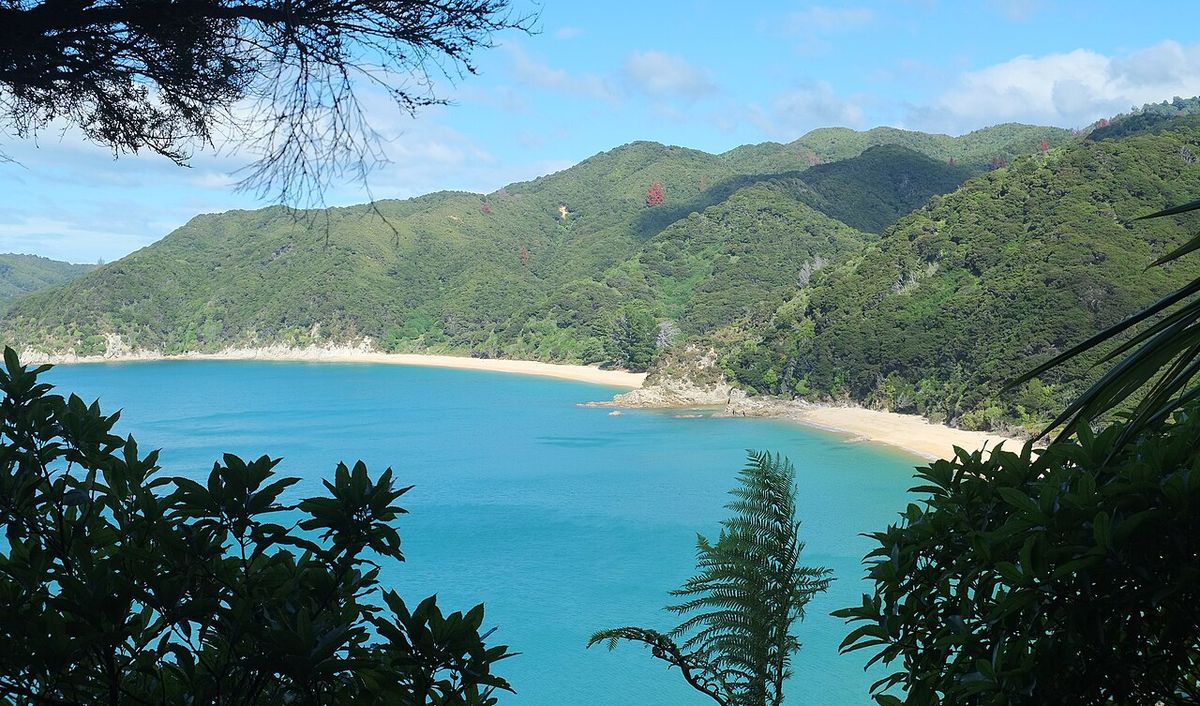
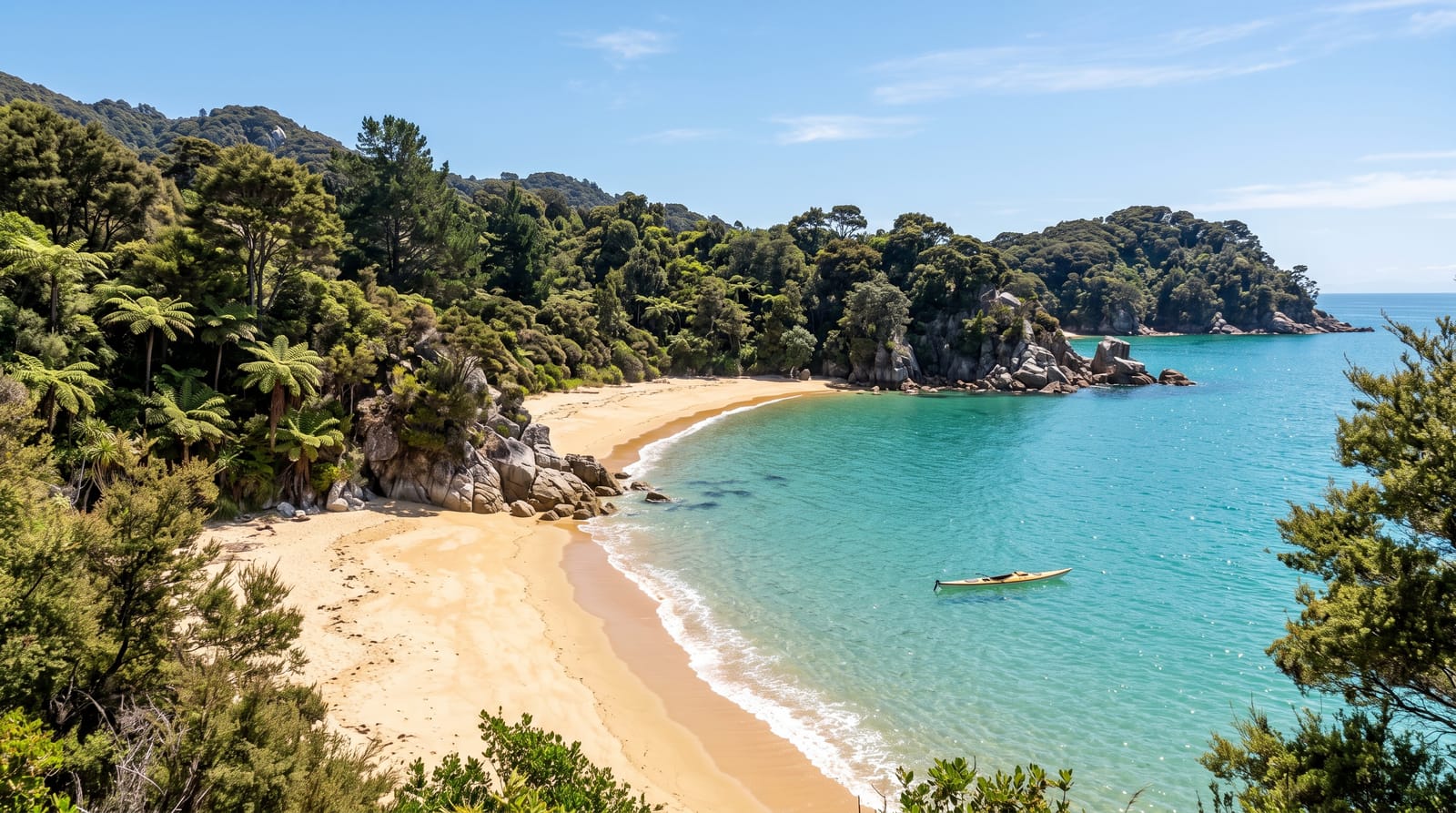
Abel Tasman, at the sunny northern tip of the South Island, is the smallest of New Zealand's national parks but one of the most loved, a stretch of coast where golden-sand beaches curve between weathered granite headlands and the sea shades from clear green to deep blue. Its centrepiece is the Abel Tasman Coast Track, one of the country's Great Walks, an easy and beautiful multi-day path that winds along the shore through native forest, crossing estuaries that can only be passed at low tide, though many people walk just a day section and return by water taxi. The other classic way to experience it is by sea kayak, paddling from beach to beach and past a seal colony on Tonga Island. Its gentleness, mild climate and swimmable water make it more relaxed than the country's alpine parks, and its combination of forest, beach and sea is quintessentially New Zealand.
History
Māori lived along this coast for hundreds of years, seasonally and permanently, growing kūmara, and Ngāti Tūmatakōkiri were here when Abel Tasman reached Golden Bay in 1642. The park was founded largely through the efforts of the ornithologist Pérrine Moncrieff and opened on 18 December 1942 to mark the 300th anniversary of Tasman's visit, with Queen Wilhelmina of the Netherlands as its patron (Wikipedia, Abel Tasman National Park).
What's there
- The golden beaches - the sandy coves between granite headlands, with turquoise water.
- The Coast Track - the Great Walk along the shore, walked in full or in day sections.
- Sea kayaking - paddling the coast from beach to beach.
- The Tonga Island seal colony - the fur seals on the marine reserve offshore.
When to go
November to April is warmest and best for swimming, walking and kayaking; the region is one of the sunniest in the country. Summer, especially around the holidays, is busy, so book water taxis, kayaks and huts ahead. The track's tidal crossings must be timed to low water, whatever the season.
Practical notes
Some sections of the track can only be crossed at low tide, so you must plan around the tide tables or take the all-tide alternative route, and getting this wrong can leave you stranded or wading. In peak summer it is popular, and huts and campsites book out well in advance. It is a gentle coastal park rather than a wilderness adventure, which is its appeal but disappoints those expecting rugged drama.
Nearby
The Nelson region's wineries and arts are nearby; the Golden Bay and Farewell Spit lie over the hill to the north.
Key facts
Source: Wikidata, item Q318357, read on 18 October 2026.
What to pack for Abel Tasman National Park
Chosen from what this place is for. Tap a kit for the full checklist.
- Broken-in walking shoes or boots - Grip and ankle support matter more than looks; never hike in brand-new boots. Find on Amazon
- Reef-safe sunscreen - High SPF that will not bleach the coral you are swimming over. Find on Amazon
- Quick-dry clothing - Board shorts or synthetics that shrug off spray and dry fast. Find on Amazon
- Binoculars - The single best wildlife tool - even a compact pair transforms a sighting. Find on Amazon
Some links on this page are Amazon affiliate links - if you buy through them we may earn a small commission at no extra cost to you.
All packing kitsPlan your trip
Where to start if Abel Tasman National Park is going on the list.
Booking links on this page are affiliate links - if you book through them we may earn a small commission at no extra cost to you. It never changes what we write about a place.
Opening times, ticket prices and seasonal closures change - check the official source before you go: official site.