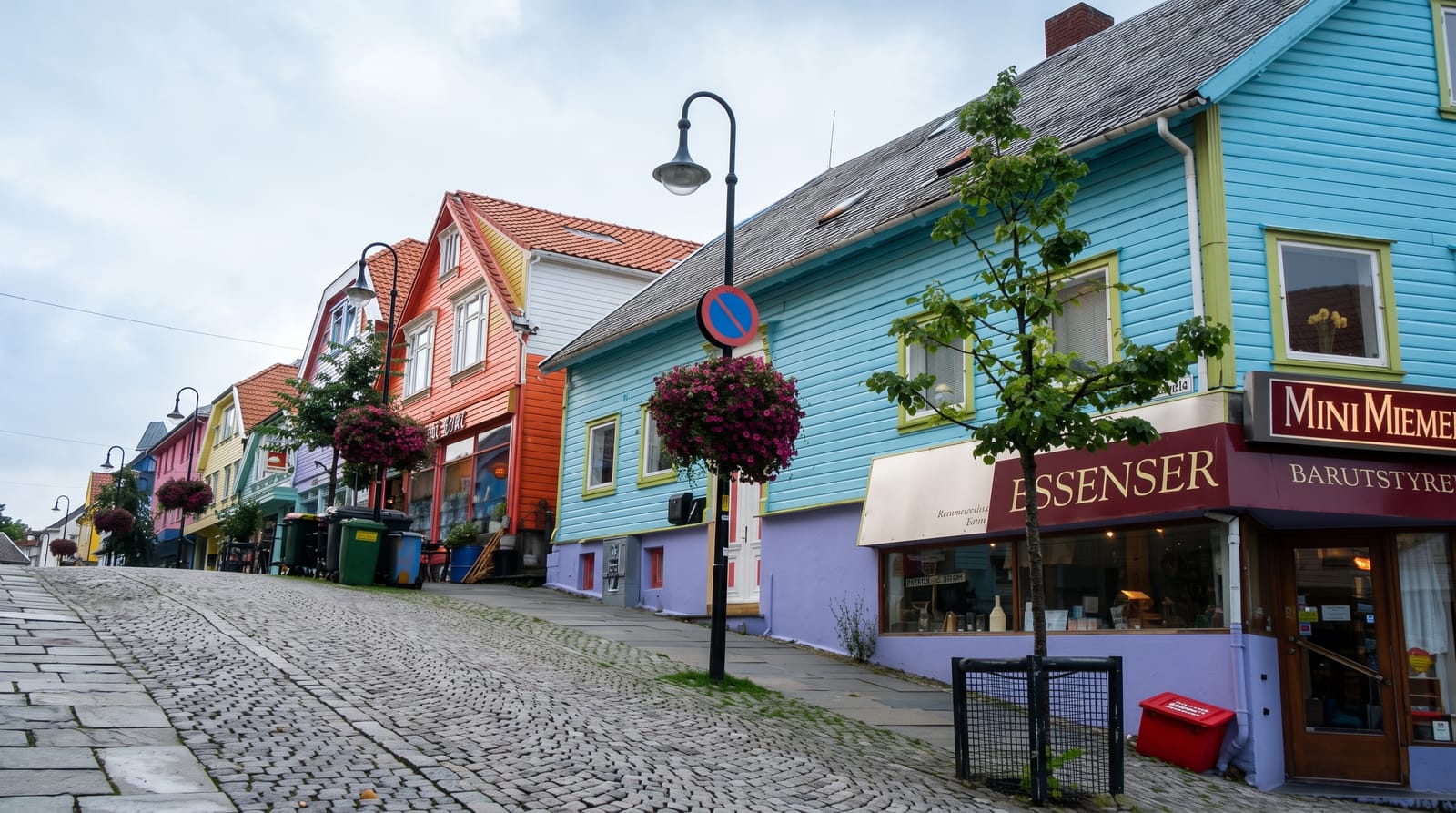
Cuba Street
Wellington's creative spine, with a kinetic bucket fountain that has been soaking pedestrians since 1969.
Updated 21 October 2026
Cuba Street runs uphill from the waterfront end of the city and is named not for the island but for the Cuba, one of the New Zealand Company ships that arrived in 1840. Its upper section was pedestrianised in 1969 and it has been the city's alternative and creative street since: second-hand and vintage shops, record stores, independent cafes, the Southern Cross and other long-running bars, buskers most afternoons, and a density of small venues. The Bucket Fountain, installed with the mall in 1969, is a stack of tipping buckets that pour water from one to the next and reliably splash anyone standing too close - it has been repeatedly proposed for removal and repeatedly saved by public objection, which tells you something about how the street works. The heritage precinct along it is protected. It is the most walked street in Wellington and the one most people mean when they say the city has character.
History
Cuba Street was laid out on Te Āti Awa land in 1842, at first lined with single-storey wooden houses, and William Tonks set up a brickworks at the top of it in 1847. A tram ran along it from 1878, James Smiths department store opened in 1907, and the creation of Cuba Mall in 1969 helped revive the street (Wikipedia, Cuba Street).
The main sights
- The Bucket Fountain - tipping since 1969, and still soaking people.
- The pedestrian mall - the upper section, closed to traffic.
- The vintage and record shops - the trade that defines the street.
- The buskers - most afternoons along the mall.
When to go
Any season; afternoons and evenings are liveliest. Wellington weather decides how pleasant the open-air section is.
Practical notes
It is a real inner-city street with a visible street population and some rough edges at night. Many shops open late morning. Wellington wind funnels down it.
Nearby
Te Papa and the waterfront are downhill; Courtenay Place is east.
Key facts
Source: Wikidata, item Q5191954, read on 18 October 2026.
What to pack for Cuba Street
Chosen from what this place is for. Tap a kit for the full checklist.
- Comfortable walking shoes - Sightseeing means kilometres of pavement and cobbles daily. Find on Amazon
- A slim anti-theft daypack - Zips that close properly; keep it in front in crowds and on transit. Find on Amazon
- A refillable water bottle - Many cities have public fountains; save money and plastic. Find on Amazon
- A light layer + compact umbrella - For museum air-con and a sudden shower. Find on Amazon
Some links on this page are Amazon affiliate links - if you buy through them we may earn a small commission at no extra cost to you.
All packing kitsPlan your trip
Where to start if Cuba Street is going on the list.
Booking links on this page are affiliate links - if you book through them we may earn a small commission at no extra cost to you. It never changes what we write about a place.
Opening times, ticket prices and seasonal closures change - check the official source before you go: official site.