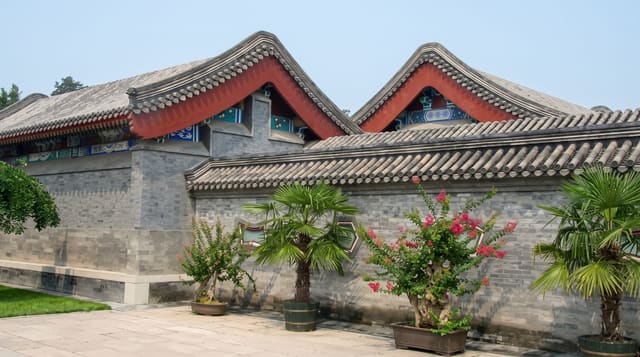
Paleis Het Loo
A late seventeenth century royal country palace outside Apeldoorn, with formal baroque gardens dug back out and rebuilt from the original plans.
Updated 21 October 2026

AI illustration
Het Loo was built in the 1680s as a hunting and country residence on the sandy heath north of Apeldoorn, and it stayed in royal use for three centuries before opening as a museum. The house is Dutch classicism at its most restrained, a symmetrical brick block with wings, and interest is split evenly between the state rooms inside and the garden behind. That garden had been landscaped over in the English manner in the nineteenth century; in the twentieth it was dug out again and reconstructed as the formal baroque scheme it started as, with parterres, fountains and clipped hedges laid out on axis. A long recent renovation put the new entrance and galleries underground.
History
The palace was designed by Jacob Roman and Johan van Swieten and built between 1684 and 1686 for stadtholder William III and Mary II, with gardens designed by Claude Desgots. It remained a summer residence of the House of Orange-Nassau until Queen Wilhelmina died there in 1962, was renovated from 1976 to 1982 and has been a state museum since 1984 (Wikipedia, Het Loo Palace).
The main sights
- The baroque garden - parterres, fountains and hedge patterns reconstructed on the seventeenth century plan.
- The state rooms - the restored royal apartments and their furnishings.
- The stables and carriages - the working buildings with coaches, cars and harness.
- The underground extension - the modern entrance hall and galleries built beneath the forecourt.
When to go
April to October for the garden, which is the better half of the visit and needs dry weather, with the fountains running in season. Spring bulbs and early summer are strongest. Midday in July and August is busy with families. Winter visits are effectively indoor only, and much of the planting is cut back to bare structure.
What to expect
Ticket prices are high for what is a fairly compact house, and the interiors are roped-off period rooms rather than spaces you move through freely. The garden is formal and symmetrical, which some find cold rather than beautiful. Apeldoorn gives you little reason to stay. Queues form at opening on holiday weekends.
Nearby
The woods and heath of the Veluwe begin immediately behind the estate.
Key facts
Source: Wikidata, item Q692381, read on 18 October 2026.
What to pack for Paleis Het Loo
Chosen from what this place is for. Tap a kit for the full checklist.
- Head torch + spare batteries - Hands-free light is essential; caves are truly dark. Find on Amazon
- Comfortable walking shoes - Sightseeing means kilometres of pavement and cobbles daily. Find on Amazon
- Grippy closed shoes - Cave floors are wet, muddy and slick with formations. Find on Amazon
- A slim anti-theft daypack - Zips that close properly; keep it in front in crowds and on transit. Find on Amazon
Some links on this page are Amazon affiliate links - if you buy through them we may earn a small commission at no extra cost to you.
All packing kitsPlan your trip
Where to start if Paleis Het Loo is going on the list.
Booking links on this page are affiliate links - if you book through them we may earn a small commission at no extra cost to you. It never changes what we write about a place.
Opening times, ticket prices and seasonal closures change - check the official source before you go: official site.