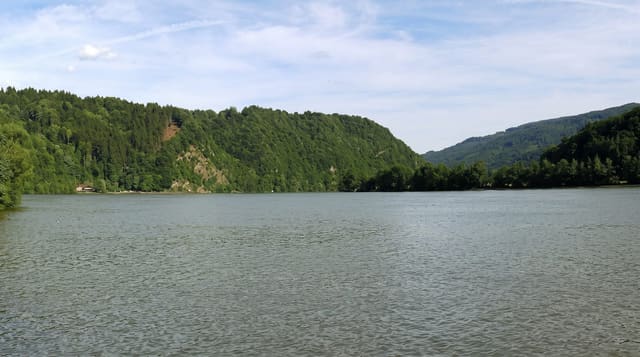
Lutterzand
A river allowed to meander freely, cutting sand cliffs and moving its bed year by year - rare in this country.
Updated 29 August 2026
Almost every watercourse in the Netherlands has been straightened, dyked or canalised, which makes the Dinkel at Lutterzand unusual: it is a small river left to wander, and it does - cutting into the sandy banks on the outside of its bends and depositing on the inside, so it exposes cliffs of pale sand several metres high, undercuts trees and shifts its channel measurably from year to year. Old courses are visible as loops in the surrounding ground. The reserve around it holds drift sand, juniper, oak and pine woodland and heath on the terraces above, and it is one of the better places in the country to see how a natural sand-bed river behaves. Junipers here form one of the larger Dutch stands. The German border is a couple of kilometres away and the Dinkel crosses it repeatedly on its way north.
Highlights
- A river left to wander - the Dinkel cutting and depositing without engineering.
- Sand cliffs - pale banks several metres high on the outside of the bends.
- Old courses in the ground - abandoned loops visible in the surrounding terraces.
- Juniper stands - among the larger surviving groups in the country.
When to go
April to October. Half a day.
Good to know
Bank edges are undercut and collapse - stay back from the cliff tops. Paths flood after heavy rain. Ticks are common. The reserve is small; half a day is enough.
Nearby
Oldenzaal is south-west; the German border is a couple of kilometres east.
Key facts
Source: Wikidata, item Q15638182, read on 18 October 2026.
What to pack for Lutterzand
Chosen from what this place is for. Tap a kit for the full checklist.
- Broken-in walking shoes or boots - Grip and ankle support matter more than looks; never hike in brand-new boots. Find on Amazon
- Layers + a waterproof shell - Mountain weather turns fast; a packable rain jacket saves the day. Find on Amazon
- Daypack with rain cover - 20-30 litres holds water, snacks, layers and a first-aid kit. Find on Amazon
- Offline maps + a power bank - Download the trail before you lose signal; carry backup charge. Find on Amazon
Some links on this page are Amazon affiliate links - if you buy through them we may earn a small commission at no extra cost to you.
All packing kitsPlan your trip
Where to start if Lutterzand is going on the list.
Booking links on this page are affiliate links - if you book through them we may earn a small commission at no extra cost to you. It never changes what we write about a place.
Opening times, ticket prices and seasonal closures change - check the official source before you go: official site.