Muktinath
A temple at 3,800 metres in Mustang sacred to Hindus and Buddhists alike, with 108 water spouts and a natural gas flame.
Updated 21 October 2026
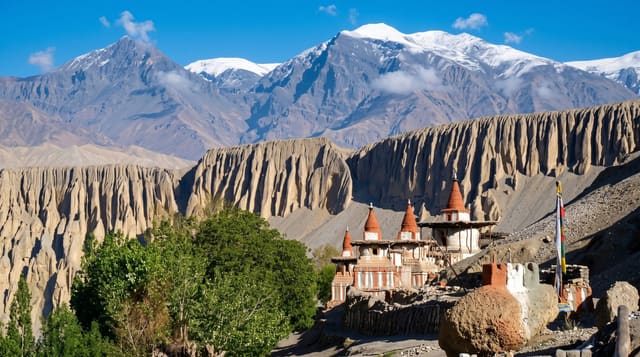
Muktinath sits at about 3,800 metres in the Mustang valley behind the Annapurna and Dhaulagiri massifs, and it is one of the very few sites revered equally by two religions: Hindus know it as Mukti Kshetra, a place of liberation and one of the 108 Divya Desams of Vishnu, while Tibetan Buddhists call it Chumig Gyatsa and associate it with Padmasambhava. Pilgrims bathe under 108 water spouts fed from the mountain and in two pools, in cold that is genuinely severe. In the small Jwala Mai temple nearby a natural gas seep burns as a continuous small flame over water, which both traditions treat as significant. The site is the end point of the Thorong La crossing on the Annapurna circuit, and a road now reaches it.
What you'll find
- The 108 spouts - the arc of water outlets pilgrims bathe under.
- Jwala Mai - the natural gas flame burning beside water.
- The Vishnu temple - the pagoda shrine at the centre of the complex.
- Mustang landscape - the dry trans-Himalayan valley around the site.
When to go
March to June and September to November. Winter is very cold and the road can close with snow. The rain shadow means the monsoon is lighter here than elsewhere.
Good to know
Altitude affects visitors who arrive quickly by road from Pokhara. The bathing water is close to freezing. The site is busy with pilgrim buses and jeep groups, and commercial development around it has grown fast. The road up from Jomsom is rough and windy.
Nearby
Jomsom lies south-west; the Thorong La crosses east to Manang.
Key facts
Source: Wikidata, item Q1025465, read on 18 October 2026.
What to pack for Muktinath
Chosen from what this place is for. Tap a kit for the full checklist.
- Warm base layers - Merino or synthetic against the skin - never cotton, which chills when damp. Find on Amazon
- Strong insect repellent - DEET or picaridin; the jungle is where bites and disease risk are highest. Find on Amazon
- Layers for big temperature swings - Warm sun by day, near-freezing at night, even near the equator. Find on Amazon
- Comfortable walking shoes - Sightseeing means kilometres of pavement and cobbles daily. Find on Amazon
Some links on this page are Amazon affiliate links - if you buy through them we may earn a small commission at no extra cost to you.
All packing kitsPlan your trip
Where to start if Muktinath is going on the list.
Booking links on this page are affiliate links - if you book through them we may earn a small commission at no extra cost to you. It never changes what we write about a place.
Opening times, ticket prices and seasonal closures change - check the official source before you go: official site.