Burmese Cuisine
A distinctive crossroads cuisine - the beloved national dish of mohinga fish noodle soup, the unique tea-leaf salad, rich curries and fresh salads, blending Indian, Chinese and Southeast Asian flavours.
Updated 1 September 2026
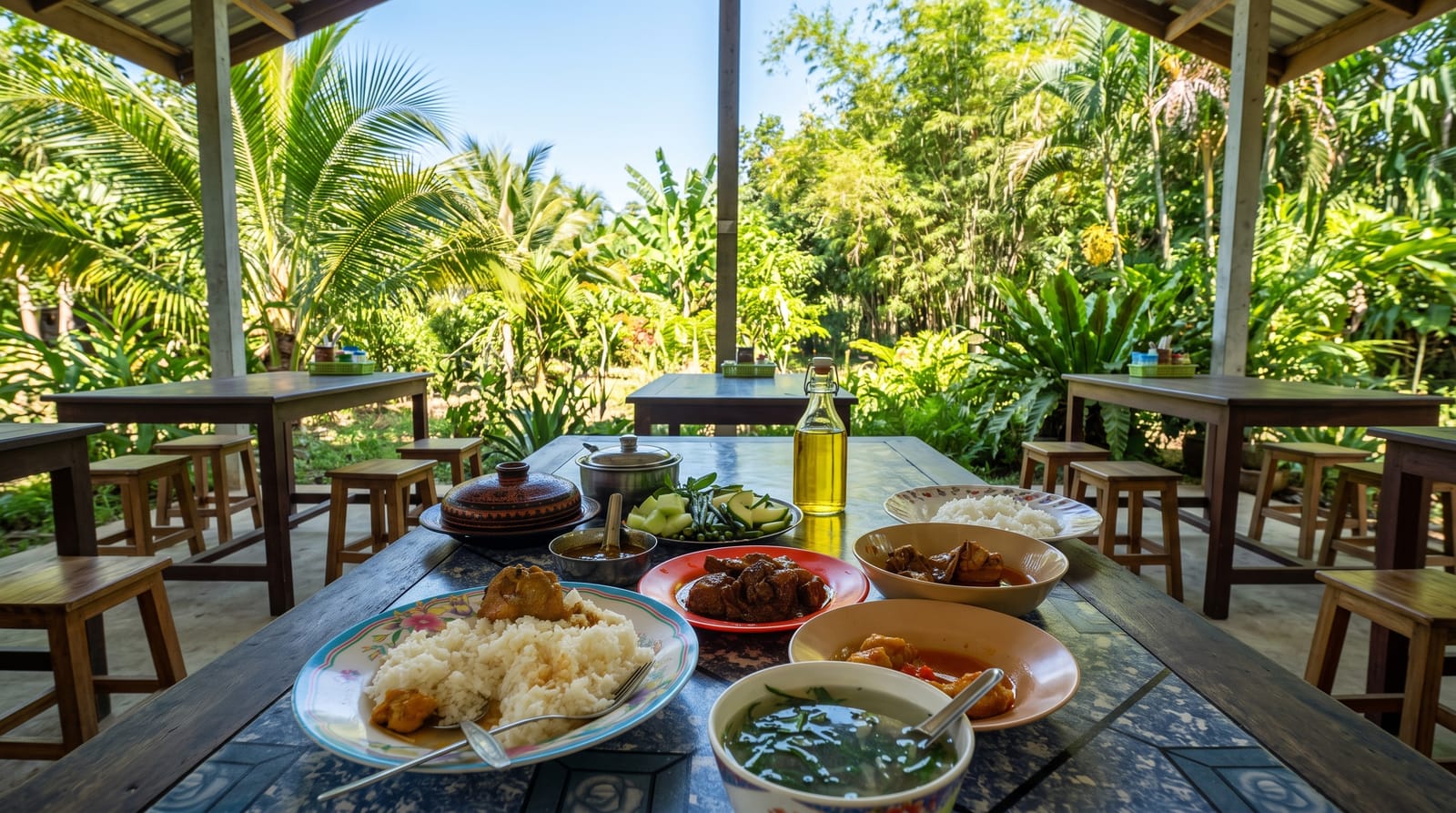
AI illustration
Burmese cuisine is a distinctive and underrated food culture at the crossroads of India, China and Southeast Asia, blending their influences into something all its own. Its unofficial national dish is mohinga, a fragrant fish-and-rice-noodle soup eaten for breakfast, and its most famous is lahpet thoke, a unique and moreish salad of fermented tea leaves. Add rich, oil-rich curries, fresh crunchy salads, and the sociable culture of the teahouse, and it is a rewarding cuisine to explore.
What's there
- Mohinga - the fragrant fish-noodle soup, the national breakfast.
- Lahpet thoke - the unique fermented tea-leaf salad.
- The curries - the rich, mild oil-based curries.
- The teahouse - the sociable teahouses and their snacks.
When to go
Year-round; the sociable teahouses, serving sweet tea, snacks and mohinga, are a beloved institution and a great window into daily life, and the markets offer the freshest, cheapest food.
Before you go
Burmese food is less internationally known and milder and oilier than Thai, which some find heavy, though the tea-leaf salad and mohinga are standouts. Street and market food is cheap and good from busy stalls, though take the usual care with water and salads.
Nearby
Yangon has the widest range; the Shan region and each area have their specialities.
What to pack for Burmese Cuisine
Chosen from what this place is for. Tap a kit for the full checklist.
- A reusable bag or container - For market produce and cutting down on packaging. Find on Amazon
- Wet wipes + hand sanitiser - Street food and washbasins do not always go together. Find on Amazon
Some links on this page are Amazon affiliate links - if you buy through them we may earn a small commission at no extra cost to you.
All packing kitsPlan your trip
Where to start if Burmese Cuisine is going on the list.
Booking links on this page are affiliate links - if you book through them we may earn a small commission at no extra cost to you. It never changes what we write about a place.
Opening times, ticket prices and seasonal closures change - check the official source before you go: official site.