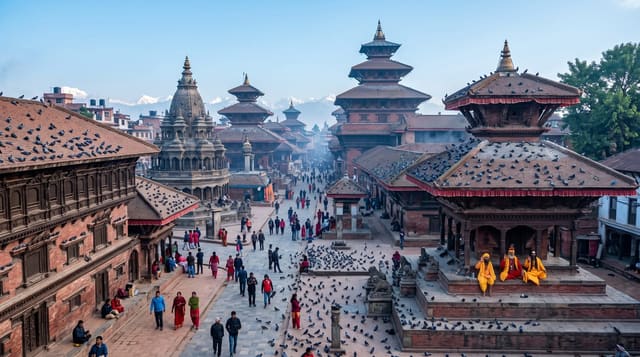
El Hedim Square
Meknes's main square, cleared by demolishing a quarter for it, which is what its name records.
Updated 29 August 2026
El Hedim means the demolition, and that is literally what it commemorates: Moulay Ismail cleared an existing quarter in the late seventeenth century to make an esplanade in front of his new imperial gate, and the rubble went into the walls he was building. The square today is the hinge of Meknes, with Bab Mansour on one side and the medina on the other, a covered food market on its northern edge selling olives, preserved lemons, spices and meat, and cafes with upstairs terraces around it. In the evenings it fills with families, food stalls, musicians and occasional storytellers - a smaller and much less commercial version of what happens at the Jemaa el-Fna in Marrakech, and one of the reasons people who prefer Meknes prefer it. The Dar Jamai museum, a nineteenth-century palace with a garden, opens off the square.
The main sights
- A demolition site - a quarter cleared in the 1690s to make the esplanade.
- The food market - olives, preserved lemons and spices on the northern edge.
- Evening life - stalls, music and families, a quieter cousin of the Jemaa el-Fna.
- Dar Jamai - a nineteenth-century palace museum opening off the square.
When to go
October to April; evenings for the square in use. An hour or two.
Good to know
Cafe terraces charge a premium for the view. Hawkers and photo-with-animal operators work the square. It is much smaller and quieter than the Jemaa el-Fna - which is the point for some and a disappointment for others. Parking around it is difficult.
Nearby
Bab Mansour faces the square; the imperial city is beyond it.
Key facts
Source: Wikidata, item Q21656995, read on 18 October 2026.
What to pack for El Hedim Square
Chosen from what this place is for. Tap a kit for the full checklist.
- Comfortable walking shoes - Sightseeing means kilometres of pavement and cobbles daily. Find on Amazon
- A slim anti-theft daypack - Zips that close properly; keep it in front in crowds and on transit. Find on Amazon
- A refillable water bottle - Many cities have public fountains; save money and plastic. Find on Amazon
- A light layer + compact umbrella - For museum air-con and a sudden shower. Find on Amazon
Some links on this page are Amazon affiliate links - if you buy through them we may earn a small commission at no extra cost to you.
All packing kitsPlan your trip
Where to start if El Hedim Square is going on the list.
Booking links on this page are affiliate links - if you book through them we may earn a small commission at no extra cost to you. It never changes what we write about a place.
Opening times, ticket prices and seasonal closures change - check the official source before you go: official site.