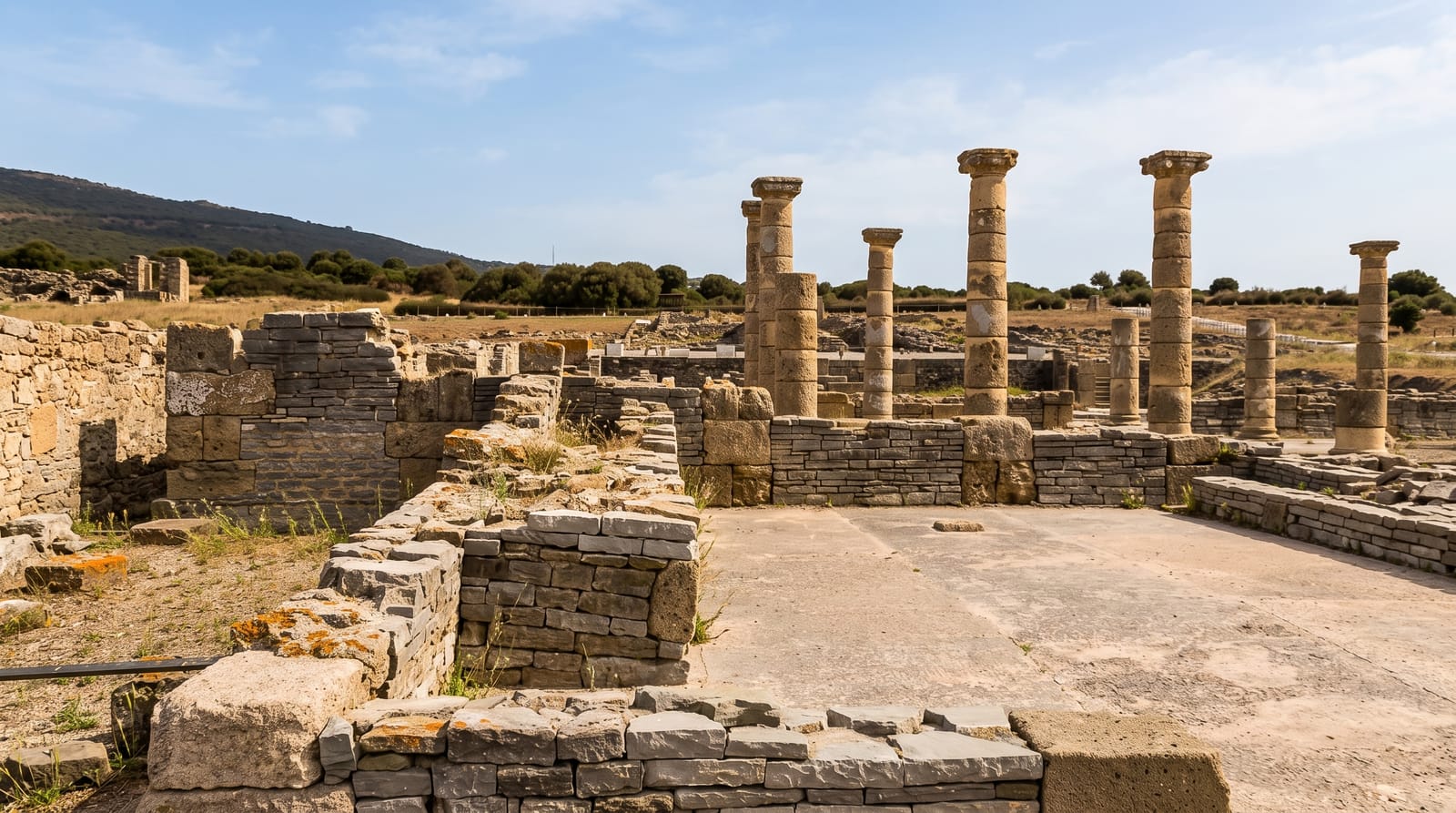
Banasa Ruins
A Roman colony in the Gharb plain with a forum, baths and mosaics, standing in farmland with almost nobody at it.
Updated 29 August 2026
Banasa was founded as a Roman colony under Augustus on the Sebou river in the Gharb, the flat and fertile plain north-east of Rabat, and it was a working provincial town rather than a showpiece - grain country, with the river as its route to the sea. What is exposed is a forum with its surrounding portico, a basilica, a capitol, two bath complexes, streets, houses with mosaic floors, and pottery kilns; the Tabula Banasitana, a bronze tablet recording a grant of Roman citizenship to a local family, was found here and is an important document for how the empire handled provincial elites. The site is in open fields with a fence, sometimes a guardian and sometimes not, no signage of consequence, and storks nesting on the columns. It receives almost no visitors, which is the general condition of Roman Morocco outside Volubilis.
What to look for
- A working colonial town - forum, basilica, capitol, baths and streets in grain country.
- Mosaic floors - in houses along the excavated streets, exposed to the weather.
- The citizenship tablet's site - where the Tabula Banasitana was found.
- Farmland and storks - an unvisited site with birds nesting on the columns.
When to go
Spring and autumn. An hour. The Gharb is muddy in winter and hot in summer.
Practical notes
Staffing is irregular and there is no interpretation. Access is by track through farmland, impassable after rain. Mosaics are uncovered and deteriorating. It is remote from the main routes and needs a car.
Nearby
Thamusida is west near Kenitra; Volubilis is south-east.
What to pack for Banasa Ruins
Chosen from what this place is for. Tap a kit for the full checklist.
- Comfortable walking shoes - Sightseeing means kilometres of pavement and cobbles daily. Find on Amazon
- Modest clothing - Shoulders and knees covered - the single most common requirement. Find on Amazon
- A slim anti-theft daypack - Zips that close properly; keep it in front in crowds and on transit. Find on Amazon
- A scarf or shawl - To cover the head or shoulders on entry; women especially at mosques. Find on Amazon
Some links on this page are Amazon affiliate links - if you buy through them we may earn a small commission at no extra cost to you.
All packing kitsPlan your trip
Where to start if Banasa Ruins is going on the list.
Booking links on this page are affiliate links - if you book through them we may earn a small commission at no extra cost to you. It never changes what we write about a place.
Opening times, ticket prices and seasonal closures change - check the official source before you go: official site.