Cetinje
The old royal capital on a karst plain under Lovcen - a monastery, King Nikola's palace and the former embassies of European powers.
Updated 1 November 2026
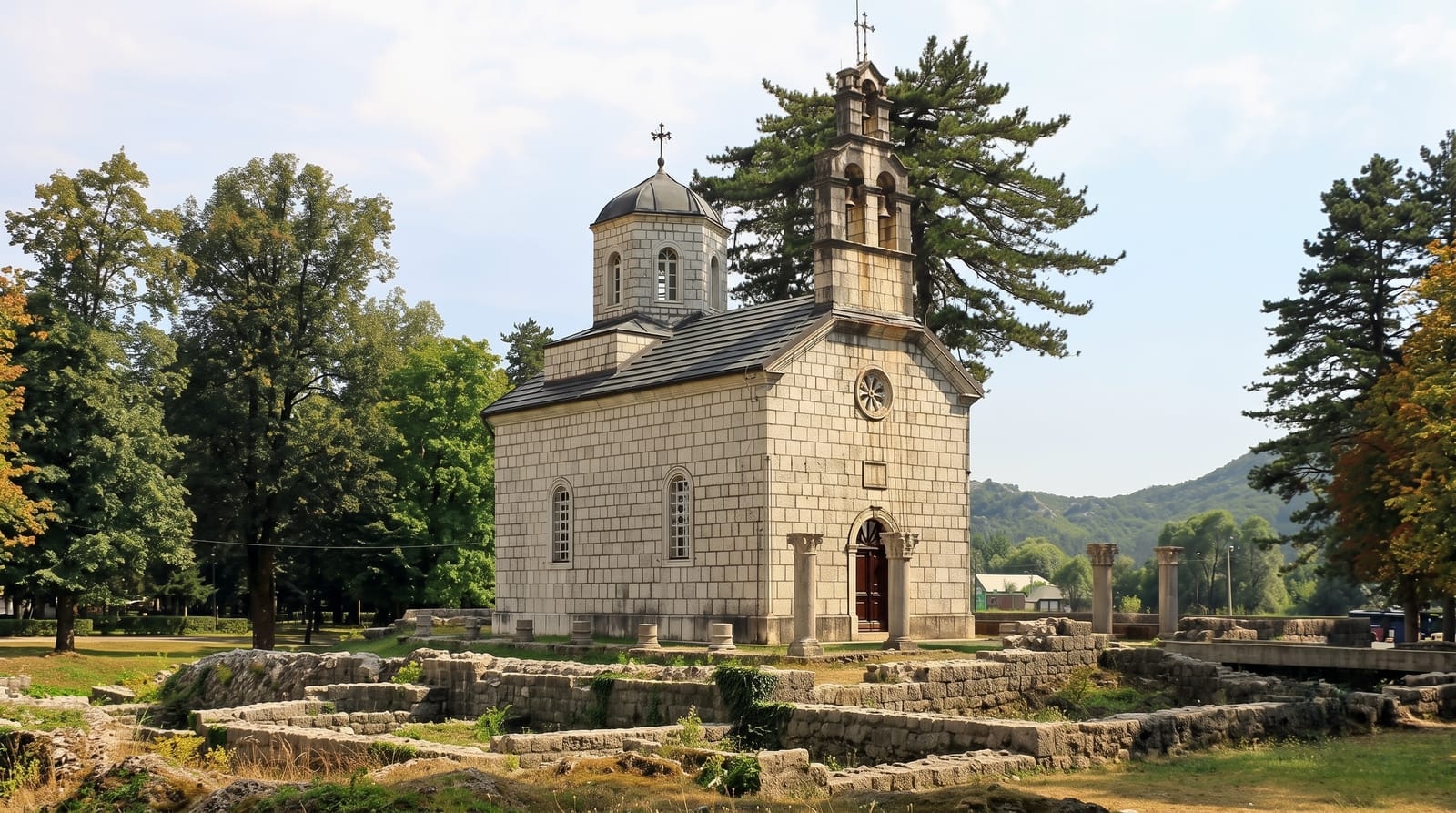
AI illustration
Cetinje was the capital of Montenegro when the country was a small mountain principality holding out against much larger neighbours, and the town still carries that history at walking scale. The monastery holds relics that draw pilgrims, including a hand of John the Baptist; the Biljarda, the residence Njegos built in 1838, is called the billiard house; and France, Russia, Britain, Italy and Austria-Hungary built consulates and embassies here when the capital had fewer than 6,000 people, many of them now schools. The town sits on a small karst plain about 670 metres up, ringed by limestone mountains including Mount Lovcen.
History
Cetinje was founded in 1482, when Ivan Crnojević moved his capital from Obod into the hills, to a more defensible field at the foot of Mount Lovćen; his court and the monastery he founded in 1484 were the first recorded Renaissance buildings in Montenegro, and the town took its name from the Cetina river. The Crnojević press, the first printing house in south-eastern Europe, worked here from 1493 to 1496. After two centuries of attacks and hardship the town revived from 1697 under the Petrović dynasty; Petar II Petrović Njegoš built his residence, the Biljarda, in 1838, and under Prince Nikola I came the first hotel, the Lokanda, a new palace, the Girls' Institute and a hospital, while European powers built consulates along its streets (Wikipedia, Cetinje).
The main sights
- Cetinje Monastery - the pilgrimage site and its relics.
- King Nikola's palace - the new palace of Prince Nikola I's reign.
- The old embassies - consulates of European powers, many now schools.
- Lovcen and Njegos mausoleum - the mountain and tomb above the town.
When to go
Spring through autumn is the comfortable window; winters are mild but wet. Combining Cetinje with the drive up Lovcen makes the strongest day, and clear autumn days give enormous views from the mausoleum.
Before you go
Cetinje is quiet to the point of sleepy and some museums keep short or seasonal hours - check before making a special trip. The monastery has a strict dress code and the relics are shown in a small chapel with limited access. Many visitors treat it as a stop between the coast and Lovcen rather than a stay, which is reasonable given the limited accommodation.
Nearby
Lovcen National Park and the Njegos mausoleum, Kotor down the serpentine road and Lake Skadar.
Key facts
Source: Wikidata, item Q173338, read on 18 October 2026.
What to pack for Cetinje
Chosen from what this place is for. Tap a kit for the full checklist.
- Comfortable walking shoes - Sightseeing means kilometres of pavement and cobbles daily. Find on Amazon
- Modest clothing - Shoulders and knees covered - the single most common requirement. Find on Amazon
- A slim anti-theft daypack - Zips that close properly; keep it in front in crowds and on transit. Find on Amazon
- A scarf or shawl - To cover the head or shoulders on entry; women especially at mosques. Find on Amazon
Some links on this page are Amazon affiliate links - if you buy through them we may earn a small commission at no extra cost to you.
All packing kitsPlan your trip
Where to start if Cetinje is going on the list.
Booking links on this page are affiliate links - if you book through them we may earn a small commission at no extra cost to you. It never changes what we write about a place.
Opening times, ticket prices and seasonal closures change - check the official source before you go: official site.


