Khermen Tsav
A deep red canyon in the far western Gobi, one of the emptiest and hardest-reached landscapes in the country.
Updated 31 August 2026
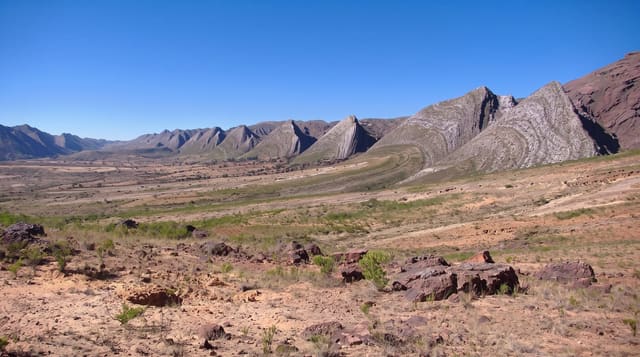
Khermen Tsav is a canyon system cut into red and ochre sediments in the far west of the southern Gobi, some hundred metres deep and running for tens of kilometres, with fins, towers and side gullies weathered out of the soft rock. It lies a long way from anywhere, on tracks that take many hours from the nearest settlement, and the isolation is a large part of what people come for: nothing is visible from the rim except desert to the horizon. The sediments are rich in fossils and expeditions have worked here for decades. Saxaul grows on the canyon floor and small springs support wildlife. There is no infrastructure of any kind, so visits mean camping with all water carried in. The name refers to the wall-like formations along the rim.
What's there
- The red canyon - a hundred-metre gorge cut into soft sediment.
- Weathered towers - fins and pinnacles standing along the walls.
- Saxaul on the floor - desert scrub in the canyon bottom.
- Total emptiness - no settlement or structure in any direction.
When to go
May to September, avoiding the worst midsummer heat. Late September is often the most comfortable. Morning and evening light give the strongest colour. Winter access is effectively impossible.
Good to know
Getting here is a serious undertaking: many hours of desert track, a driver who knows the route, and self-sufficiency in fuel and water. There are no facilities, no phone signal and no help. Camping is the only option. Fossils are protected and must be left alone.
Nearby
Nemegt basin lies northeast; Gurvantes is the nearest settlement.
What to pack for Khermen Tsav
Chosen from what this place is for. Tap a kit for the full checklist.
- Broken-in walking shoes or boots - Grip and ankle support matter more than looks; never hike in brand-new boots. Find on Amazon
- Binoculars - The single best wildlife tool - even a compact pair transforms a sighting. Find on Amazon
- Loose, light, long clothing - Covering up beats bare skin in the desert - and locals dress this way for a reason. Find on Amazon
- Shelter suited to the place - Tent, tarp or hut booking - match it to the terrain and rules. Find on Amazon
Some links on this page are Amazon affiliate links - if you buy through them we may earn a small commission at no extra cost to you.
All packing kitsPlan your trip
Where to start if Khermen Tsav is going on the list.
Booking links on this page are affiliate links - if you book through them we may earn a small commission at no extra cost to you. It never changes what we write about a place.
Opening times, ticket prices and seasonal closures change - check the official source before you go: official site.