Bayanzag Flaming Cliffs
Red sandstone cliffs in the Gobi where the first known dinosaur eggs were found in the 1920s.
Updated 31 August 2026
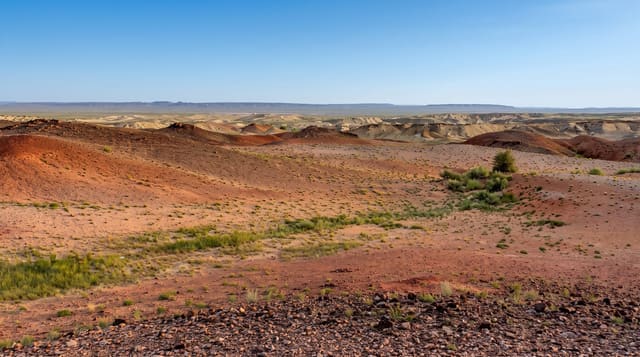
Bayanzag is a low escarpment of red and orange sandstone eroded into gullies and buttresses above a plain of saxaul scrub, and its fame is palaeontological: the American expeditions led by Roy Chapman Andrews worked here in the 1920s and found the first scientifically recognised dinosaur eggs, along with Protoceratops and Velociraptor material. The cliffs were named the Flaming Cliffs for the colour they take at sunset. Fossils continue to erode out of the sediment and are protected; removing them is illegal. The site itself is modest in scale, a walk of an hour or two along the rim and down into the gullies, with the saxaul forest below and views over open desert. Ger camps and a few stalls sit at the top, and it is one of the busiest stops on the southern Gobi circuit.
The landscape
- Red sandstone gullies - the eroded escarpment that gives the site its name.
- Sunset colour - the light that turns the cliffs orange and red.
- Saxaul forest - the scrub woodland on the plain below.
- Fossil ground - the sediments that produced the 1920s discoveries.
When to go
May to September; late afternoon into sunset is the point of the visit. Midday flattens the colour and the heat is severe. Spring dust storms reduce visibility.
Practical notes
The cliffs are lower and smaller than the reputation suggests, perhaps thirty metres, and the visit is short. It is the busiest site in the Gobi with tour groups and souvenir stalls. Fossils must not be picked up or bought. Edges are unstable.
Nearby
Khongoryn Els lies southwest; Dalanzadgad is southeast.
What to pack for Bayanzag Flaming Cliffs
Chosen from what this place is for. Tap a kit for the full checklist.
- Broken-in walking shoes or boots - Grip and ankle support matter more than looks; never hike in brand-new boots. Find on Amazon
- Loose, light, long clothing - Covering up beats bare skin in the desert - and locals dress this way for a reason. Find on Amazon
- Shelter suited to the place - Tent, tarp or hut booking - match it to the terrain and rules. Find on Amazon
- Layers + a waterproof shell - Mountain weather turns fast; a packable rain jacket saves the day. Find on Amazon
Some links on this page are Amazon affiliate links - if you buy through them we may earn a small commission at no extra cost to you.
All packing kitsPlan your trip
Where to start if Bayanzag Flaming Cliffs is going on the list.
Booking links on this page are affiliate links - if you book through them we may earn a small commission at no extra cost to you. It never changes what we write about a place.
Opening times, ticket prices and seasonal closures change - check the official source before you go: official site.