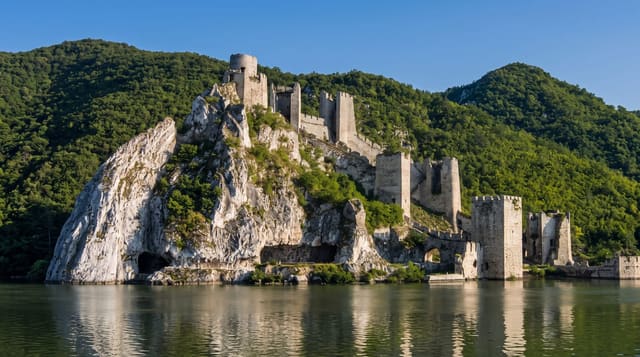
Soroca Fortress
A perfectly circular stone fort on the Dniester - founded in 1499 and rebuilt in stone in the 1540s to a geometry that Italian engineers would have recognised.
Updated 21 October 2026
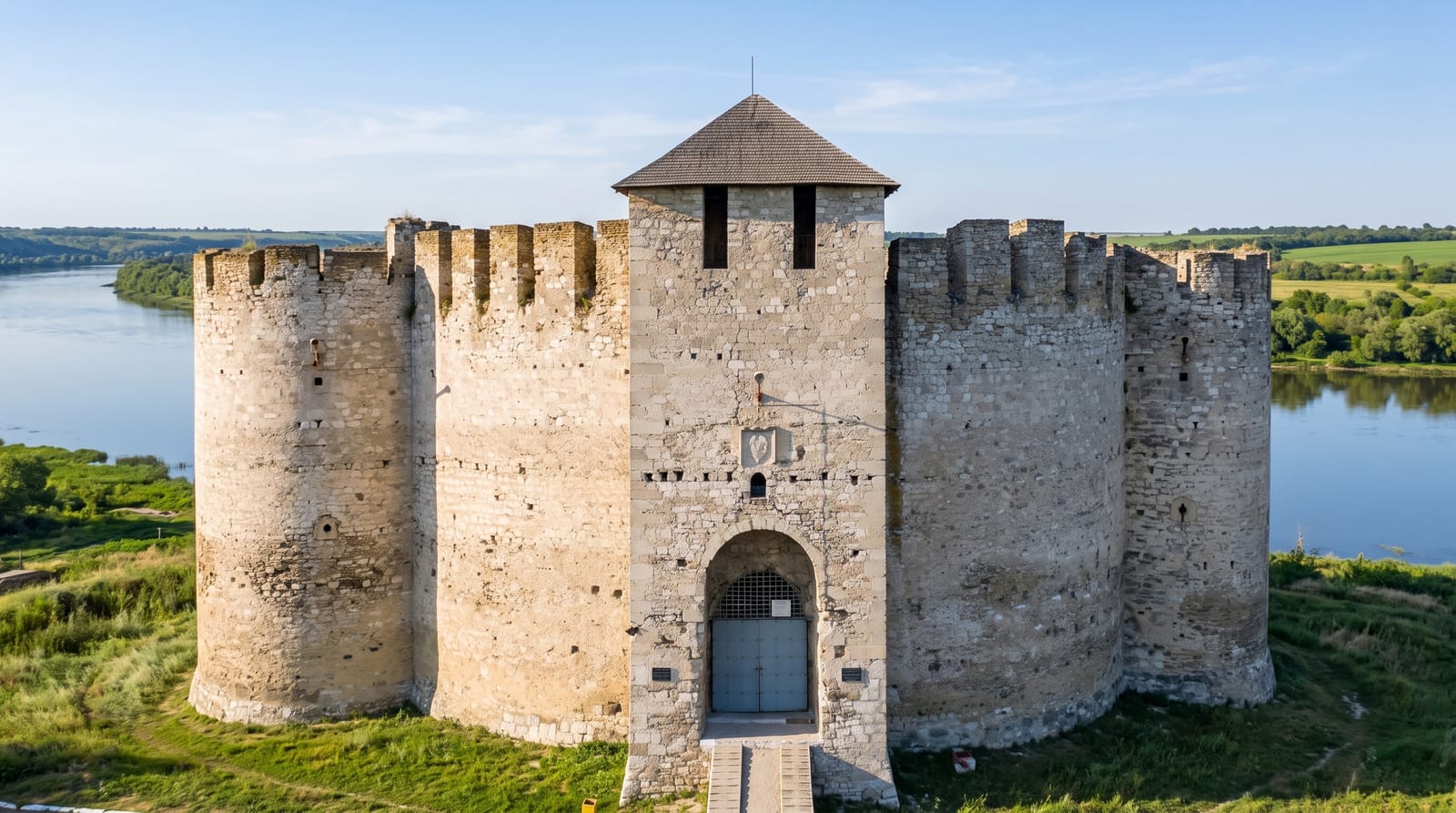
AI illustration
Soroca fortress stands on the bank of the Dniester where a ford once crossed it, founded as a wooden fort by Stephen the Great in 1499 and rebuilt in stone in the 1540s under Petru Rares in a shape unusual for the region: a perfect circle of walls with five bastion towers set at exact intervals, a geometry associated with Italian Renaissance military design and rare in eastern Europe. It has been restored and can be walked - the courtyard, the wall walk and the towers - with the river below and Ukraine on the far bank. The town above is also known for its Roma community and the extravagant houses built on the hill, some modelled on famous buildings.
What to look for
- The circular walls - the fortress geometry and the five towers.
- The wall walk - the restored circuit above the Dniester.
- The Candle of Gratitude - the hilltop monument above the town with long river views.
- Soroca hill - the elaborate houses of the town's Roma quarter.
When to go
Late spring to early autumn gives comfortable weather and green river views. The fortress is open year round with reduced winter hours. Weekends bring local visitors and occasional medieval-themed events.
What to expect
The fortress is small and seen in an hour; the trip from Chisinau is three hours each way, so it usually pairs with the Candle of Gratitude monument and the town. Public transport is by marshrutka and slow. Signage in the fortress is limited and largely in Romanian. The town itself is modest with few facilities aimed at visitors.
Nearby
The Candle of Gratitude, Saharna monastery and the Dniester valley.
Key facts
Source: Wikidata, item Q2374273, read on 18 October 2026.
What to pack for Soroca Fortress
Chosen from what this place is for. Tap a kit for the full checklist.
- Comfortable walking shoes - Sightseeing means kilometres of pavement and cobbles daily. Find on Amazon
- Modest clothing - Shoulders and knees covered - the single most common requirement. Find on Amazon
- A slim anti-theft daypack - Zips that close properly; keep it in front in crowds and on transit. Find on Amazon
- A scarf or shawl - To cover the head or shoulders on entry; women especially at mosques. Find on Amazon
Some links on this page are Amazon affiliate links - if you buy through them we may earn a small commission at no extra cost to you.
All packing kitsPlan your trip
Where to start if Soroca Fortress is going on the list.
Booking links on this page are affiliate links - if you book through them we may earn a small commission at no extra cost to you. It never changes what we write about a place.
Opening times, ticket prices and seasonal closures change - check the official source before you go: official site.