Teotihuacan
The vast pyramid city near Mexico City - a sacred metropolis older than the Aztecs, dominated by the colossal Pyramids of the Sun and Moon along the Avenue of the Dead, a UNESCO site.
Updated 18 October 2026
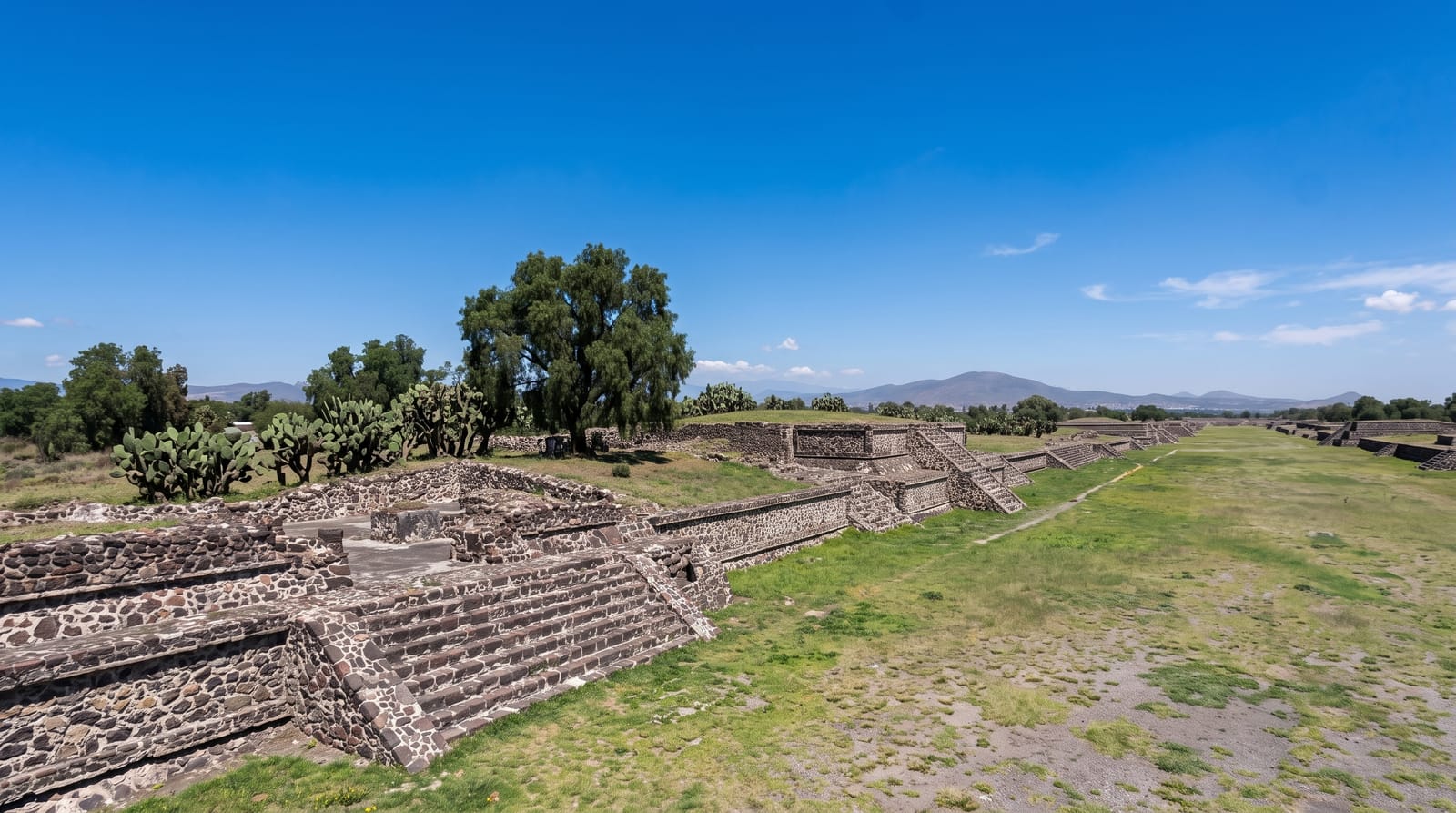
AI illustration
UNESCO World Heritage
Teotihuacan is one of the greatest archaeological sites in the Americas, the ruins of a vast and mysterious city that flourished near modern Mexico City over a thousand years before the Aztecs, who named it the place where the gods were created. Its colossal Pyramids of the Sun and Moon rise along the ceremonial Avenue of the Dead, a UNESCO wonder whose builders and language remain an enigma.
History
The first settlement in the area dates to 600 BC, and until 200 BC it was a scatter of small villages; from 200 BC farmers gathered around its springs, and between AD 1 and 350 the city grew explosively into the largest metropolis in Mesoamerica, swelled by people fleeing volcanic eruptions elsewhere, and built the Pyramids of the Sun and Moon. At its height in the first half of the first millennium it may have had around 100,000 people, the largest city in the Americas and perhaps the sixth-largest in the world. Around 550 its major monuments were sacked and systematically burned, possibly in civil strife, though the city may have lasted into the 7th or 8th century; its original name is unknown, and the name Teotihuacan, often glossed as the birthplace of the gods, was given centuries later by the Aztecs. In 1905 Leopoldo Batres began a major excavation and restoration, and in 1987 the site, covering 83 square kilometres, became a World Heritage Site (Wikipedia, Teotihuacan).
What to look for
- The Pyramid of the Sun - the colossal pyramid, one of the largest in the world.
- The Pyramid of the Moon - the pyramid crowning the Avenue of the Dead.
- The Avenue of the Dead - the great ceremonial axis of the city.
- The Temple of the Feathered Serpent - the carved facade of Quetzalcoatl.
When to go
Year-round; the dry season from November to April is best, and mornings are cooler and quieter before the tour groups. Some balloon operators fly over the pyramids at dawn for a spectacular view.
Practical notes
Climbing the pyramids has been restricted at times to protect them, so check before counting on it. It is huge, hot and shadeless, so go early with water, a hat and good shoes. It is a popular day trip from Mexico City, busy by midday, and vendors line the avenue.
Nearby
Mexico City and its great Anthropology Museum, which holds finds from the site, are an hour away.
Key facts
Source: Wikidata, item Q172613, read on 18 October 2026.
What to pack for Teotihuacan
Chosen from what this place is for. Tap a kit for the full checklist.
- Comfortable walking shoes - Sightseeing means kilometres of pavement and cobbles daily. Find on Amazon
- Modest clothing - Shoulders and knees covered - the single most common requirement. Find on Amazon
- A slim anti-theft daypack - Zips that close properly; keep it in front in crowds and on transit. Find on Amazon
- A scarf or shawl - To cover the head or shoulders on entry; women especially at mosques. Find on Amazon
Some links on this page are Amazon affiliate links - if you buy through them we may earn a small commission at no extra cost to you.
All packing kitsPlan your trip
Where to start if Teotihuacan is going on the list.
Booking links on this page are affiliate links - if you book through them we may earn a small commission at no extra cost to you. It never changes what we write about a place.
Opening times, ticket prices and seasonal closures change - check the official source before you go: official site.