Ouadane
The stone city on the caravan cliff - a UNESCO ksar of collapsing lanes and manuscript memory above the Adrar's date palms.
Updated 18 October 2026
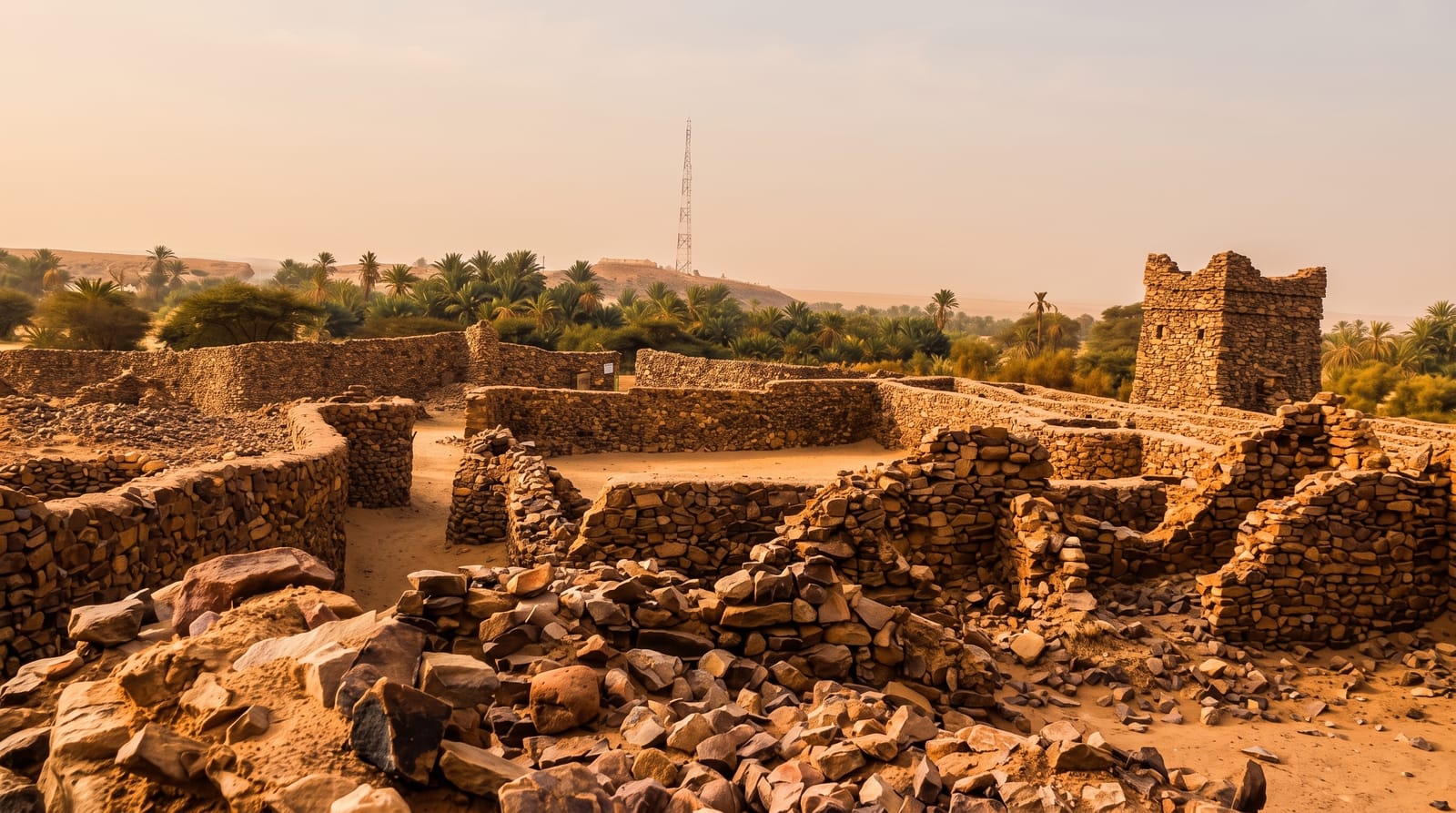
AI illustration
UNESCO World Heritage
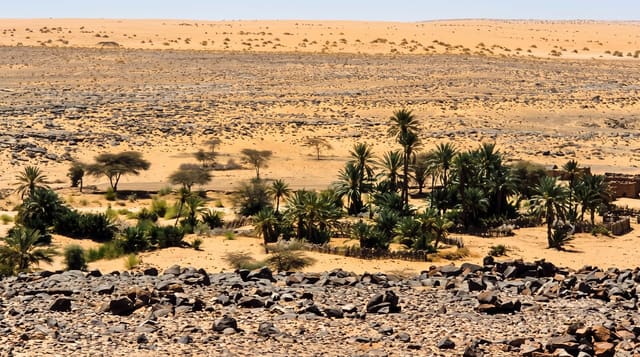
Ouadane climbs its escarpment in a cascade of dry-stone ruin - the most dramatic of the four caravan ksour UNESCO inscribed together, founded in the twelfth century on the gold-and-salt roads and slowly emptied by the centuries until the old town became its own monument: lanes of collapsed masonry stepping down the cliff, the old mosque's minaret presiding, the newer village and palm grove at the foot. Like Chinguetti, Ouadane kept manuscript libraries through its decline, and family custodians still show vellum treasures to visitors who ask respectfully. The desert light does the rest, especially in the hour before sunset when the whole cliff turns to honey.
History
Its early history is uncertain, though the town may have prospered on the trans-Saharan gold trade: the route described by al-Bakri in the 11th century from southern Morocco to Aoudaghost may have passed through it, as Raymond Mauny argued in 1961, though Suzanne Daveau preferred a route further east, and traffic would have fallen from the early 13th century, when Oualata replaced Aoudaghost as the southern terminus. The first written mention is by the Portuguese Ca' da Mosto in the mid-15th century, when Gomes Eanes de Zurara also called it the most important town of the Adrar and the only one with a wall, and fifty years later Valentim Fernandes described its role as a depot for slabs of salt from the Idjil mines. The old town, now in ruins but still largely intact, is a World Heritage Site (Wikipedia, Ouadane).
What's there
- The ruined ksar - stone lanes cascading the escarpment.
- The old mosque - the minaret over the caravan town.
- The manuscript keepers - family libraries surviving the centuries.
- The palm grove - the living green below the stone.
When to go
November to February for bearable desert days and the caravan-season light; late afternoon is the photograph. The Guelb er Richat pairs naturally - most visitors combine them from Atar.
What to expect
The ruins are unstabilised - walk with care and a local guide who knows the safe lanes; fees and manuscript viewings are negotiated courtesies that keep the custodianship alive. Desert travel logistics (4x4, water, local drivers) apply in full. Facilities are auberge-simple.
Nearby
The Richat structure, Chinguetti's libraries and Atar.
What to pack for Ouadane
Chosen from what this place is for. Tap a kit for the full checklist.
- Loose, light, long clothing - Covering up beats bare skin in the desert - and locals dress this way for a reason. Find on Amazon
- Comfortable walking shoes - Sightseeing means kilometres of pavement and cobbles daily. Find on Amazon
- Modest clothing - Shoulders and knees covered - the single most common requirement. Find on Amazon
- A wide-brim hat + sunglasses - Shade for your face and eyes where there is none overhead. Find on Amazon
Some links on this page are Amazon affiliate links - if you buy through them we may earn a small commission at no extra cost to you.
All packing kitsPlan your trip
Where to start if Ouadane is going on the list.
Booking links on this page are affiliate links - if you book through them we may earn a small commission at no extra cost to you. It never changes what we write about a place.
Opening times, ticket prices and seasonal closures change - check the official source before you go: official site.