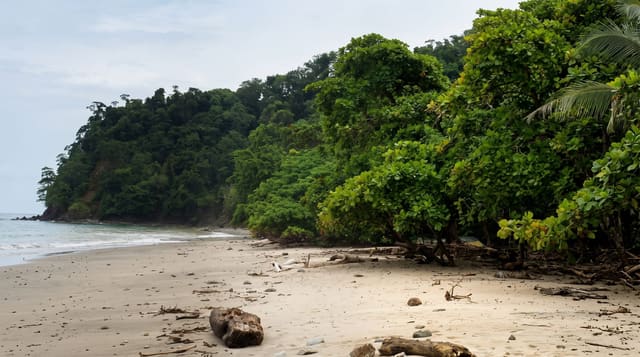
Banc d'Arguin National Park
One of the greatest bird sanctuaries on earth - a vast UNESCO coastal park of shallows, mudflats and desert shore where the Sahara meets the Atlantic, hosting millions of migratory birds in one of the world's most important wintering sites for waterfowl.
Updated 18 October 2026

AI illustration
UNESCO World Heritage
Banc d'Arguin National Park, a UNESCO World Heritage Site stretching along Mauritania's Atlantic coast where the sands of the Sahara meet the ocean, is one of the most important bird sanctuaries in the world. Its vast expanse of shallow coastal waters, mudflats, sandbanks and small islands provides a crucial wintering ground for millions of migratory shorebirds and waterfowl travelling the great flyways from northern Europe and Siberia, a spectacle of avian abundance. The park's rich waters also support fish, dolphins and turtles, and are traditionally fished by the Imraguen people using time-honoured methods, making it a place of both natural and cultural significance.
History
Its rich fisheries and position made this coast a prize for Portugal, France, England, Brandenburg-Prussia and the Dutch. Lured by tales of wealth in the interior, the Portuguese built a trading fort at Arguin in 1455 and soon turned from gold to slaves, exporting as many as 1,000 a year in the mid-15th century to Europe and to the sugar plantations of São Tomé. On 2 July 1816 the French frigate Méduse ran aground on the Banc d'Arguin, and the survivors' account inspired Théodore Géricault's painting The Raft of the Medusa of 1819, now in the Louvre. The national park was set up in 1976 to protect the birds, the fisheries and the geology, and it is a World Heritage Site (Wikipedia, Banc d'Arguin National Park).
Highlights
- The migratory birds - the millions of wintering shorebirds and waterfowl.
- The mudflats and shallows - the vast coastal feeding grounds.
- The Imraguen fishers - the traditional fishing communities.
- The desert-meets-ocean - the Sahara shore and Atlantic waters.
When to go
November to March, the cooler season and the northern winter, is the prime time, when millions of migratory birds fill the park and the desert climate is most bearable; birdwatching is at its spectacular peak. The park is remote, reached by four-wheel drive along the coast and explored by boat with local guides.
Before you go
Banc d'Arguin is remote and undeveloped, reached by rough coastal four-wheel-drive journeys and explored by boat with guides, with very basic facilities, so it is a specialised destination appealing mainly to serious birdwatchers and the adventurous; Mauritania's limited tourism and the desert conditions add to the challenge. For one of the planet's greatest concentrations of migratory birds, in a striking landscape where the Sahara meets the Atlantic, though, it is an extraordinary natural spectacle.
Nearby
The port of Nouadhibou and the desert coast are within reach.
Key facts
Source: Wikidata, item Q539518, read on 18 October 2026.
What to pack for Banc d'Arguin National Park
Chosen from what this place is for. Tap a kit for the full checklist.
- Broken-in walking shoes or boots - Grip and ankle support matter more than looks; never hike in brand-new boots. Find on Amazon
- Travel rod + reel - A packable multi-piece rod fits in a case and covers most holiday fishing. Find on Amazon
- Binoculars - The single best wildlife tool - even a compact pair transforms a sighting. Find on Amazon
- Loose, light, long clothing - Covering up beats bare skin in the desert - and locals dress this way for a reason. Find on Amazon
Some links on this page are Amazon affiliate links - if you buy through them we may earn a small commission at no extra cost to you.
All packing kitsPlan your trip
Where to start if Banc d'Arguin National Park is going on the list.
Booking links on this page are affiliate links - if you book through them we may earn a small commission at no extra cost to you. It never changes what we write about a place.
Opening times, ticket prices and seasonal closures change - check the official source before you go: official site.