Apollonia
The port of ancient Cyrene, with Byzantine basilicas and a harbour now partly under water.
Updated 3 September 2026
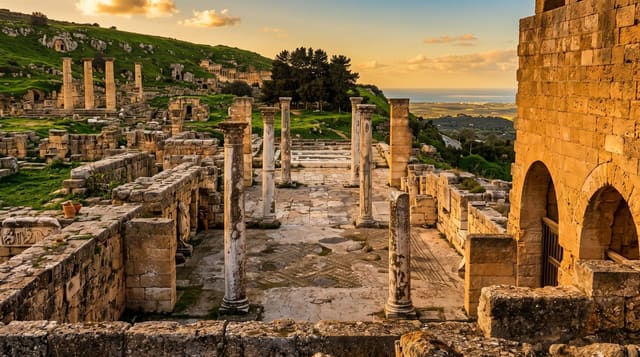
Apollonia served as the harbour of Cyrene and became a substantial city in its own right, and what survives runs along the shore: three Byzantine basilicas with columns of imported marble still standing, a theatre cut into the slope facing the sea, baths and a palace of the Byzantine governor. Part of the ancient harbour is now submerged, the coast here having subsided, and the moles and quays can be seen under the water.
Highlights
- The Byzantine basilicas - three churches with their imported marble columns.
- The theatre - the seating cut into the slope facing directly out to sea.
- The submerged harbour - moles and quays visible under the water offshore.
- The governor's palace - the Byzantine administrative building near the shore.
When to go
March to May and October to November are the comfortable months. Summer on the coast is hot. Winter brings rain to Cyrenaica.
Practical notes
The site has suffered from a lack of maintenance and from encroachment. There is little interpretation on the ground. Visiting Libya requires arrangements made well in advance through a licensed operator.
Nearby
Cyrene is inland, and Ras al-Hilal is east along the coast.
Key facts
Source: Wikidata, item Q45826, read on 18 October 2026.
What to pack for Apollonia
Chosen from what this place is for. Tap a kit for the full checklist.
- Comfortable walking shoes - Sightseeing means kilometres of pavement and cobbles daily. Find on Amazon
- Modest clothing - Shoulders and knees covered - the single most common requirement. Find on Amazon
- A slim anti-theft daypack - Zips that close properly; keep it in front in crowds and on transit. Find on Amazon
- A scarf or shawl - To cover the head or shoulders on entry; women especially at mosques. Find on Amazon
Some links on this page are Amazon affiliate links - if you buy through them we may earn a small commission at no extra cost to you.
All packing kitsPlan your trip
Where to start if Apollonia is going on the list.
Booking links on this page are affiliate links - if you book through them we may earn a small commission at no extra cost to you. It never changes what we write about a place.
Opening times, ticket prices and seasonal closures change - check the official source before you go: official site.