Muang Khoun
The old capital of Xieng Khouang, now a small town among its ruins, with a standing stupa shell and a seated Buddha under open sky.
Updated 21 October 2026
Muang Khoun was the seat of the Xieng Khouang principality for centuries and the province's main town until the twentieth century, when it was largely destroyed and the provincial seat moved to Phonsavan, and what stands here now is a small town among the remains of the old one. That Foun, a sixteenth-century stupa, survives as a brick shell with a hole in its side. At Wat Phia Wat the hall is gone and a large seated Buddha of the same period sits on its base in the open, with the pillars that once held the roof still standing around it.
Highlights
- That Foun - a sixteenth-century brick stupa standing roofless on a low hill.
- Wat Phia Wat - a large seated Buddha on its original base, open to the sky, ringed by broken pillars.
- The old town site - foundations and fragments across the fields where the capital stood.
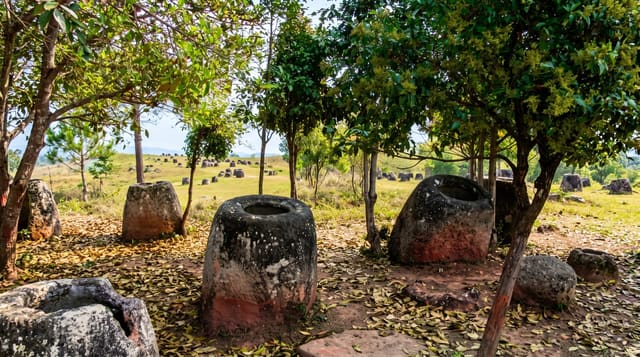
- The setting - upland plain and low hills, the same country as the jar sites.
When to go
November to March is the dry season and the best time for the roads. October leaves the surrounding fields green. The upland winter here is genuinely cold at night, colder than most visitors expect in Laos.
Things to know
There is not a great deal to see and the sites are a few minutes each, so this works as a half-day trip from Phonsavan rather than a destination. Unexploded ordnance remains a concern across this province: stay on paths and cleared ground, which is standard local advice rather than alarmism. Facilities in the town are minimal.
Nearby
Phonsavan and the Plain of Jars sites are half an hour northwest.
Key facts
Source: Wikidata, item Q6402644, read on 18 October 2026.
What to pack for Muang Khoun
Chosen from what this place is for. Tap a kit for the full checklist.
- Comfortable walking shoes - Sightseeing means kilometres of pavement and cobbles daily. Find on Amazon
- A slim anti-theft daypack - Zips that close properly; keep it in front in crowds and on transit. Find on Amazon
- A refillable water bottle - Many cities have public fountains; save money and plastic. Find on Amazon
- A light layer + compact umbrella - For museum air-con and a sudden shower. Find on Amazon
Some links on this page are Amazon affiliate links - if you buy through them we may earn a small commission at no extra cost to you.
All packing kitsPlan your trip
Where to start if Muang Khoun is going on the list.
Booking links on this page are affiliate links - if you book through them we may earn a small commission at no extra cost to you. It never changes what we write about a place.
Opening times, ticket prices and seasonal closures change - check the official source before you go: official site.