Huangyao Ancient Town
A stone-paved Ming and Qing town among karst hills, quieter and less made-over than most.
Updated 4 September 2026
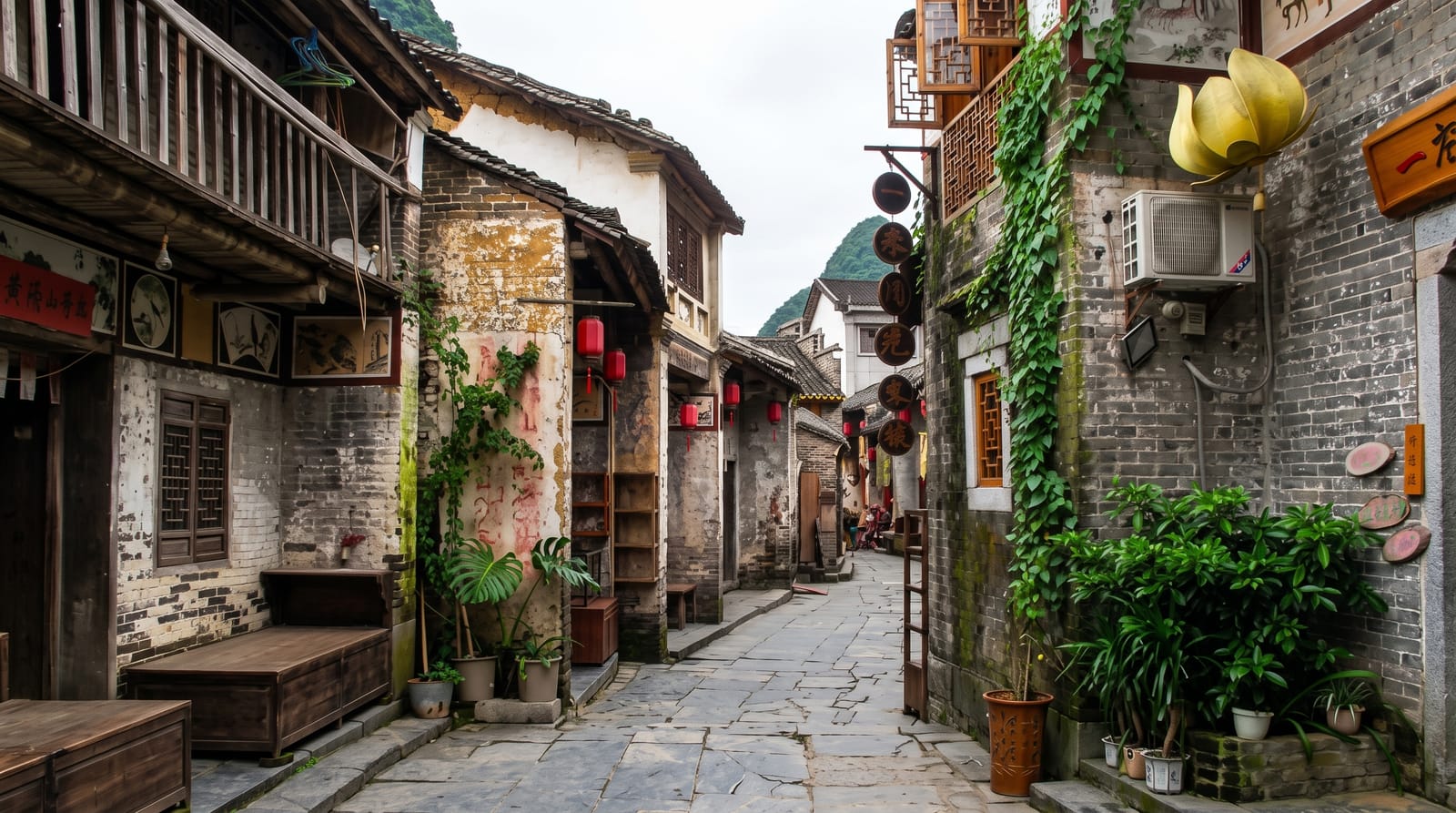
AI illustration
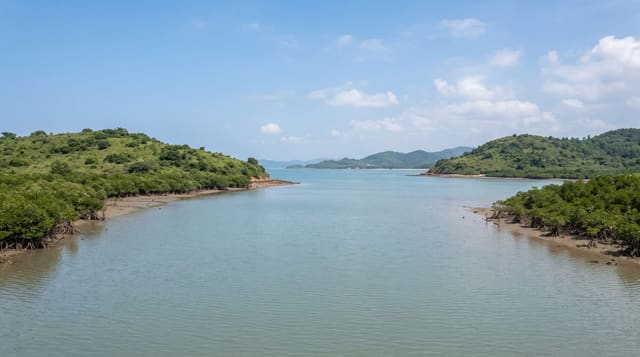
Huangyao grew as a river trading town from the Song and took its present form in the Ming and Qing, with some eight kilometres of streets paved in slabs of local stone, three hundred old houses, ancestral halls, stone bridges and banyans, laid out along streams between karst hills. It sits far enough from major routes that restoration has been slower and lighter than at better-known old towns, so the lanes are still partly residential and the pace is slow. Guesthouses occupy old courtyard houses, the town is small enough to walk entirely, and the surrounding hills, fields and rivers are cycled.
What you'll find
- The stone streets - slab-paved lanes through the old town.
- The courtyard houses - Ming and Qing residences, some open.
- The stone bridges and banyans - crossings and old trees along the streams.
- The karst setting - hills rising directly behind the roofs.
When to go
March to May and September to November for mild weather; summer is hot, humid and wet. Weekends and holidays bring visitors from Guangdong but midweek is quiet.
Practical notes
Tourism has arrived, with souvenir shops and cafés on the main lanes. Entry is charged. Access without a car is slow, and English is almost absent.
Nearby
Hezhou lies northeast; Yangshuo is northwest.
What to pack for Huangyao Ancient Town
Chosen from what this place is for. Tap a kit for the full checklist.
- Strong insect repellent - DEET or picaridin; the jungle is where bites and disease risk are highest. Find on Amazon
- Comfortable walking shoes - Sightseeing means kilometres of pavement and cobbles daily. Find on Amazon
- Long, light, quick-dry clothing - Covers skin from insects and sun without cooking you in the humidity. Find on Amazon
- A slim anti-theft daypack - Zips that close properly; keep it in front in crowds and on transit. Find on Amazon
Some links on this page are Amazon affiliate links - if you buy through them we may earn a small commission at no extra cost to you.
All packing kitsPlan your trip
Where to start if Huangyao Ancient Town is going on the list.
Booking links on this page are affiliate links - if you book through them we may earn a small commission at no extra cost to you. It never changes what we write about a place.
Opening times, ticket prices and seasonal closures change - check the official source before you go: official site.