Tsavo East and Tsavo West
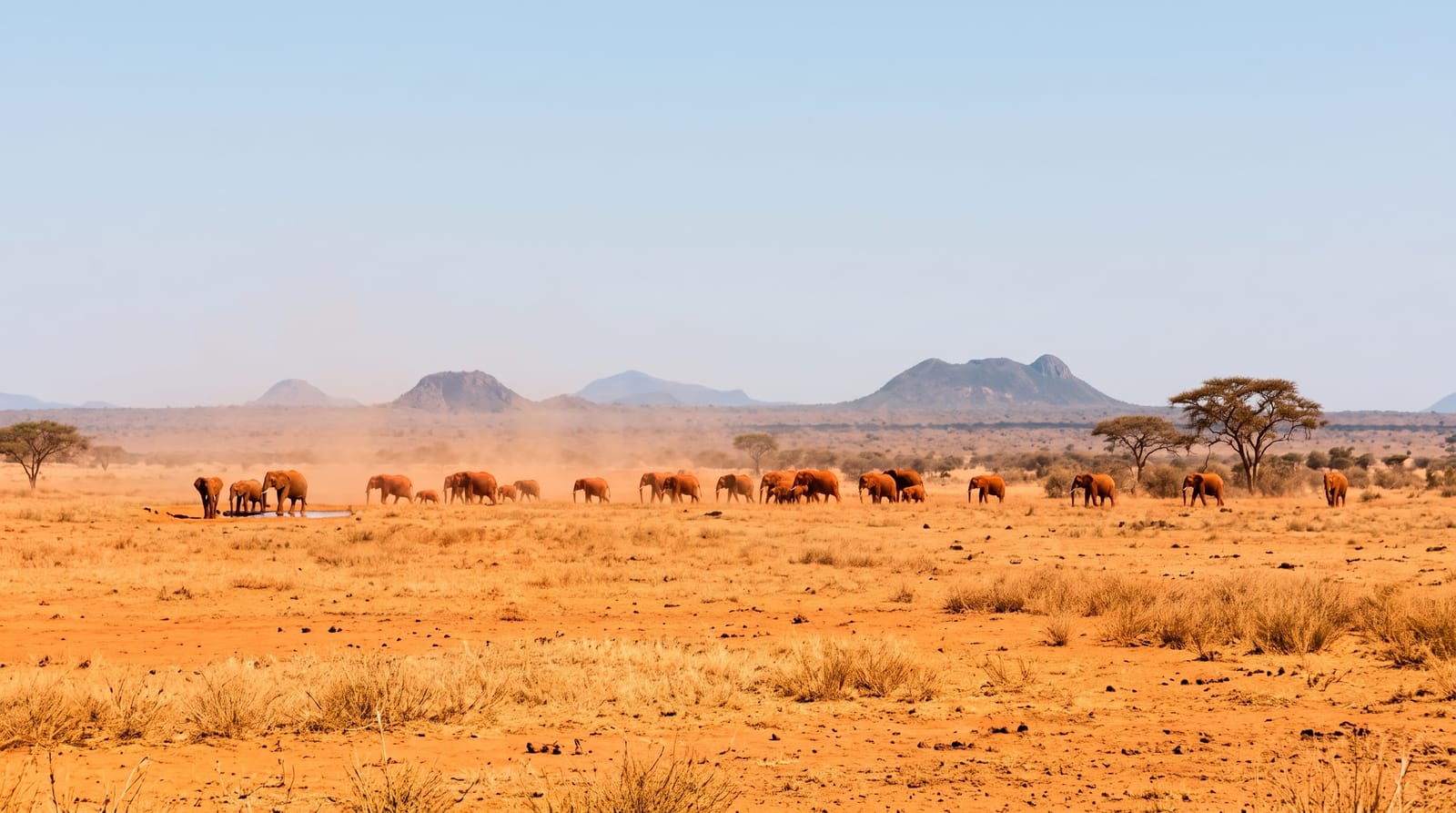
Together the largest protected area in Kenya, a vast red-earth wilderness where the elephants dust themselves the colour of the soil.
Updated 31 August 2026
AI illustration
Tsavo East and Tsavo West together cover an area larger than some countries, and their scale is the point: this is not the manicured game-viewing of the smaller reserves but a huge, dry, thorny wilderness where you can drive for an hour without seeing another vehicle. The soil is a deep ochre red, and the elephants that dust-bathe in it come out the same colour, which is how Tsavo's famous red elephants got their name. The eastern park is flatter and drier, cut by the Galana river and edged by the Yatta Plateau, one of the longest lava flows in the world; the western is greener and more broken, with volcanic hills, the Shetani lava field, and Mzima Springs, where clear water wells up through porous rock and an underwater viewing chamber lets you look through it at hippos and fish. Lion, buffalo, giraffe, oryx and enormous herds of elephant range through both.
The landscape
- The red elephants - herds dusted ochre by Tsavo's red soil.
- Mzima Springs - clear spring pools with an underwater viewing chamber, in Tsavo West.
- The Yatta Plateau and Lugard Falls - the long lava flow and the sculpted river rapids.
- The scale - vast, empty bush country with very few other vehicles.
When to go
The dry seasons, roughly June to October and January to February, concentrate animals at water and thin the bush, which matters a great deal in Tsavo's dense scrub. The parks lie conveniently between Nairobi and the coast, which makes them an easy add-on to a beach trip.
Good to know
Tsavo is big and thick, so wildlife is more scattered and harder to spot than in the Mara or Amboseli, and first-time safari-goers hoping for constant sightings can be disappointed; its rewards are space, solitude and elephants. Distances between gates and lodges are long over rough tracks. The two parks charge separately. Poaching hit Tsavo hard in the past, and while numbers have recovered, animals here are warier than in the busier reserves.
Nearby
Amboseli lies to the west below Kilimanjaro; the coast and Mombasa are a few hours east.
What to pack for Tsavo East and Tsavo West
Chosen from what this place is for. Tap a kit for the full checklist.
- Broken-in walking shoes or boots - Grip and ankle support matter more than looks; never hike in brand-new boots. Find on Amazon
- Binoculars - The single best wildlife tool - even a compact pair transforms a sighting. Find on Amazon
- Layers + a waterproof shell - Mountain weather turns fast; a packable rain jacket saves the day. Find on Amazon
- A zoom camera or long lens - Animals rarely come close; reach beats megapixels. Find on Amazon
Some links on this page are Amazon affiliate links - if you buy through them we may earn a small commission at no extra cost to you.
All packing kitsPlan your trip
Where to start if Tsavo East and Tsavo West is going on the list.
Booking links on this page are affiliate links - if you book through them we may earn a small commission at no extra cost to you. It never changes what we write about a place.
Opening times, ticket prices and seasonal closures change - check the official source before you go: official site.