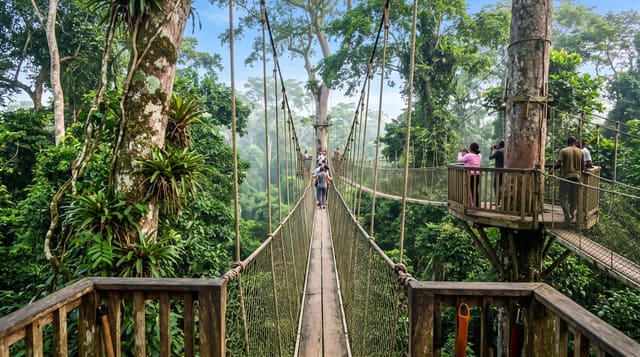
Kakamega Forest
The country's last surviving patch of Congo-basin rainforest, a green island in western farmland full of birds, butterflies and monkeys found nowhere else in Kenya.
Updated 31 August 2026
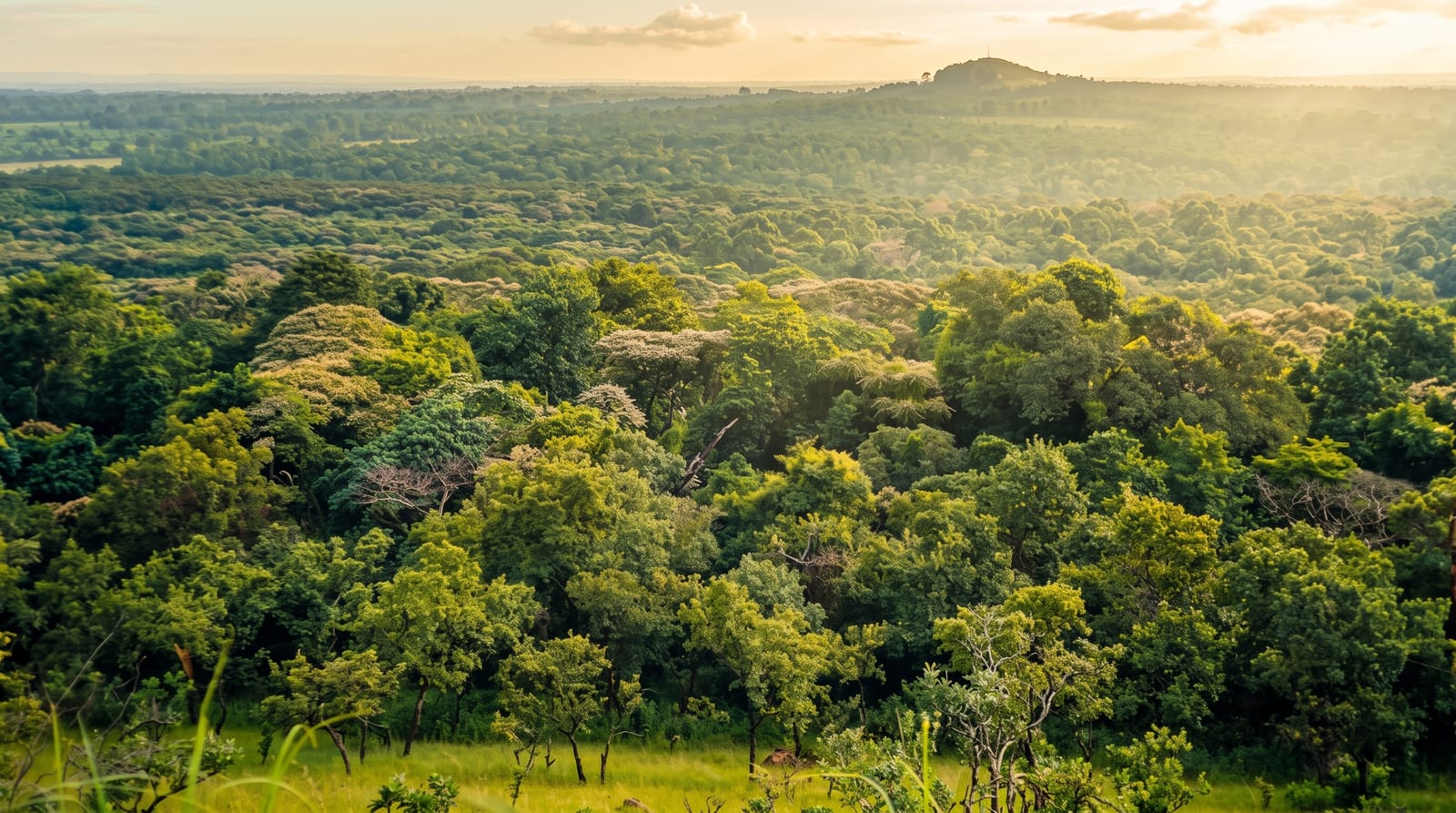
AI illustration
Kakamega is the easternmost remnant of the great rainforest belt that once ran across equatorial Africa from the Congo basin, now a green island of a few hundred square kilometres surrounded by intensively farmed land, and the wildlife it holds is unlike anywhere else in Kenya. Its bird list runs to hundreds of species, many of them West and Central African birds at the very edge of their range, including the great blue turaco crashing through the canopy. Blue and red-tailed monkeys, black-and-white colobus and the rare De Brazza's monkey live in the trees, and the forest is famous for butterflies and for its trees, some of them huge buttressed giants. Trails run from the two main entrances, including a climb to Lirhanda Hill for dawn over the canopy, and night walks turn up bushbabies and flying squirrels.
The landscape
- The birdlife - Central African species at their range limit, including the great blue turaco.
- The monkeys - blue, red-tailed, colobus and the rare De Brazza's.
- Lirhanda Hill at dawn - the climb to a viewpoint over the canopy at first light.
- Night walks - bushbabies, flying squirrels and the forest after dark.
When to go
The drier windows of December to March and June to August make the trails easier, though this is rainforest and rain is possible any day. Dawn is by far the best time for birds and for the hill viewpoint. Guides know the territories of the rarer monkeys and transform a walk.
Good to know
It is a long way west, near the Ugandan border, and reaching it takes real effort from Nairobi, which is why so few visitors come. Trails are muddy and leech-friendly after rain, and accommodation is limited to basic bandas and a couple of simple lodges. It is a forest, so wildlife is heard more than seen and a guide makes the difference between a walk in trees and a genuine wildlife day.
Nearby
Kisumu and Lake Victoria are an hour south; the Nandi hills and tea country lie east.
Key facts
Source: Wikidata, item Q1397614, read on 18 October 2026.
What to pack for Kakamega Forest
Chosen from what this place is for. Tap a kit for the full checklist.
- Broken-in walking shoes or boots - Grip and ankle support matter more than looks; never hike in brand-new boots. Find on Amazon
- Binoculars - The single best wildlife tool - even a compact pair transforms a sighting. Find on Amazon
- Strong insect repellent - DEET or picaridin; the jungle is where bites and disease risk are highest. Find on Amazon
- Layers + a waterproof shell - Mountain weather turns fast; a packable rain jacket saves the day. Find on Amazon
Some links on this page are Amazon affiliate links - if you buy through them we may earn a small commission at no extra cost to you.
All packing kitsPlan your trip
Where to start if Kakamega Forest is going on the list.
Booking links on this page are affiliate links - if you book through them we may earn a small commission at no extra cost to you. It never changes what we write about a place.
Opening times, ticket prices and seasonal closures change - check the official source before you go: official site.