Yakushima
The moss island of ancient cedars - rain-soaked primeval forest with trees a thousand years old and more, sea turtle beaches and mountains rising from subtropical coast, UNESCO-listed.
Updated 18 October 2026
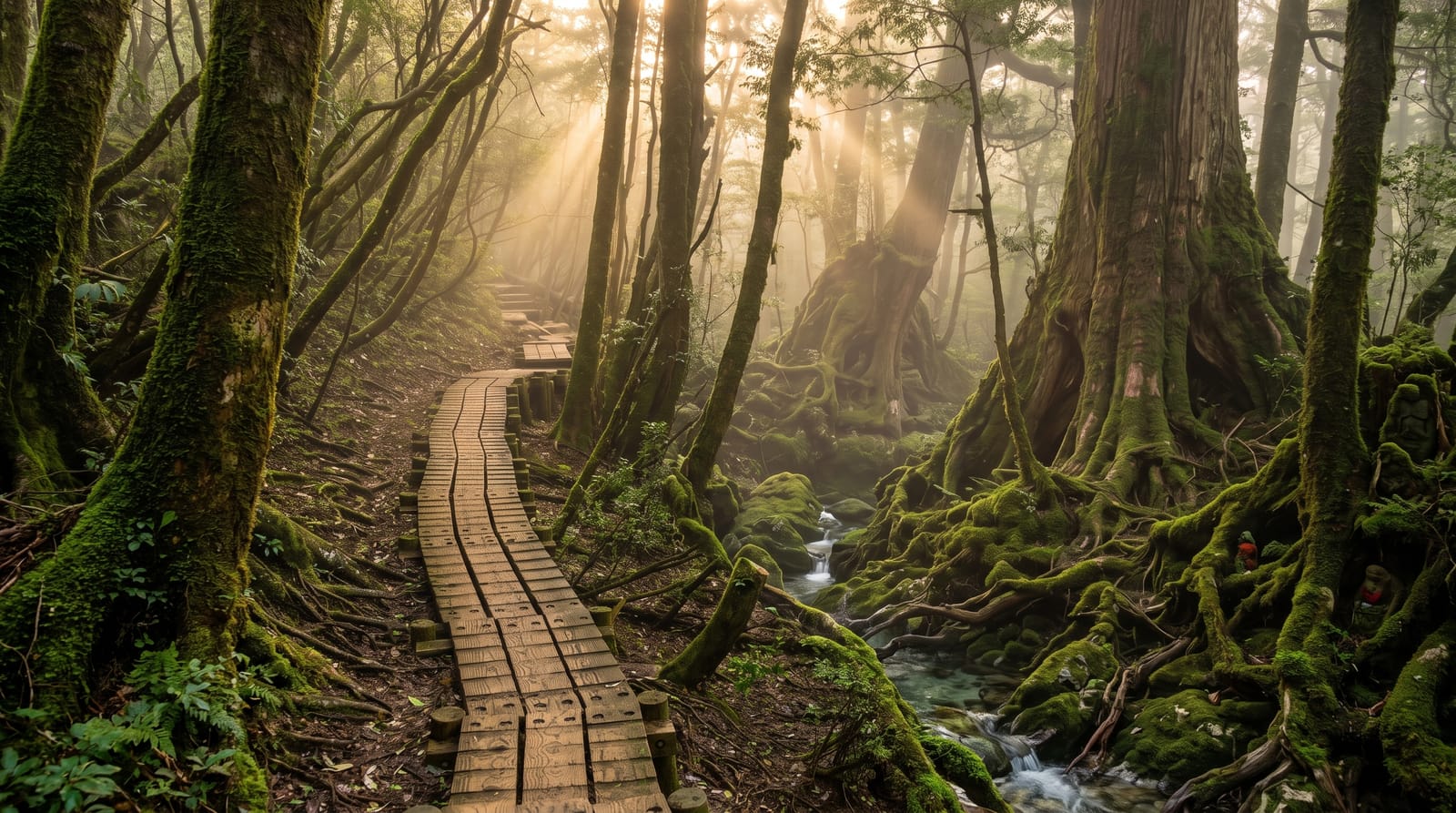
AI illustration
UNESCO World Heritage
Yakushima is a small round island south of Kyushu where mountains climb straight from warm ocean into cloud, wringing out some of the highest rainfall in Japan - locals joke that it rains thirty-five days a month - and that endless water feeds a primeval forest unlike anywhere else in the country. Yakusugi cedars over a thousand years old stand moss-bearded in the mist, the most celebrated of them, Jomon Sugi, far older still; the mossy ravines famously inspired the forest scenes of Princess Mononoke; and down at the coast, loggerhead turtles nest on the beaches in early summer. It is Japan's wildest easily-reached island and a UNESCO natural site.
History
Yakushima has been settled since at least the Jōmon period and first appears in writing in records of the Chinese Sui dynasty: in 601 a Chinese expedition reached the country it called Liukiu, finding the people small but warlike, and in 607 a second expedition came to trade and took one of the islanders back to China. The Shoku Nihongi, in an entry of 702, places Yakushima in the ancient province of Tane, and in the Edo period it was ruled by the Shimazu of the Satsuma domain as part of Ōsumi Province, passing to Kagoshima Prefecture after the Meiji Restoration. In 1980 a large area became a UNESCO biosphere reserve, and in 1993 the island's ancient forest became a natural World Heritage Site and 10 hectares of wetland at Nagata-hama a Ramsar site (Wikipedia, Yakushima).
What you'll find
- Shiratani Unsuikyo - the moss ravine of the Mononoke forests, walkable in a half day.
- Jomon Sugi - the ancient giant cedar, a serious ten-hour round-trip hike.
- Yakusugi Land - accessible boardwalk loops among thousand-year trees.
- The coast - seaside onsen pools, waterfalls and summer turtle beaches.
When to go
Spring and autumn offer the driest of the island's famously wet weather and comfortable hiking. Early summer brings nesting turtles and hydrangeas but also the rainy season at full power; winter dusts the peaks with snow while the coast stays mild. Whatever the month, pack for rain without negotiation.
Before you go
The rain is not a joke - it will likely rain on you, and proper waterproofs decide whether that is atmospheric or miserable. The Jomon Sugi pilgrimage is long, starts before dawn and feels more corridor than wilderness in peak season; many visitors find Shiratani's moss ravines the better experience at a fraction of the effort. Buses are sparse - a rental car unlocks the island. Book lodging ahead; capacity is small.
Nearby
Kagoshima city and the smoking volcano of Sakurajima are the mainland gateway across the strait.
Key facts
Source: Wikidata, item Q242176, read on 18 October 2026.
What to pack for Yakushima
Chosen from what this place is for. Tap a kit for the full checklist.
- Broken-in walking shoes or boots - Grip and ankle support matter more than looks; never hike in brand-new boots. Find on Amazon
- Reef-safe sunscreen - High SPF that will not bleach the coral you are swimming over. Find on Amazon
- Binoculars - The single best wildlife tool - even a compact pair transforms a sighting. Find on Amazon
- Warm base layers - Merino or synthetic against the skin - never cotton, which chills when damp. Find on Amazon
Some links on this page are Amazon affiliate links - if you buy through them we may earn a small commission at no extra cost to you.
All packing kitsPlan your trip
Where to start if Yakushima is going on the list.
Booking links on this page are affiliate links - if you book through them we may earn a small commission at no extra cost to you. It never changes what we write about a place.
Opening times, ticket prices and seasonal closures change - check the official source before you go: official site.