Tono Furusato Village
Curved farmhouses where families and horses lived under one roof, in the valley of Japan's best-known folktale collection.
Updated 12 October 2026
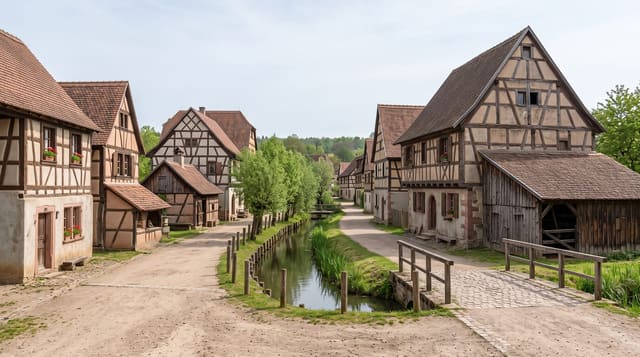
Kunio Yanagita published Tono Monogatari in 1910, a collection of the tales told in this valley - of kappa in the rivers, of zashiki-warashi, the child spirits that bring fortune to a house, of the mountain people - and it founded Japanese folklore studies as a discipline. The village collects several magariya, the L-shaped farmhouses of this region, in which the stable formed a wing at right angles to the living quarters so that horses were kept inside the house; Tono bred horses and the arrangement kept them warm and watched. The buildings are thatched, dark inside, with irori hearths kept smoking to preserve the thatch, and staff work them - weaving, cooking, tending the fields around. Storytellers narrate the tales in the local dialect at set times. It is a working demonstration farm rather than a static museum.
Highlights
- Magariya - L-shaped farmhouses with the stable built into the living quarters.
- Smoking hearths - irori kept burning to preserve the thatch above them.
- Working demonstration - staff weaving, cooking and farming the surrounding land.
- Storytelling - the Tono tales narrated in dialect at set times.
When to go
April to November. Half a day. Winter is snowbound and services reduce.
Practical notes
Storytelling is in the local dialect and hard to follow even for Japanese speakers. The site is well outside Tono town and buses are infrequent. Interiors are dark and smoky by design. Winter closes much of the programme.
Nearby
Tono town and its folk museums are north-east; Kappabuchi stream is nearby.
Key facts
Source: Wikidata, item Q11642412, read on 18 October 2026.
What to pack for Tono Furusato Village
Chosen from what this place is for. Tap a kit for the full checklist.
- Comfortable walking shoes - Sightseeing means kilometres of pavement and cobbles daily. Find on Amazon
- A slim anti-theft daypack - Zips that close properly; keep it in front in crowds and on transit. Find on Amazon
- A refillable water bottle - Many cities have public fountains; save money and plastic. Find on Amazon
- A light layer + compact umbrella - For museum air-con and a sudden shower. Find on Amazon
Some links on this page are Amazon affiliate links - if you buy through them we may earn a small commission at no extra cost to you.
All packing kitsPlan your trip
Where to start if Tono Furusato Village is going on the list.
Booking links on this page are affiliate links - if you book through them we may earn a small commission at no extra cost to you. It never changes what we write about a place.
Opening times, ticket prices and seasonal closures change - check the official source before you go: official site.