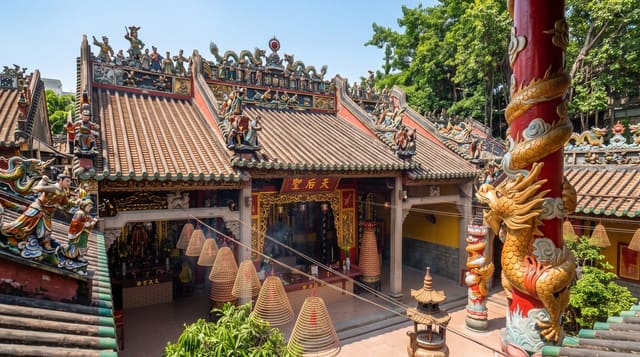
Shitennoji
The first state-built Buddhist temple in Japan, founded in 593, rebuilt many times to the same original plan.
Updated 18 October 2026
Shitennoji was founded in 593 by Prince Shotoku and is the oldest officially administered temple in Japan. Nothing standing is original - it has burned, collapsed in earthquakes and been destroyed and rebuilt repeatedly, most recently in reinforced concrete in 1963 - but the layout is: a south gate, middle gate, five-storey pagoda, main hall and lecture hall on a single straight north-south axis inside a roofed corridor, which is the earliest Buddhist temple plan used in Japan and is named after this temple. Walking that axis is the reason to come. The Gokuraku-jodo garden behind is a Pure Land garden of ponds and streams. On the twenty-first and twenty-second of each month a large flea market fills the grounds. The temple remains a working centre of the Wa sect, which it founded in 1946.
History
Prince Shōtoku, known for his Buddhist faith at a time when Buddhism was not yet widespread in Japan, commissioned the temple as part of a national project to promote it, and invited three carpenters from the Korean kingdom of Baekje to lead the building. One of the men involved later founded the firm Kongō Gumi, which specialised in temples and shrines and was the world's oldest company until it was taken over by the Takamatsu Construction Group in 2004. The buildings have been rebuilt several times, most completely in 1963, and soon after the Second World War the temple left the Tendai sect and formed the Wa sect (Wikipedia, Shitennō-ji).
What you'll find
- The oldest plan in Japan - gate, pagoda, main hall and lecture hall on one straight axis.
- A 593 foundation - the first state-administered Buddhist temple in the country.
- Concrete reconstruction - rebuilt in 1963 to the original layout after repeated destruction.
- The monthly market - a large flea market on the twenty-first and twenty-second.
When to go
The twenty-first or twenty-second for the market; all year otherwise. Two hours.
Practical notes
The buildings are twentieth-century concrete - the antiquity is in the plan, not the fabric. Inner areas and garden are ticketed separately. Market days change the atmosphere entirely. The surrounding district is plain.
Nearby
Abeno Harukas is south at Tennoji; Shinsekai is west.
Key facts
Source: Wikidata, item Q339859, read on 18 October 2026.
What to pack for Shitennoji
Chosen from what this place is for. Tap a kit for the full checklist.
- Comfortable walking shoes - Sightseeing means kilometres of pavement and cobbles daily. Find on Amazon
- Modest clothing - Shoulders and knees covered - the single most common requirement. Find on Amazon
- A slim anti-theft daypack - Zips that close properly; keep it in front in crowds and on transit. Find on Amazon
- A scarf or shawl - To cover the head or shoulders on entry; women especially at mosques. Find on Amazon
Some links on this page are Amazon affiliate links - if you buy through them we may earn a small commission at no extra cost to you.
All packing kitsPlan your trip
Where to start if Shitennoji is going on the list.
Booking links on this page are affiliate links - if you book through them we may earn a small commission at no extra cost to you. It never changes what we write about a place.
Opening times, ticket prices and seasonal closures change - check the official source before you go: official site.