Shirakawa-go
The village of praying-hands farmhouses - steep thatched roofs built for deep snow, rice paddies and mountain mist, a UNESCO icon of rural Japan.
Updated 18 October 2026
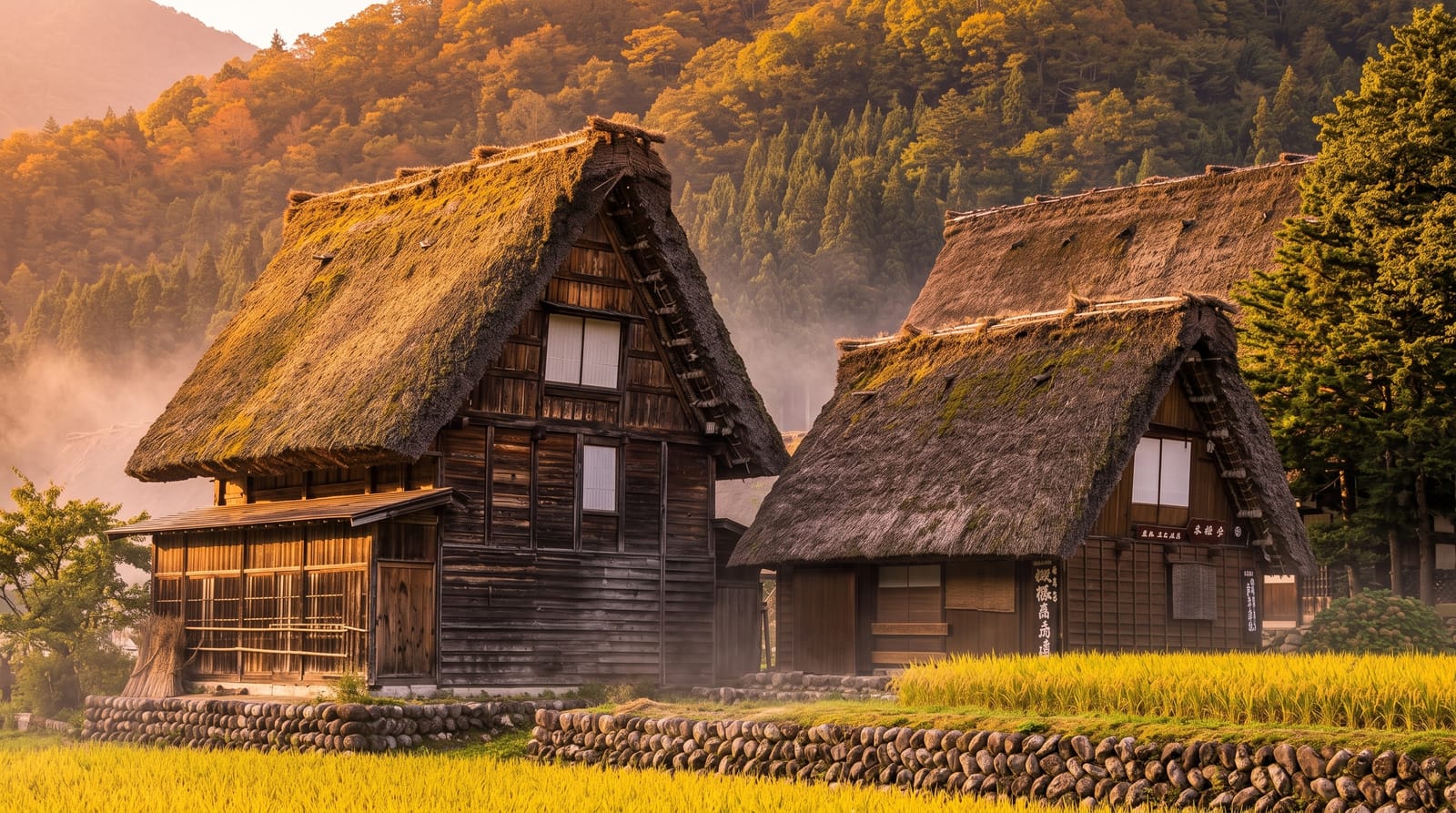
AI illustration
UNESCO World Heritage
In a remote river valley in the mountains, the village of Ogimachi in Shirakawa-go preserves Japan's most distinctive rural architecture: gassho-zukuri farmhouses, named praying hands for their steep thatched roofs pitched to shed the region's enormous snowfalls. Some are centuries old, their vast attics once used for silkworm farming, and several dozen still stand among rice paddies and vegetable gardens - lived in, farmed around, and UNESCO-listed together with neighbouring Gokayama. Seen from the hillside viewpoint with mist on the valley, or glowing under deep snow on winter evenings, it is one of the most photographed and most affecting rural scenes in the country.
History
Mount Hakusan, the main peak of the area, has been held sacred since ancient times, and in the 8th century the Shirakawa-gō and Gokayama valleys became a place of ascetic practice and mountain worship centred on it. For a long time the region was under the Tendai school of Buddhism, until in the 13th century it gave way to the Jōdo Shin school, which is still the main religious influence today. The remote, mountainous valleys also keep the legend of defeated warriors who fled here to hide. The three villages of the World Heritage Site, spread over 68 hectares of the Shogawa valley across the border of Gifu and Toyama, are known for their gasshō-zukuri farmhouses with steep roofs built to shed the heavy snow (Wikipedia, Historic Villages of Shirakawa-gō and Gokayama).
The main sights
- The Ogimachi viewpoint - the classic overlook of thatched roofs among the paddies.
- Wada House and the open farmhouses - centuries-old interiors, hearth smoke and silkworm attics.
- The winter light-up evenings - the village glowing under metres of snow on set January and February dates.
- Quieter Gokayama - the smaller neighbouring villages over the pass, same architecture, fraction of the visitors.
When to go
Every season composes a different postcard: fresh green paddies in early summer, gold at harvest, crimson hills in autumn and the famous heavy snow in January and February. The winter illumination evenings are ticketed and book out far in advance; ordinary winter days need no reservation and still deliver the snowbound scene.
Practical notes
Shirakawa-go is both a living village and a very famous one - midday brings coachloads, and the main lane can feel like a queue. Arrive early, stay for dusk, or sleep in a farmhouse minshuku to meet the place honestly; overnight guests get the village nearly alone. Winter access is reliable but pack proper boots - paths are snow and ice for months.
Nearby
Takayama's old town and the Gokayama villages pair naturally; Kanazawa is reachable by the same bus line.
Key facts
Source: Wikidata, item Q877626, read on 18 October 2026.
What to pack for Shirakawa-go
Chosen from what this place is for. Tap a kit for the full checklist.
- Warm base layers - Merino or synthetic against the skin - never cotton, which chills when damp. Find on Amazon
- Comfortable walking shoes - Sightseeing means kilometres of pavement and cobbles daily. Find on Amazon
- Modest clothing - Shoulders and knees covered - the single most common requirement. Find on Amazon
- Shelter suited to the place - Tent, tarp or hut booking - match it to the terrain and rules. Find on Amazon
Some links on this page are Amazon affiliate links - if you buy through them we may earn a small commission at no extra cost to you.
All packing kitsPlan your trip
Where to start if Shirakawa-go is going on the list.
Booking links on this page are affiliate links - if you book through them we may earn a small commission at no extra cost to you. It never changes what we write about a place.
Opening times, ticket prices and seasonal closures change - check the official source before you go: official site.