Okayama Korakuen
One of the three great gardens of Japan, unusual for its wide lawns, with a black castle borrowed as backdrop.
Updated 20 October 2026
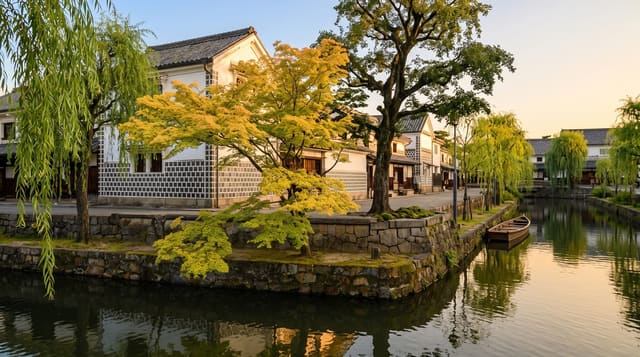
Korakuen was completed in 1700 for the lord of Okayama and is counted with Kenrokuen and Kairakuen as one of the three great gardens of Japan. What separates it is the open ground: most strolling gardens are dense, and this one has broad lawns between the ponds, tea plantation, rice paddy and plum grove, which makes it feel airy in a way the others do not. The layout uses shakkei, borrowed scenery - Okayama Castle, whose keep is black-boarded and known as the crow castle, stands across the river and is deliberately framed from within the garden as though part of it. Streams run through the whole site from a diverted river, feeding the ponds and the paddy. The garden was heavily damaged in 1934 by flood and again in the war, and was restored using the Edo-period plans and paintings that had survived.
History
In 1687 the daimyō Ikeda Tsunamasa had Tsuda Nagatada begin the garden, which was finished in 1700. It was first called Kōen, the "later garden", because it was built after Okayama Castle, and in 1871 it was renamed Kōrakuen after senyu koraku, "grieve earlier than others, enjoy later than others", a line from Fan Zhongyan (Wikipedia, Kōraku-en).
What you'll find
- Open lawn - broad grass between ponds, unusual among Japanese strolling gardens.
- Borrowed scenery - the black castle framed across the river as part of the view.
- A working landscape - tea plantation, rice paddy and plum grove inside the garden.
- Restoration from plans - rebuilt after 1934 flood damage using surviving Edo drawings.
When to go
May for azaleas, November for colour. Two hours. Early morning is quietest.
Practical notes
Entry is charged and the castle across the river is a separate ticket. The lawns can look bare in winter. It is smaller than its reputation suggests - two hours is plenty. Summer heat in Okayama is heavy.
Nearby
Okayama Castle is across the footbridge; Kurashiki is west.
Key facts
Source: Wikidata, item Q1377689, read on 18 October 2026.
What to pack for Okayama Korakuen
Chosen from what this place is for. Tap a kit for the full checklist.
- Broken-in walking shoes or boots - Grip and ankle support matter more than looks; never hike in brand-new boots. Find on Amazon
- Layers + a waterproof shell - Mountain weather turns fast; a packable rain jacket saves the day. Find on Amazon
- Daypack with rain cover - 20-30 litres holds water, snacks, layers and a first-aid kit. Find on Amazon
- Offline maps + a power bank - Download the trail before you lose signal; carry backup charge. Find on Amazon
Some links on this page are Amazon affiliate links - if you buy through them we may earn a small commission at no extra cost to you.
All packing kitsPlan your trip
Where to start if Okayama Korakuen is going on the list.
Booking links on this page are affiliate links - if you book through them we may earn a small commission at no extra cost to you. It never changes what we write about a place.
Opening times, ticket prices and seasonal closures change - check the official source before you go: official site.