Kamakura Great Buddha
A serene bronze Buddha over eleven metres tall, sitting in the open air since his hall washed away centuries ago - the heart of temple-filled, beach-fringed Kamakura.
Updated 20 October 2026
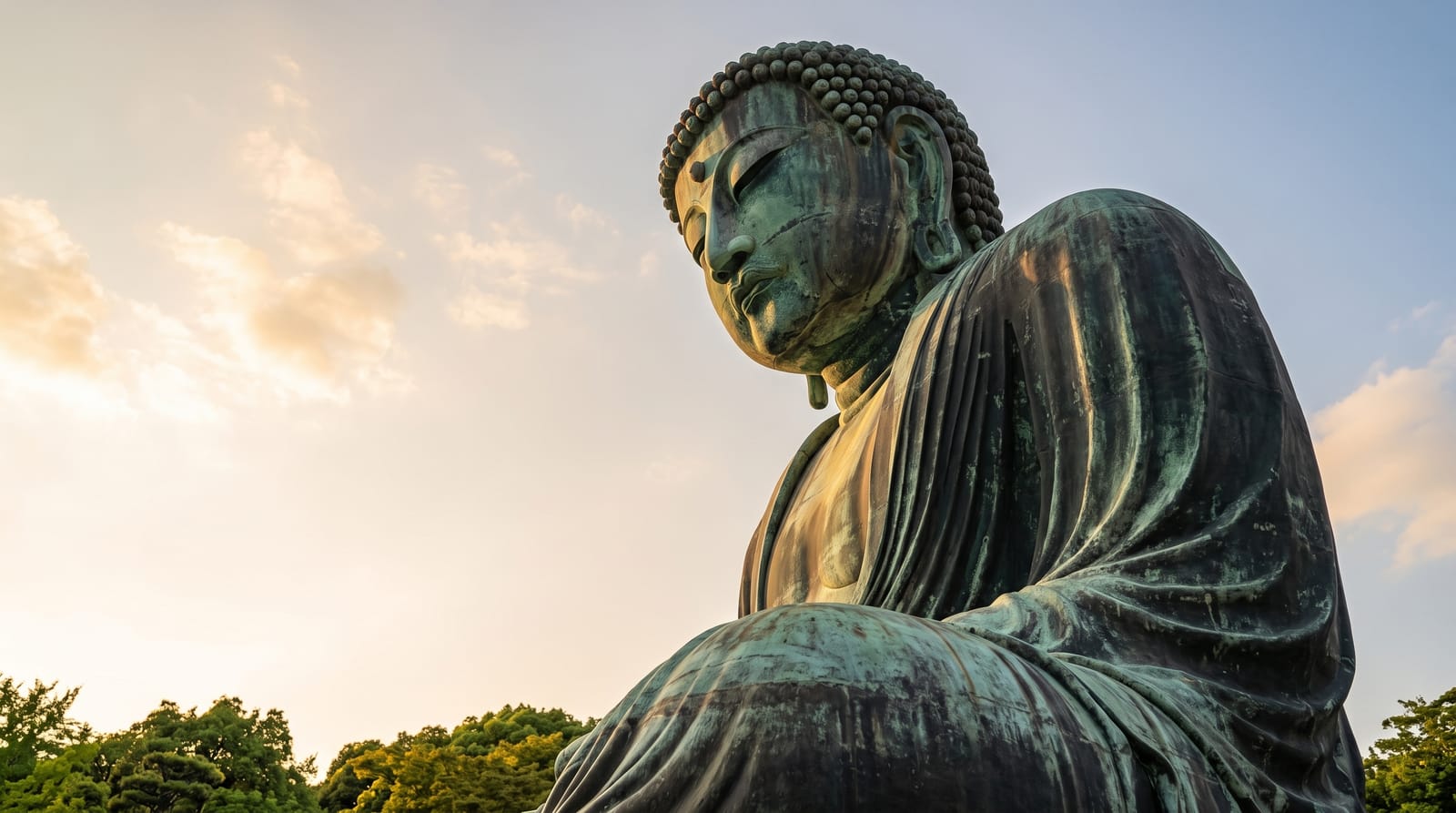
AI illustration
The Great Buddha of Kamakura has sat in meditation for over seven centuries, a bronze colossus more than eleven metres tall whose last wooden hall was washed away by a tsunami in 1498, so long ago that open sky now seems his natural setting. Green with age and gently smiling, he anchors Kotoku-in temple in Kamakura, the seaside town that was medieval Japan's capital and remains packed with Zen temples, shrines, hydrangea lanes and bamboo groves - all an easy hour from Tokyo. Visitors can even duck inside the hollow statue to see how thirteenth-century casters built him in stacked bronze sections.
History
Temple records date the bronze statue to around 1252. It replaced a wooden statue damaged by a storm in 1248, when its hall was wrecked too; the new hall was wrecked by a storm in 1334 and damaged again in 1369, and the last building over the statue was washed away by the tsunami that followed the Nankai earthquake of 20 September 1498 (Wikipedia, Kōtoku-in).
What you'll find
- The Great Buddha himself - calm, weathered and best in slanted morning or late light.
- Hase-dera temple - hillside gardens, a golden eleven-headed Kannon and bay views just down the road.
- Tsurugaoka Hachimangu and Komachi street - the great shrine avenue and its snacking approach.
- The Zen temples and hiking paths - Kencho-ji, Engaku-ji and the wooded trails linking them.
When to go
Kamakura works year round: June brings hydrangeas to Hase-dera and Meigetsu-in, autumn colours the Zen gardens, and clear winter days are quiet with sharp light on the bronze. Summer adds beach crowds - the town doubles as Tokyo's surf-and-swim escape.
What to expect
The Buddha is genuinely moving but occupies twenty minutes; Kamakura's real gift is the full day of temples, trails and back lanes around him - plan the loop rather than the single stop. Weekends are busy with Tokyo day-trippers, so go on a weekday if you can. Watch your snacks near the shrine avenue: the local kites are skilled thieves with excellent dive technique.
Nearby
Enoshima island and its sea-cave shrine sit along the same coastal railway; Yokohama is on the way back to Tokyo.
Key facts
Source: Wikidata, item Q672056, read on 18 October 2026.
What to pack for Kamakura Great Buddha
Chosen from what this place is for. Tap a kit for the full checklist.
- Broken-in walking shoes or boots - Grip and ankle support matter more than looks; never hike in brand-new boots. Find on Amazon
- Quick-dry clothing - Board shorts or synthetics that shrug off spray and dry fast. Find on Amazon
- Head torch + spare batteries - Hands-free light is essential; caves are truly dark. Find on Amazon
- Comfortable walking shoes - Sightseeing means kilometres of pavement and cobbles daily. Find on Amazon
Some links on this page are Amazon affiliate links - if you buy through them we may earn a small commission at no extra cost to you.
All packing kitsPlan your trip
Where to start if Kamakura Great Buddha is going on the list.
Booking links on this page are affiliate links - if you book through them we may earn a small commission at no extra cost to you. It never changes what we write about a place.
Opening times, ticket prices and seasonal closures change - check the official source before you go: official site.