Ginzan Onsen
A single street of wooden inns facing each other across a river in the Yamagata mountains, gaslit at dusk and deep in snow.
Updated 20 October 2026
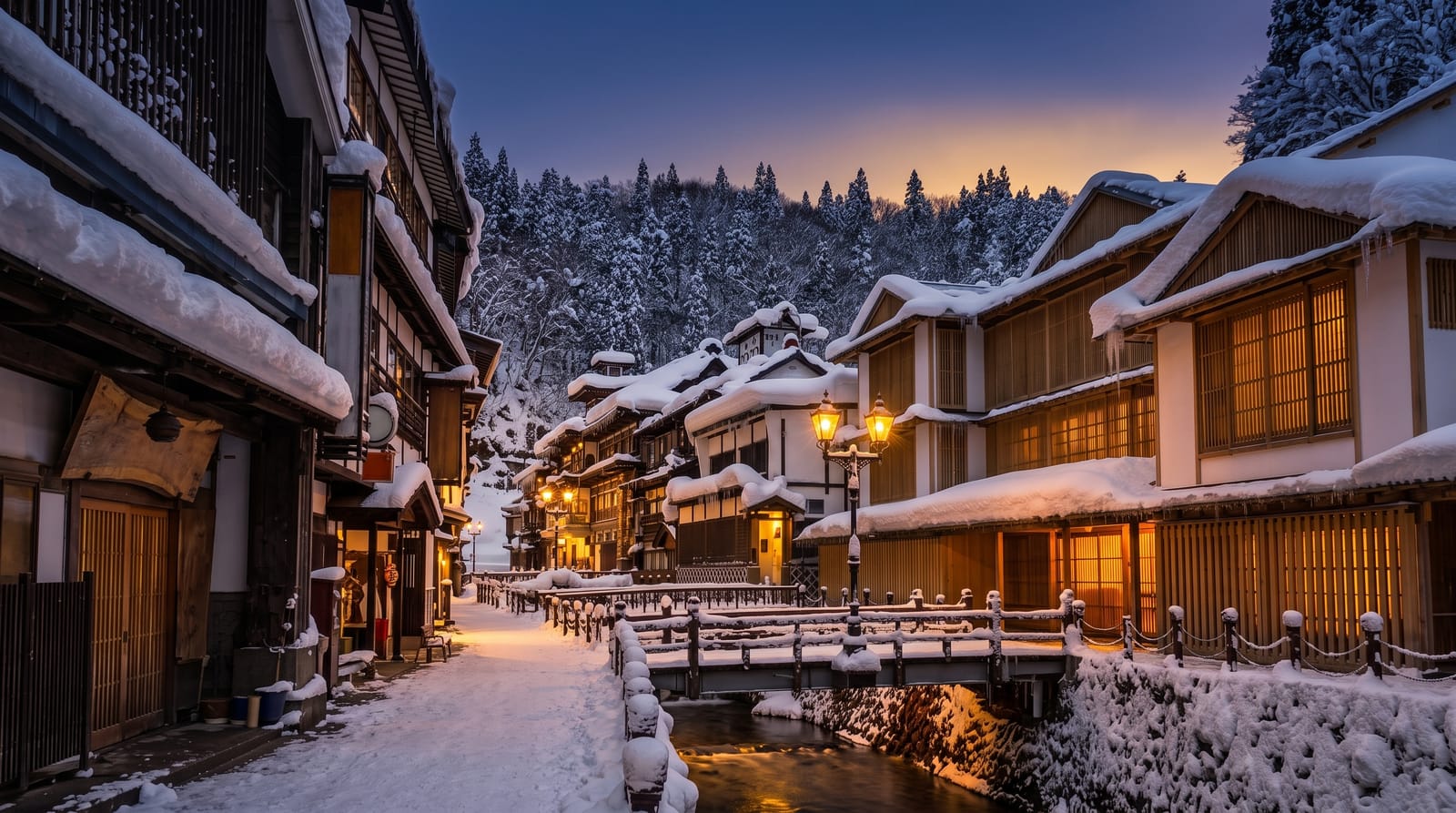
AI illustration
Ginzan grew around a silver mine, and when the mine closed the hot water kept the village alive. What survives is one short street: three and four storey wooden inns from the 1910s and 1920s standing face to face along both banks of a narrow river, with plaster relief panels on their fronts and gas lamps lit at dusk. Snow falls heavily here and piles along the parapets, which is the image that made the place famous. Behind the street a path climbs past the old mine tunnel to a waterfall. It takes ten minutes to walk end to end, so the point is to stay, bathe and watch the light change.
History
Miners working the nearby silver mines found the hot springs about 500 years ago, and the town was founded more than 400 years ago. As silver output fell toward the end of the 17th century the springs were used less, until tourism revived them in the early 20th century, when the wooden inns were built along the river; the television drama Oshin later made the town famous across Japan (Wikipedia, Ginzan Onsen).
Highlights
- The wooden street at dusk - gas lamps coming on along both riverbanks.
- The plaster relief fronts - kote-e panels worked into the facades of the older inns.
- The public foot baths - free places to sit with wet feet in the middle of the street.
- Shirogane Falls - a short walk up behind the village past the old mine tunnel.
When to go
Deep winter, roughly late December to February, is when the street looks the way people expect, but it is also when access is tightest and beds are booked months out. Autumn colour and green summer evenings are far easier and still handsome. Day visitors should aim for late afternoon, when the lamps are lit and coaches have gone.
Things to know
The village is one street and very small, so a few coachloads fill it completely, and in winter private cars are turned back to a car park with a shuttle. Most baths belong to the inns and are for staying guests; walk-in options are few and limited by hours. Rooms are expensive for what they are, and photographers crowd the bridges at dusk.
Nearby
Yamadera's cliff temple, the Mogami river boats and the Zao range south of Yamagata city.
Key facts
Source: Wikidata, item Q5563313, read on 18 October 2026.
What to pack for Ginzan Onsen
Chosen from what this place is for. Tap a kit for the full checklist.
- Warm base layers - Merino or synthetic against the skin - never cotton, which chills when damp. Find on Amazon
- Modest clothing - Shoulders and knees covered - the single most common requirement. Find on Amazon
- Swimwear - Needed at most public thermal pools; some traditional baths are nude and single-sex. Find on Amazon
- An insulated + windproof jacket - A down or synthetic layer under a hard shell handles most cold. Find on Amazon
Some links on this page are Amazon affiliate links - if you buy through them we may earn a small commission at no extra cost to you.
All packing kitsPlan your trip
Where to start if Ginzan Onsen is going on the list.
Booking links on this page are affiliate links - if you book through them we may earn a small commission at no extra cost to you. It never changes what we write about a place.
Opening times, ticket prices and seasonal closures change - check the official source before you go: official site.