Lucea
A quiet Georgian harbour town in Hanover with a courthouse clock tower holding a clock that was delivered to the wrong island.
Updated 19 October 2026
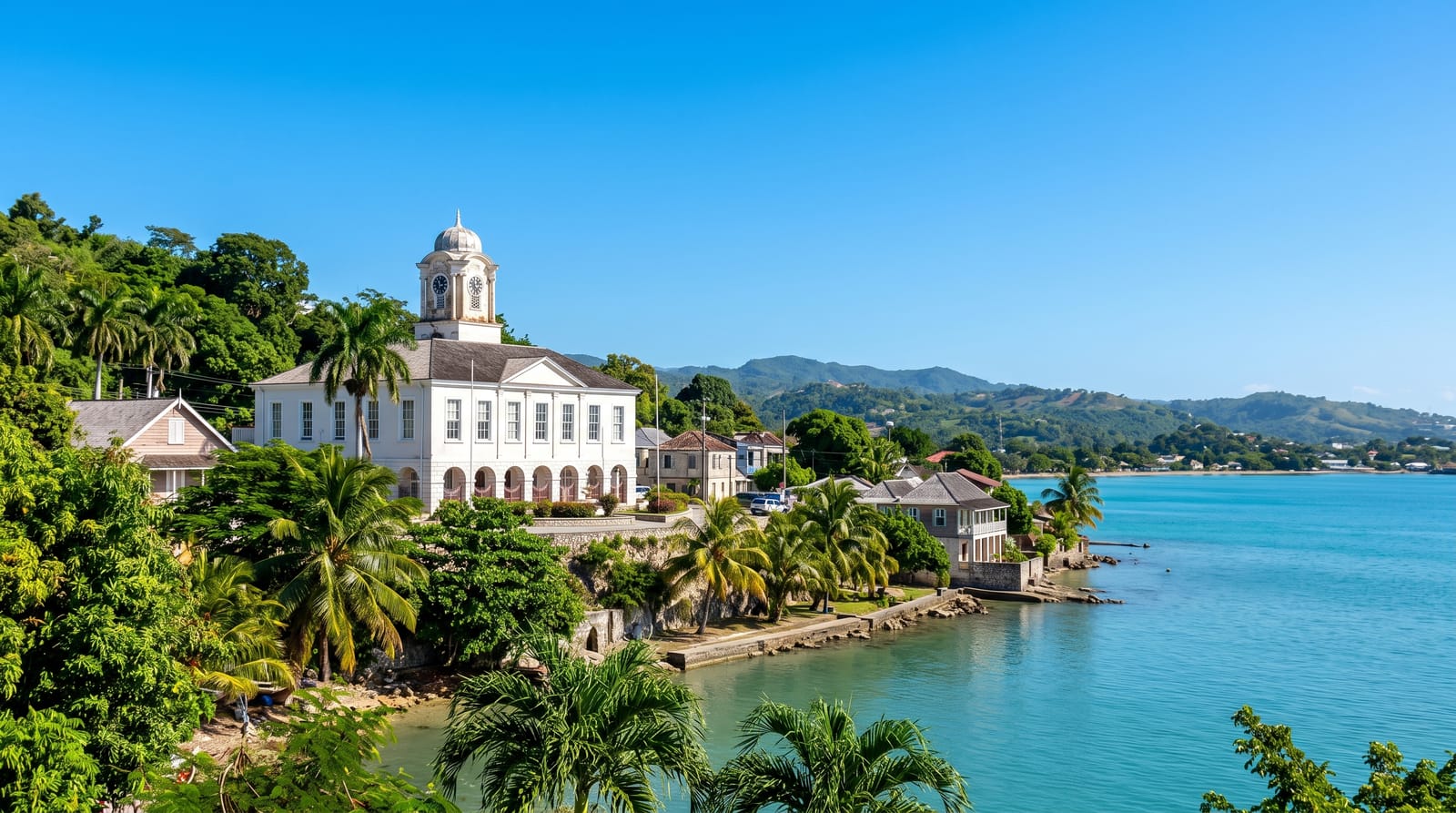
AI illustration
Lucea was a busy sugar port in the eighteenth and nineteenth centuries and then stopped being one, which is why a good deal of its Georgian fabric survives largely untouched: a courthouse of 1817 with an arcaded ground floor, warehouses along the harbour, a parish church, and Fort Charlotte on the point with its cannon still facing the sea. The courthouse clock tower carries the town's best story. The clock, in an elaborate copper case, was made in England and shipped in the 1810s for St Lucia; it arrived here by mistake, the townspeople liked it, raised the money to keep it, and sent St Lucia a replacement. It has run ever since.
History
Lucea became the capital of Hanover, Jamaica's second-smallest parish, founded on 12 November 1723. Fort Charlotte was built in 1761 and the clock tower in 1817, and from the mid-18th century the farmers of Hanover exported mainly bananas and logwood, used for dyes (Wikipedia, Lucea, Jamaica).
The main sights
- The courthouse and clock tower - the 1817 building and its misdelivered clock.
- Fort Charlotte - the harbour defences on the point.
- Hanover Museum - in the old parish jail and workhouse.
- The harbour - a deep natural bay with the old warehouses along it.
When to go
December to April is drier. Mornings are best for the light on the harbour. It takes a couple of hours and works as a stop on the drive between Montego Bay and Negril rather than a destination.
Before you go
The town is faded and many of the historic buildings are in poor repair, with restoration long promised and slow to arrive. There is little in the way of visitor facilities. The clock tower is the main draw and it is a five-minute look. Most people drive past on the coast road without stopping, which is understandable but a shame.
Nearby
Negril is 45 minutes west; Montego Bay is 45 minutes east.
Key facts
Source: Wikidata, item Q1632220, read on 18 October 2026.
What to pack for Lucea
Chosen from what this place is for. Tap a kit for the full checklist.
- Comfortable walking shoes - Sightseeing means kilometres of pavement and cobbles daily. Find on Amazon
- A slim anti-theft daypack - Zips that close properly; keep it in front in crowds and on transit. Find on Amazon
- A refillable water bottle - Many cities have public fountains; save money and plastic. Find on Amazon
- A light layer + compact umbrella - For museum air-con and a sudden shower. Find on Amazon
Some links on this page are Amazon affiliate links - if you buy through them we may earn a small commission at no extra cost to you.
All packing kitsPlan your trip
Where to start if Lucea is going on the list.
Booking links on this page are affiliate links - if you book through them we may earn a small commission at no extra cost to you. It never changes what we write about a place.
Opening times, ticket prices and seasonal closures change - check the official source before you go: official site.