Viareggio Carnival
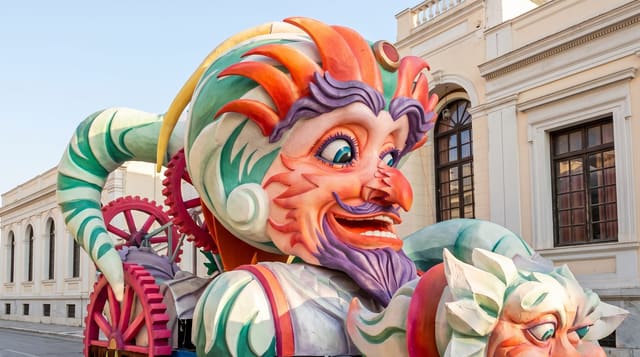
Papier-mache floats several storeys high, built to mock politicians and moved by hidden mechanisms.
Updated 19 October 2026

AI illustration
The carnival began in 1873, when wealthy locals paraded flower-decked floats and other townspeople put on masks in protest at high taxes, and grew into one of the largest in Europe. The floats are built in a permanent complex called the Cittadella by workshops that compete each year, using papier-mache over frames, a technique adopted in the 1920s because it made vast structures light enough to move; the biggest reach twenty metres and carry heads that turn, arms that lift and figures that rise, worked by operators inside. The subjects are satirical and usually political, aimed at whoever is currently in power at home or abroad. Parades run along the seafront over several days.
History
The first parade, in 1873, was organised by wealthy townsmen with flower-decked floats, while other citizens put on masks in protest at high taxes, and the first winning float, in 1883, was I Quattro Mori, a copy of the Livorno statue. In 1925 the sculptor Antonio d'Arliano first used papier-mache over iron and wood frames, which has shaped the floats ever since (Wikipedia, Carnival of Viareggio).
The main sights
- The giant floats - papier-mache structures up to twenty metres tall.
- The moving parts - heads, arms and figures worked from inside.
- The satire - designs mocking current political figures.
- The Cittadella - the workshop complex where the floats are built.
When to go
February, over a series of parade days including weekends and Shrove Tuesday; dates shift with Easter. The Cittadella workshops can be visited outside the season.
What to expect
Parade days are ticketed and crowded, with the seafront closed to traffic. Weather in February on this coast can be wet and cold. Accommodation books out.
Nearby
Lucca lies inland; the Apuan Alps rise behind the coast.
Key facts
Source: Wikidata, item Q642130, read on 18 October 2026.
What to pack for Viareggio Carnival
Chosen from what this place is for. Tap a kit for the full checklist.
- Comfortable walking shoes - Sightseeing means kilometres of pavement and cobbles daily. Find on Amazon
- A slim anti-theft daypack - Zips that close properly; keep it in front in crowds and on transit. Find on Amazon
- A refillable water bottle - Many cities have public fountains; save money and plastic. Find on Amazon
- A light layer + compact umbrella - For museum air-con and a sudden shower. Find on Amazon
Some links on this page are Amazon affiliate links - if you buy through them we may earn a small commission at no extra cost to you.
All packing kitsPlan your trip
Where to start if Viareggio Carnival is going on the list.
Booking links on this page are affiliate links - if you book through them we may earn a small commission at no extra cost to you. It never changes what we write about a place.
Opening times, ticket prices and seasonal closures change - check the official source before you go: official site.