Valtellina
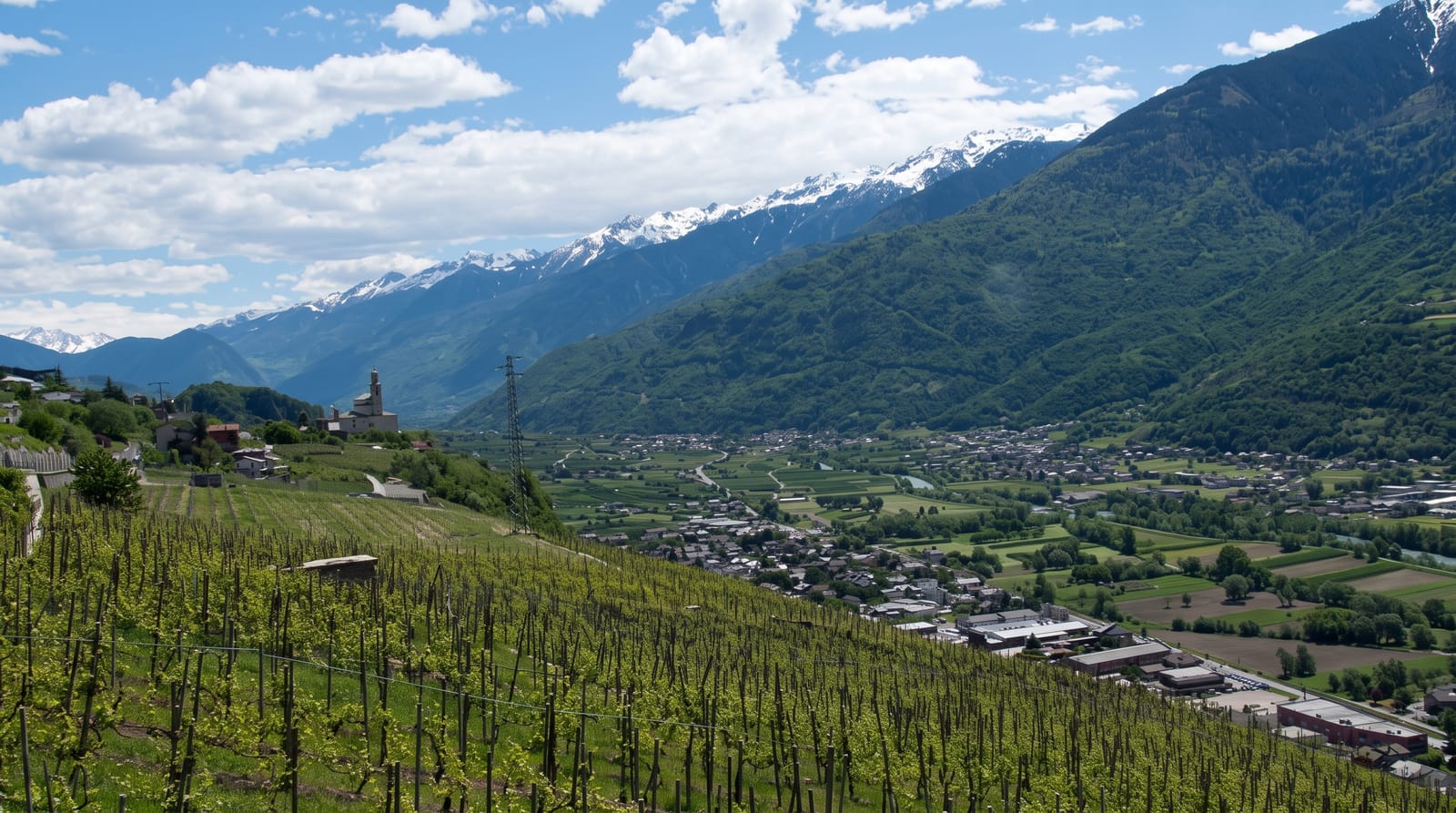
An alpine valley running east to west, so its north side takes the sun and carries terraced vineyards.
Updated 16 October 2026
AI illustration
Most alpine valleys run north to south; the Valtellina runs east to west, so one flank faces south all day and has been terraced for vines since at least the Middle Ages. The dry-stone retaining walls total an estimated two and a half thousand kilometres, built and maintained by hand on slopes too steep for machinery, and the wine, made from Nebbiolo called Chiavennasca here, is classified in subzones like Sassella, Grumello and Inferno. Pizzoccheri, a buckwheat pasta cooked with cabbage, potato and Valtellina Casera cheese, is the valley dish. Bresaola, air-dried salted beef, also comes from here.
Background
Valtellina, called Vuclina in Romansh and Veltlin in German, lies in Lombardy along the Swiss border and was once a key Alpine route between northern Italy and Germany. By the 5th century it was Christian, with around ten pieve, country churches each with its own baptistery, belonging to the Diocese of Como. The Lombards held it after 720, and some fifty years on Charlemagne granted it to the Saint Denis Monastery near Paris. The valley railway, the Ferrovia della Valtellina, was electrified in 1902 with three-phase power at 3,600 volts. Today the valley is known for its ski centre and hot spring spas, and for Bitto cheese, which takes its name from the river Bitto.
Source: Wikipedia, "Valtellina"
The main sights
- The terraced vineyards - thousands of kilometres of dry-stone walls.
- The Nebbiolo subzones - Sassella, Grumello, Inferno and Valgella.
- Pizzoccheri - buckwheat pasta with cabbage, potato and cheese.
- The bresaola - air-dried salted beef cured in the valley.
When to go
May to October for walking the terrace paths; harvest is October and involves carrying grapes by hand or monorail. Winter suits the ski areas at Bormio and Livigno.
Practical notes
Terrace paths are steep with steps and loose stone. The valley floor is built up and industrial in places. Cellar visits need booking.
Nearby
The Stelvio pass lies east; Lake Como is west.
Key facts
Source: Wikidata, item Q685105, read on 18 October 2026.
What to pack for Valtellina
Chosen from what this place is for. Tap a kit for the full checklist.
- Comfortable walking shoes - Sightseeing means kilometres of pavement and cobbles daily. Find on Amazon
- Modest clothing - Shoulders and knees covered - the single most common requirement. Find on Amazon
- Swimwear - Needed at most public thermal pools; some traditional baths are nude and single-sex. Find on Amazon
- A slim anti-theft daypack - Zips that close properly; keep it in front in crowds and on transit. Find on Amazon
Some links on this page are Amazon affiliate links - if you buy through them we may earn a small commission at no extra cost to you.
All packing kitsPlan your trip
Where to start if Valtellina is going on the list.
Booking links on this page are affiliate links - if you book through them we may earn a small commission at no extra cost to you. It never changes what we write about a place.
Opening times, ticket prices and seasonal closures change - check the official source before you go: official site.