Trieste
A port city of Habsburg architecture and old coffee houses, with a square that opens directly onto the sea.
Updated 19 October 2026

AI illustration
Trieste grew as the main seaport of the Austrian empire after 1719, and its centre was built in that period: wide neoclassical blocks, the Borgo Teresiano laid out on a grid around a canal, and Piazza Unità d'Italia, one of the largest squares in Europe that opens on one side straight onto the water. Coffee arrived through the port and the city kept a Viennese cafe culture, with historic houses still trading and a local vocabulary for coffee orders that confuses visitors. James Joyce lived here for about a decade from 1904 and worked on Ulysses; Italo Svevo and Umberto Saba were both Triestine writers.
History
The name probably comes from Tergeste, from a word for "market". The city belonged to the Habsburg monarchy from 1382, and in the 19th century, when the monarchy was one of the Great Powers of Europe, Trieste was its most important seaport and a prosperous trading hub of the Mediterranean (Wikipedia, Trieste).
What you'll find
- Piazza Unità d'Italia - a vast square open to the sea on one side.
- The Borgo Teresiano - a Habsburg grid around a canal basin.
- The historic cafes - Viennese-style coffee houses still trading.
- The literary city - Joyce, Svevo and Saba, with markers around town.
When to go
April to October; the Barcolana sailing regatta in October fills the gulf with hundreds of boats. The bora wind can blow hard in winter, occasionally closing streets.
Practical notes
The bora can be genuinely strong, with ropes strung in some streets historically. Coffee terms differ from the rest of Italy and need learning. The city feels Central European rather than Italian.
Nearby
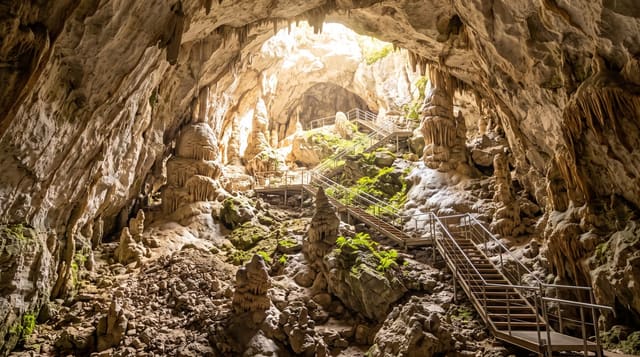
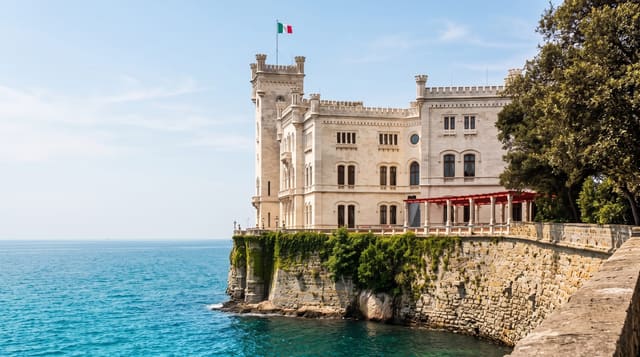
Miramare lies north; the Grotta Gigante is inland.
Key facts
Source: Wikidata, item Q546, read on 18 October 2026.
What to pack for Trieste
Chosen from what this place is for. Tap a kit for the full checklist.
- Comfortable walking shoes - Sightseeing means kilometres of pavement and cobbles daily. Find on Amazon
- A slim anti-theft daypack - Zips that close properly; keep it in front in crowds and on transit. Find on Amazon
- A refillable water bottle - Many cities have public fountains; save money and plastic. Find on Amazon
- A light layer + compact umbrella - For museum air-con and a sudden shower. Find on Amazon
Some links on this page are Amazon affiliate links - if you buy through them we may earn a small commission at no extra cost to you.
All packing kitsPlan your trip
Where to start if Trieste is going on the list.
Booking links on this page are affiliate links - if you book through them we may earn a small commission at no extra cost to you. It never changes what we write about a place.
Opening times, ticket prices and seasonal closures change - check the official source before you go: official site.