Trastevere
A quarter across the river that kept its own identity, around a basilica with mosaics of gold and blue.
Updated 19 October 2026
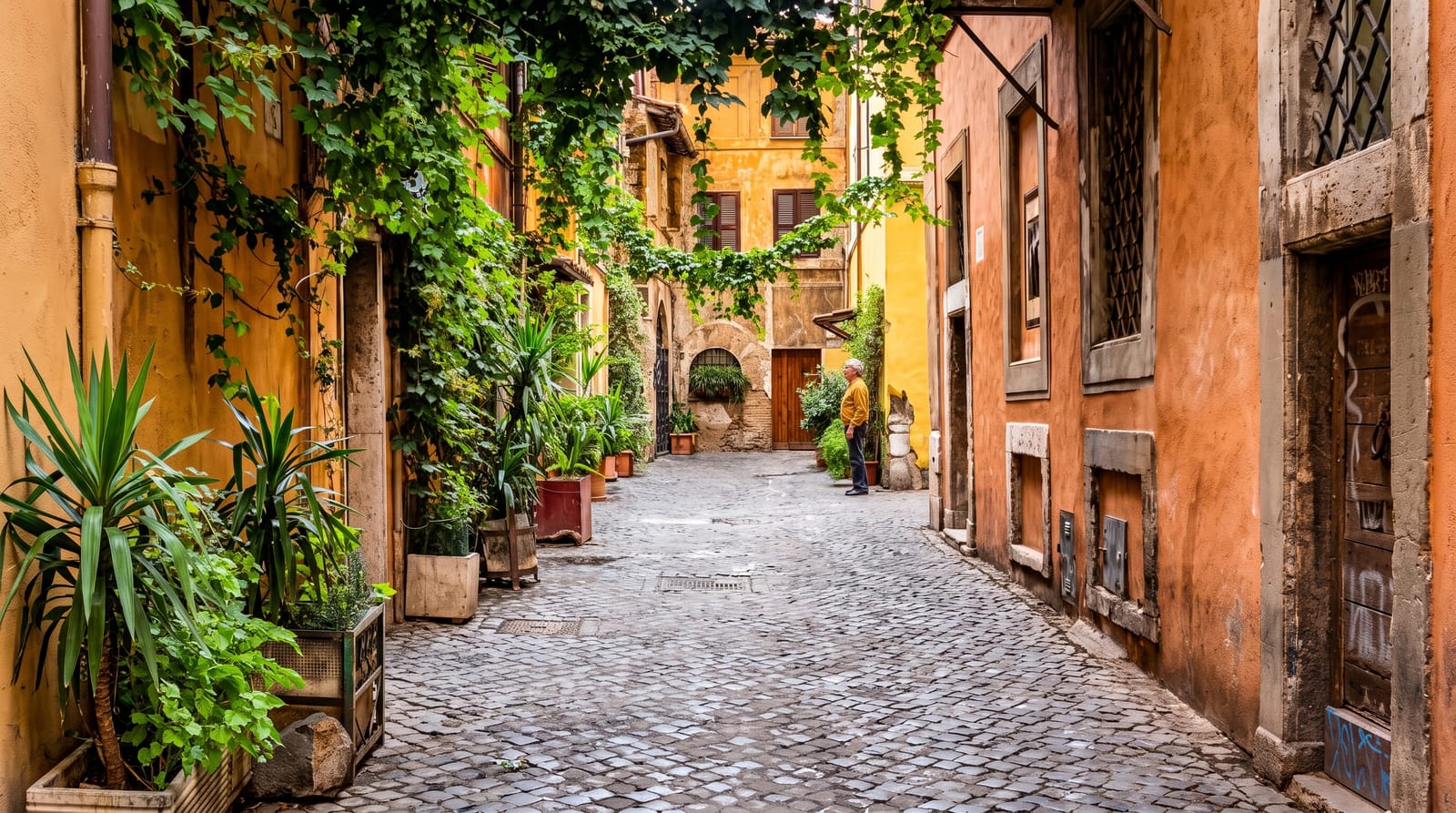
AI illustration
Trastevere means across the Tiber, and being on the far bank kept it separate for most of Roman history: a working quarter of dockers, tanners and immigrants, with a dialect and a stubborn local identity that residents still claim. Santa Maria in Trastevere may be the oldest church in Rome dedicated to the Virgin, with a twelfth-century apse mosaic in gold and deep blue and a further band by Cavallini below it. Santa Cecilia holds a sculpture of the saint by Maderno and a Cavallini Last Judgement fresco upstairs. The lanes are cobbled and the quarter is now Rome's densest concentration of restaurants and bars.
History
In Rome's regal period, 753 to 509 BC, the far bank belonged to the Etruscans and was called Ripa Etrusca, and for a long time its only link with the city was the wooden Pons Sublicius. Sailors and fishermen settled here, with newcomers from the East, mainly Jews and Syrians, and under Augustus it became the city's 14th region, Trans Tiberim (Wikipedia, Trastevere).
What you'll find
- The Santa Maria mosaics - twelfth-century gold and blue work in the apse.
- The Cavallini frescoes - a Last Judgement in the convent at Santa Cecilia.
- The cobbled lanes - a medieval street pattern on the far bank.
- The evening life - the quarter's restaurant and bar concentration after dark.
When to go
April to June and September to October; evenings are when the quarter is liveliest and most crowded. The Cavallini fresco has restricted morning hours and needs planning.
Things to know
Tourism has changed the quarter substantially and much of what is sold as local is not. The Cavallini fresco is open only certain mornings. Nights are noisy for anyone staying there.
Nearby
The Vatican lies north; the Aventine is across the river.
Key facts
Source: Wikidata, item Q914255, read on 18 October 2026.
What to pack for Trastevere
Chosen from what this place is for. Tap a kit for the full checklist.
- Comfortable walking shoes - Sightseeing means kilometres of pavement and cobbles daily. Find on Amazon
- Modest clothing - Shoulders and knees covered - the single most common requirement. Find on Amazon
- A slim anti-theft daypack - Zips that close properly; keep it in front in crowds and on transit. Find on Amazon
- A scarf or shawl - To cover the head or shoulders on entry; women especially at mosques. Find on Amazon
Some links on this page are Amazon affiliate links - if you buy through them we may earn a small commission at no extra cost to you.
All packing kitsPlan your trip
Where to start if Trastevere is going on the list.
Booking links on this page are affiliate links - if you book through them we may earn a small commission at no extra cost to you. It never changes what we write about a place.
Opening times, ticket prices and seasonal closures change - check the official source before you go: official site.