The Salento Coast
Fine white sand and shallow clear water on the Ionian side, rock and sea caves on the Adriatic.
Updated 4 September 2026
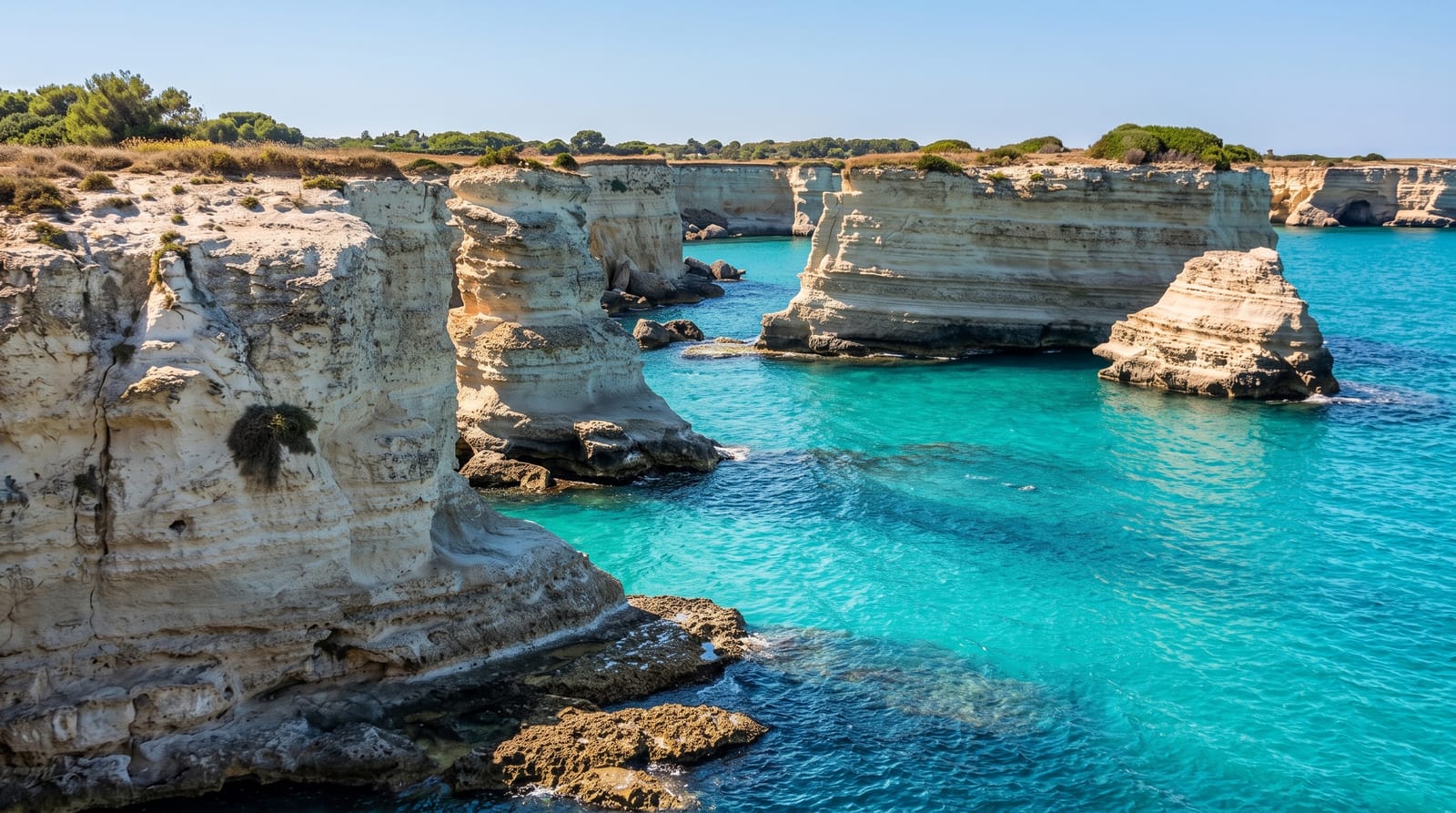
AI illustration
The Salento peninsula has two very different coasts. The Ionian side, from Porto Cesareo down to Pescoluse, has fine pale sand, dunes and water that stays shallow and clear a long way out, which is why the stretch near Pescoluse is marketed as the Maldives of Salento, a nickname the locals now use themselves. The Adriatic side is rock: low limestone cliffs, sea caves, and swimming from platforms rather than beaches. Between them the interior is flat with olive groves, dry-stone walls and baroque towns. Torre dell'Orso, Porto Selvaggio and Punta Prosciutto are among the better-known stops.
What's there
- The Ionian sand - fine pale beaches with long shallow water.
- The Adriatic rock - low cliffs, caves and platform swimming.
- The dune systems - protected dunes behind several Ionian beaches.
- The towers - coastal watchtowers built against sixteenth-century raids.
When to go
June to September; August is extremely crowded with Italian holidaymakers and parking is difficult everywhere. June and September are far more comfortable.
Before you go
Many good beaches are occupied by paid clubs with limited free access. August traffic and parking are severe. Public transport along the coast is thin.
Nearby
Gallipoli and Otranto sit on opposite coasts; Lecce is inland.
What to pack for The Salento Coast
Chosen from what this place is for. Tap a kit for the full checklist.
- Reef-safe sunscreen - High SPF that will not bleach the coral you are swimming over. Find on Amazon
- Head torch + spare batteries - Hands-free light is essential; caves are truly dark. Find on Amazon
- Loose, light, long clothing - Covering up beats bare skin in the desert - and locals dress this way for a reason. Find on Amazon
- Comfortable walking shoes - Sightseeing means kilometres of pavement and cobbles daily. Find on Amazon
Some links on this page are Amazon affiliate links - if you buy through them we may earn a small commission at no extra cost to you.
All packing kitsPlan your trip
Where to start if The Salento Coast is going on the list.
Booking links on this page are affiliate links - if you book through them we may earn a small commission at no extra cost to you. It never changes what we write about a place.
Opening times, ticket prices and seasonal closures change - check the official source before you go: official site.