Gallipoli
An old town on a limestone island joined by a bridge, once Europe's main supplier of lamp oil.
Updated 4 September 2026

AI illustration
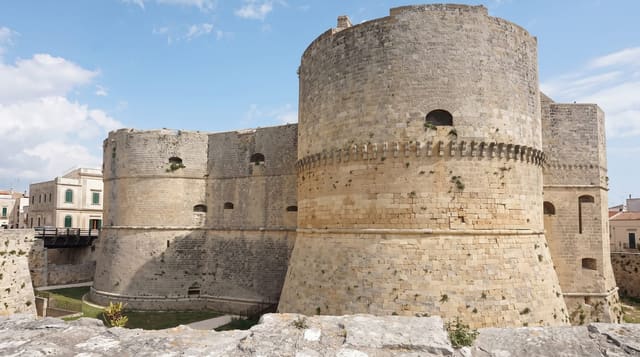
The old town occupies a small limestone island linked to the mainland by a seventeenth-century bridge, ringed by walls with an Angevin castle at the entrance. In the seventeenth and eighteenth centuries Gallipoli exported olive oil across Europe, not for eating but for lamps: lampante oil was stored in underground cisterns cut into the rock beneath the town, where the constant temperature suited it, and shipped from the port to light cities including London and Paris. Several of these frantoi ipogei can be visited. The name comes from Greek for beautiful city. Beaches run north along the Ionian shore.
What you'll find
- The island old town - a walled town on limestone joined by a bridge.
- The underground oil mills - rock-cut cisterns that supplied Europe's lamps.
- The Angevin castle - a fortress guarding the bridge and harbour.
- The Ionian beaches - long sand stretches north of the town.
When to go
May to September; August is very crowded, and Gallipoli has a heavy nightlife scene in high summer that some will want to avoid. Spring is quiet.
Good to know
Summer nightlife dominates the town in July and August. The underground mills keep limited hours. Beaches are largely private clubs in season.
Nearby
Santa Maria di Leuca lies south; Lecce is inland.
What to pack for Gallipoli
Chosen from what this place is for. Tap a kit for the full checklist.
- Reef-safe sunscreen - High SPF that will not bleach the coral you are swimming over. Find on Amazon
- Head torch + spare batteries - Hands-free light is essential; caves are truly dark. Find on Amazon
- Comfortable walking shoes - Sightseeing means kilometres of pavement and cobbles daily. Find on Amazon
- Quick-dry towel - A microfibre towel packs small and dries in minutes. Find on Amazon
Some links on this page are Amazon affiliate links - if you buy through them we may earn a small commission at no extra cost to you.
All packing kitsPlan your trip
Where to start if Gallipoli is going on the list.
Booking links on this page are affiliate links - if you book through them we may earn a small commission at no extra cost to you. It never changes what we write about a place.
Opening times, ticket prices and seasonal closures change - check the official source before you go: official site.