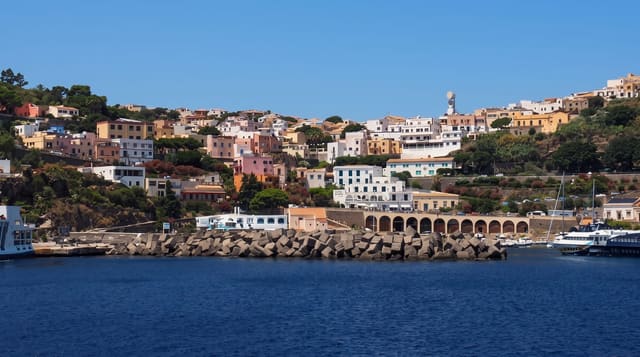
Pantelleria
A volcanic island closer to Africa than to Sicily, with stone houses built to catch every drop of water.
Updated 19 October 2026

AI illustration
Pantelleria lies about seventy kilometres from Tunisia and a hundred from Sicily, a volcanic island of black rock with no rivers and little rain, where agriculture depends on structures: dammusi, thick-walled stone houses with domed roofs that collect rainwater, and giardini panteschi, circular dry-stone walls built around a single citrus tree to shelter it from the wind and condense moisture. Zibibbo vines are grown in hollows scooped into the ground, and the practice of head-training them this way was listed by UNESCO as intangible heritage in 2014. The Specchio di Venere is a crater lake with hot springs and mud along its edge.
History
Neolithic visitors came to the island to quarry obsidian, and the first permanent settlement, at Mursia, began in the Bronze Age, when the megalithic Sesi tombs were also built. The Carthaginians probably took the island, a station on the way to Sicily, around the beginning of the 7th century BC, with their acropolis on the twin hill of San Marco and Santa Teresa, 2 km south of the present town (Wikipedia, Pantelleria).
Highlights
- The dammusi - domed stone houses built to collect rainwater.
- The giardini panteschi - circular walls sheltering a single citrus tree.
- The sunken vines - Zibibbo grown in hollows, UNESCO-listed practice.
- The Specchio di Venere - a crater lake with hot springs and mud.
When to go
May to October; the wind, which gives the island its character, blows hard and can cancel flights and ferries. August is busy and expensive.
Things to know
Transport is weather dependent and cancellations are common. There are no sand beaches, only black rock entries. The wind is constant and strong.
Nearby
Sicily lies northeast; the island stands alone in open sea.
What to pack for Pantelleria
Chosen from what this place is for. Tap a kit for the full checklist.
- Broken-in walking shoes or boots - Grip and ankle support matter more than looks; never hike in brand-new boots. Find on Amazon
- Reef-safe sunscreen - High SPF that will not bleach the coral you are swimming over. Find on Amazon
- Swimwear - Needed at most public thermal pools; some traditional baths are nude and single-sex. Find on Amazon
- Layers + a waterproof shell - Mountain weather turns fast; a packable rain jacket saves the day. Find on Amazon
Some links on this page are Amazon affiliate links - if you buy through them we may earn a small commission at no extra cost to you.
All packing kitsPlan your trip
Where to start if Pantelleria is going on the list.
Booking links on this page are affiliate links - if you book through them we may earn a small commission at no extra cost to you. It never changes what we write about a place.
Opening times, ticket prices and seasonal closures change - check the official source before you go: official site.