Ischia
A volcanic island of thermal gardens and a castle on its own islet, larger and greener than Capri.
Updated 19 October 2026
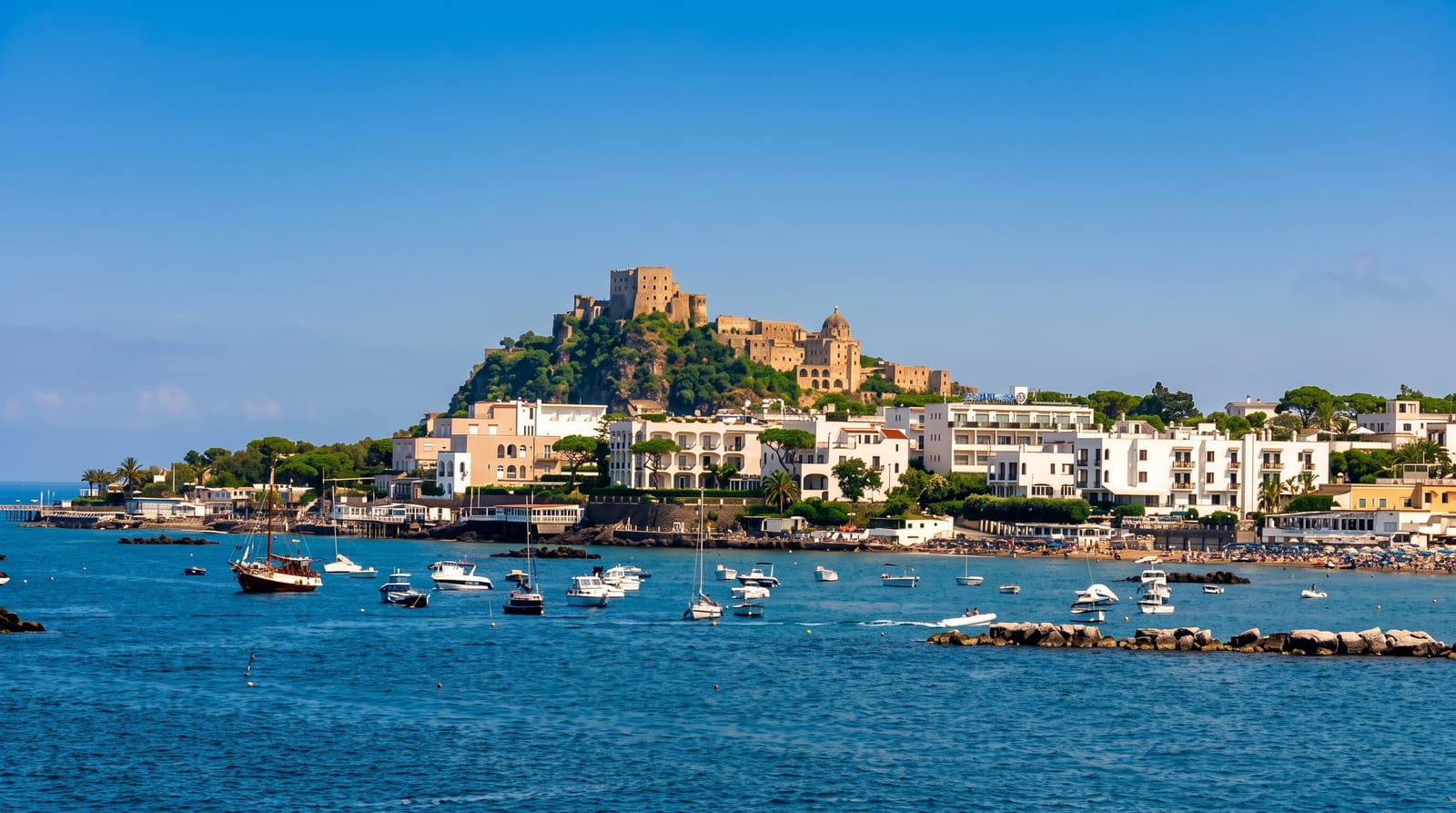
AI illustration
Ischia is the largest island in the Bay of Naples at about forty-seven square kilometres, volcanic, with Monte Epomeo rising to seven hundred and eighty-nine metres in the middle and hot springs across it; thermal parks with dozens of pools at different temperatures are the island's main business, along with vineyards on terraced slopes. The Aragonese castle stands on a separate rocky islet linked by a causeway built in 1441, holding a fortress, churches and a convent where nuns' bodies were once left seated on stone drains. The port itself occupies a former volcanic crater opened to the sea in 1854.
History
The island, roughly trapezoidal, measures about 10 km from east to west and 7 km from north to south, with 34 km of coastline and an area of 47 square kilometres, and it lies about 30 kilometres from Naples (Wikipedia, Ischia).
What's there
- The Aragonese castle - a fortress islet linked by a fifteenth-century causeway.
- The thermal parks - terraced gardens of pools at graded temperatures.
- Monte Epomeo - a 789-metre summit walk with island-wide views.
- The crater port - a harbour cut into a volcanic crater in 1854.
When to go
May to October; the thermal parks close in winter, roughly November to March. August is crowded and expensive. Spring and autumn suit walking Epomeo.
Before you go
Thermal parks close for the winter months. Ferries are cancelled in rough seas. The island is hilly with slow bus services and difficult driving.
Nearby
Procida lies east; Naples is across the bay.
Key facts
Source: Wikidata, item Q189387, read on 18 October 2026.
What to pack for Ischia
Chosen from what this place is for. Tap a kit for the full checklist.
- Comfortable walking shoes - Sightseeing means kilometres of pavement and cobbles daily. Find on Amazon
- Swimwear - Needed at most public thermal pools; some traditional baths are nude and single-sex. Find on Amazon
- A slim anti-theft daypack - Zips that close properly; keep it in front in crowds and on transit. Find on Amazon
- Quick-dry towel + flip-flops - For wet changing areas and hot poolside stone. Find on Amazon
Some links on this page are Amazon affiliate links - if you buy through them we may earn a small commission at no extra cost to you.
All packing kitsPlan your trip
Where to start if Ischia is going on the list.
Booking links on this page are affiliate links - if you book through them we may earn a small commission at no extra cost to you. It never changes what we write about a place.
Opening times, ticket prices and seasonal closures change - check the official source before you go: official site.